Digital tools and biomarkers for cognitive screening: A systematic review
-
By
-
Seunghui Hong
-
ChanHee Kim
-
Seon Heui Lee
-
June 22, 2026
-
Clinical Scorecard: Systematic Review of Digital Technologies and Biomarkers for Cognitive Assessment
At a Glance
| Category | Detail |
|---|
| Condition | Dementia |
| Key Mechanisms | Digital cognitive assessments and biomarkers for early detection and monitoring. |
| Target Population | Older adults, particularly those with limited mobility or access to healthcare. |
| Care Setting | Community healthcare environments. |
Key Highlights
- Increasing prevalence of dementia, with nearly 890,000 cases in South Korea as of 2021.
- Traditional neuropsychological tests are time-consuming and require trained specialists.
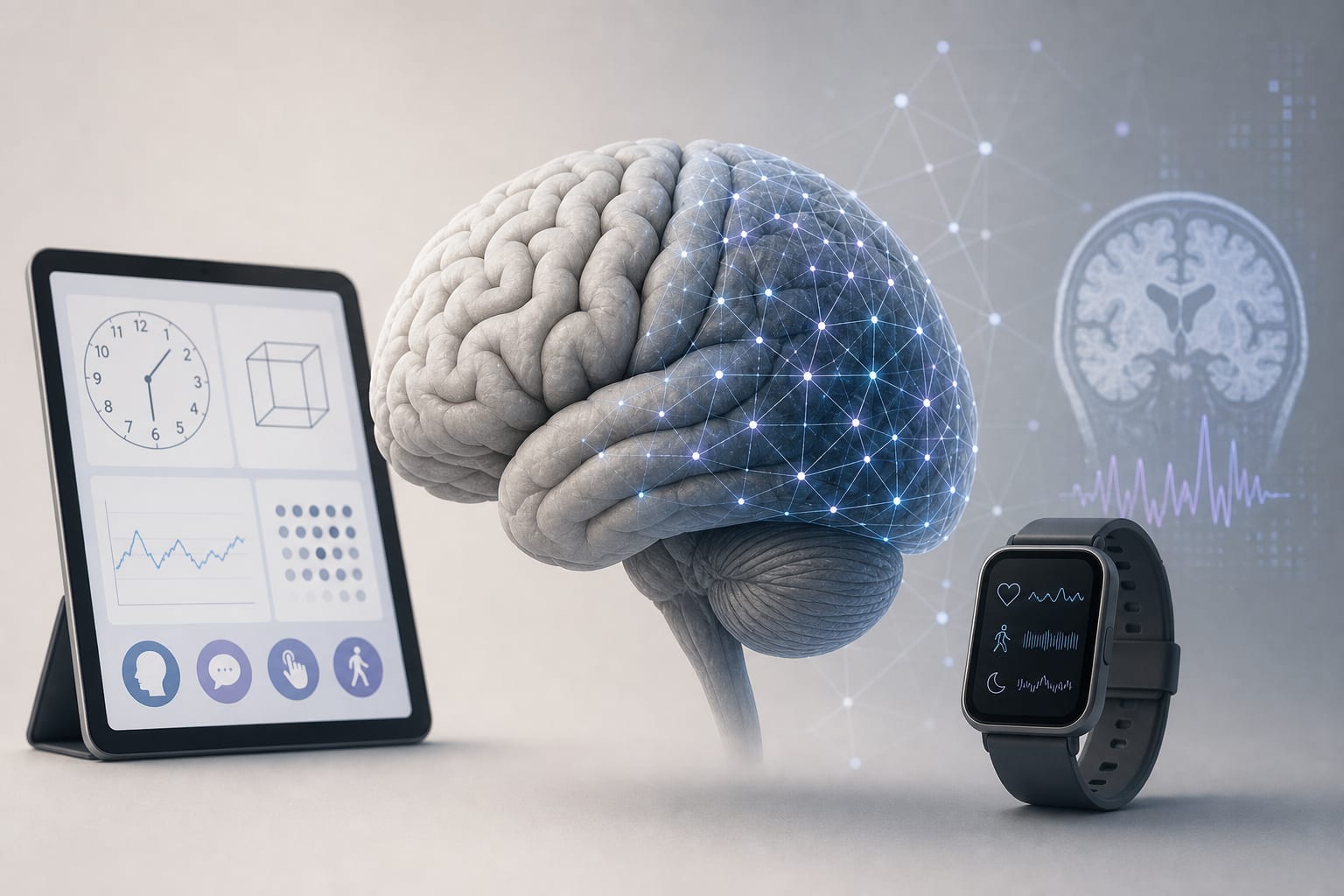
- Digital biomarkers provide continuous, real-life data for early detection of cognitive changes.
- AI-driven multimodal biomarkers show higher sensitivity for early Alzheimer’s detection.
- Community nurses can integrate digital assessments into routine home visits.
Guideline-Based Recommendations
Diagnosis
- Utilize digital cognitive assessments for early detection of cognitive decline.
Management
- Incorporate digital biomarkers into cognitive health monitoring programs.
Monitoring & Follow-up
- Employ continuous monitoring through digital devices to track cognitive function.
Risks
- Address score discrepancies between digital and paper-based tests.
Patient & Prescribing Data
Older adults with cognitive decline or at risk for dementia.
Digital tools enhance accessibility and usability of cognitive assessments.
Clinical Best Practices
- Implement digital cognitive assessments in community health programs.
- Train community nurses to effectively use digital tools for cognitive evaluation.
Related Resources & Content