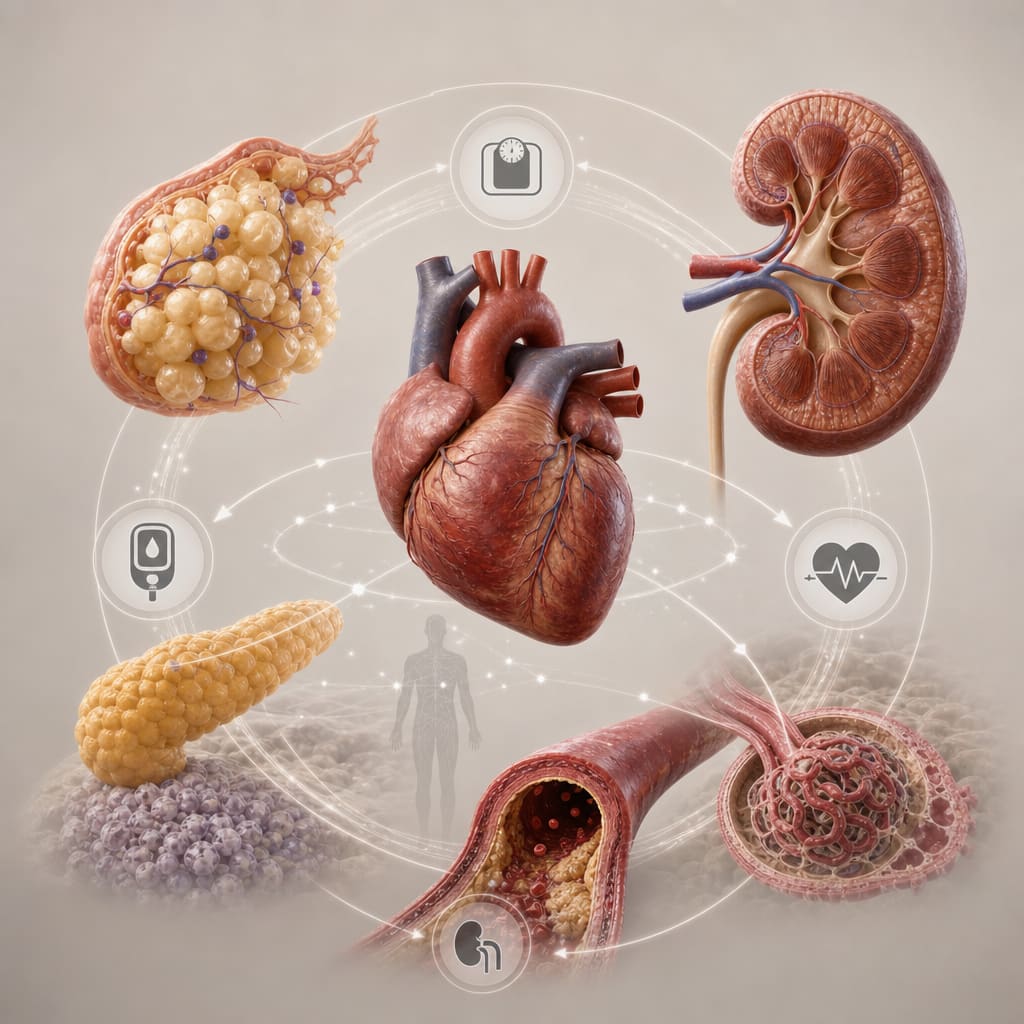
Dapagliflozin Mitigates Cardiotoxic Effects of Sunitinib via the AMPKα-PPARα Pathway and Increases Renal Cell Carcinoma Sensitivity to Sunitinib - Scorecard - MDSpire
Advertisement
Dapagliflozin Mitigates Cardiotoxic Effects of Sunitinib via the AMPKα-PPARα Pathway and Increases Renal Cell Carcinoma Sensitivity to Sunitinib
Clinical Scorecard: Dapagliflozin Mitigates Cardiotoxic Effects of Sunitinib via the AMPKα-PPARα Pathway and Increases Renal Cell Carcinoma Sensitivity to Sunitinib
At a Glance
Category
Detail
Condition
Cardiotoxicity associated with cancer therapeutics, specifically sunitinib in renal cell carcinoma (RCC)
Key Mechanisms
Sunitinib induces mitochondrial dysfunction and apoptosis in cardiomyocytes; dapagliflozin mitigates these effects via the AMPKα-PPARα pathway.
Target Population
Patients with clear-cell RCC receiving sunitinib therapy.
Care Setting
Oncology and cardiology settings.
Key Highlights
Sunitinib is linked to left ventricular dysfunction and heart failure.
Dapagliflozin shows cardioprotective effects against sunitinib-induced cardiotoxicity.
The protective mechanism involves the AMPKα-PPARα axis.
Dapagliflozin has anti-tumor effects in kidney cancer cells.
Research indicates a need for safer cancer therapeutics.
Guideline-Based Recommendations
Diagnosis
Monitor cardiac function in patients receiving sunitinib.
Management
Consider dapagliflozin for patients experiencing sunitinib-induced cardiotoxicity.
Monitoring & Follow-up
Regular echocardiography to assess left ventricular function.
Risks
Increased risk of congestive heart failure in patients treated with sunitinib.
Patient & Prescribing Data
Patients with metastatic clear-cell RCC.
Dapagliflozin may enhance the safety profile of sunitinib therapy.
Clinical Best Practices
Implement cardiac monitoring protocols for patients on sunitinib.
Evaluate the potential use of dapagliflozin in managing cardiotoxicity.