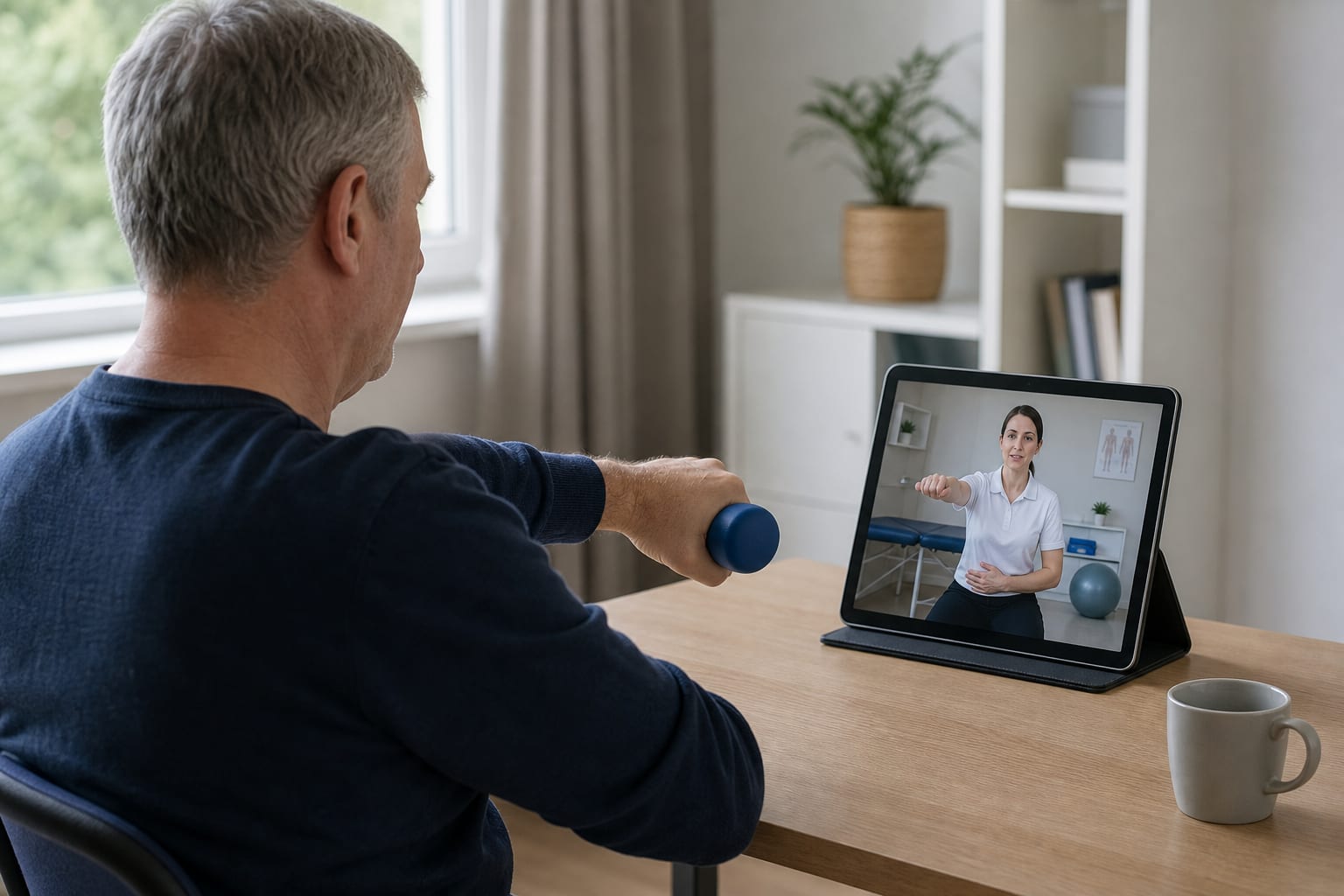
Clinical Scorecard: Evaluation of Current Practices and Insights for Ongoing Implementation of Telerehabilitation in Community Stroke Services: A Mixed Methods Approach
At a Glance
Category
Detail
Condition
Key Mechanisms
Delivery of rehabilitation consultations, assessments, and therapies remotely using information and communication technologies.
Target Population
Care Setting
Key Highlights
Telerehabilitation may be as effective as in-person care for activities of daily living and upper limb function.
The COVID-19 pandemic accelerated the adoption of telerehabilitation in stroke care.
Guideline-Based Recommendations
Diagnosis
Management
Telerehabilitation is supported in guidelines and policy for stroke rehabilitation.
Monitoring & Follow-up
Ongoing evaluation and monitoring of telerehabilitation services are critical for improvement.
Risks
Patient & Prescribing Data
Patients receiving stroke rehabilitation in community settings.
Understanding patient experiences and clinician perspectives is essential for effective telerehabilitation.
Clinical Best Practices
Engage with service users to enhance telerehabilitation services.