Advancements in artificial intelligence for the localization of premature ventricular contraction origins
-
By
-
Changyu Wang
-
Zhiqiang Pei
-
Xingxing Cai
-
June 29, 2026
-
Clinical Scorecard: Innovations in Artificial Intelligence for Identifying Origins of Premature Ventricular Contractions
At a Glance
| Category | Detail |
|---|
| Condition | Premature Ventricular Contractions (PVC) |
| Key Mechanisms | AI-based automated analysis of ECG data for PVC origin localization |
| Target Population | Patients with PVC, particularly those with high burden or refractory cases |
| Care Setting | Clinical electrophysiology and arrhythmia management |
Key Highlights
- PVC is a common arrhythmia with a prevalence of 1%-4% in the general population.
- Accurate localization of PVC origins is crucial for effective catheter ablation.
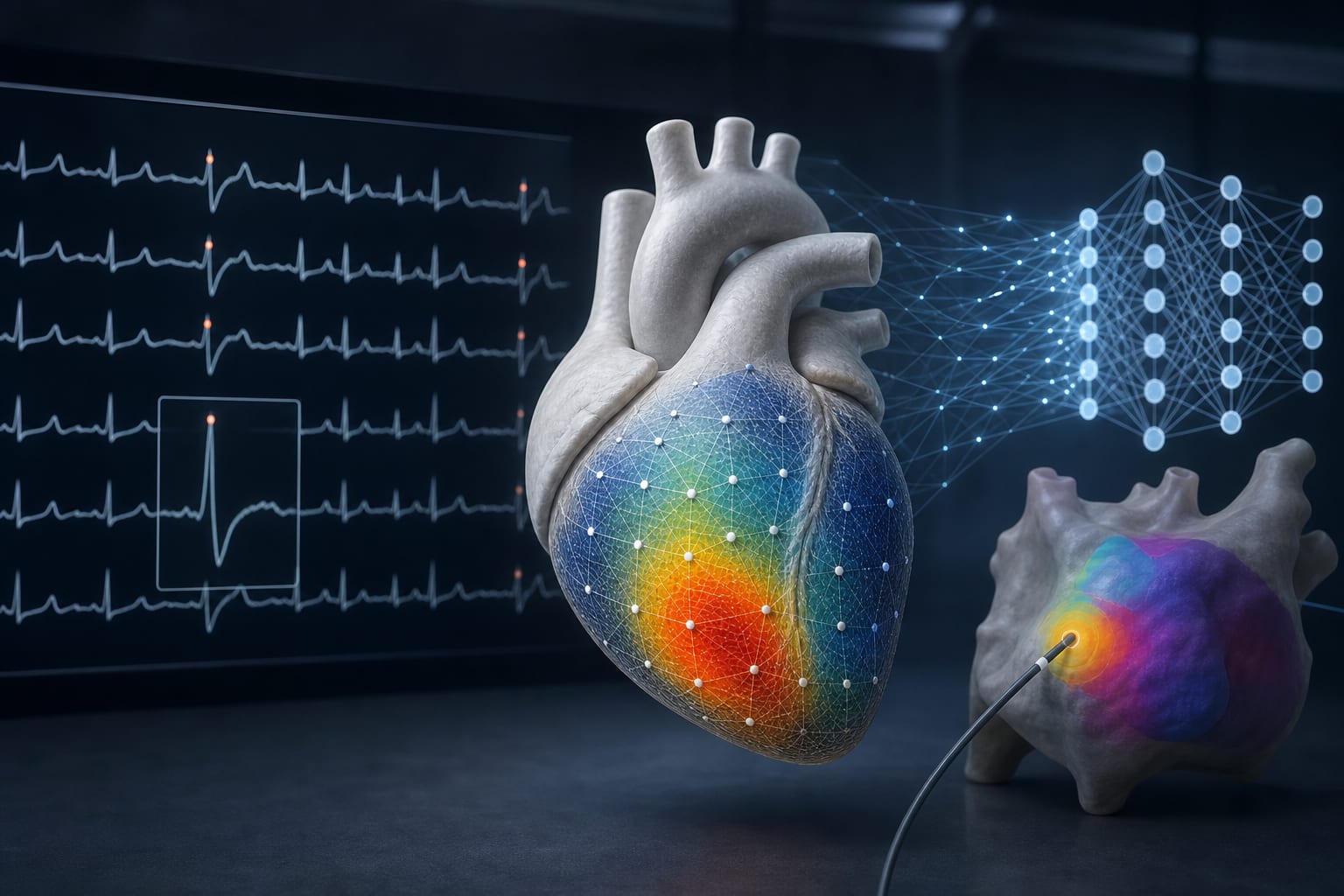
- AI methods improve the efficiency and accuracy of PVC origin identification.
- Traditional ECG analysis is subjective and inefficient compared to AI approaches.
- AI can extract high-dimensional features from ECG data for better classification.
Guideline-Based Recommendations
Diagnosis
- Use AI algorithms to enhance the accuracy of PVC origin localization.
Management
- Consider catheter ablation for patients with high PVC burden (≥15%) or refractory to medical therapy.
Monitoring & Follow-up
- Regular assessment of PVC burden and symptoms in patients with structural heart disease.
Risks
- Long-term pharmacological treatment may increase the risk of malignant arrhythmias.
Patient & Prescribing Data
Patients with frequent PVCs, especially those with structural heart disease.
Catheter ablation is an effective treatment option for high-burden PVCs.
Clinical Best Practices
- Utilize AI-based tools for ECG analysis to improve PVC localization.
- Integrate traditional ECG criteria with AI methods for comprehensive assessment.
Related Resources & Content