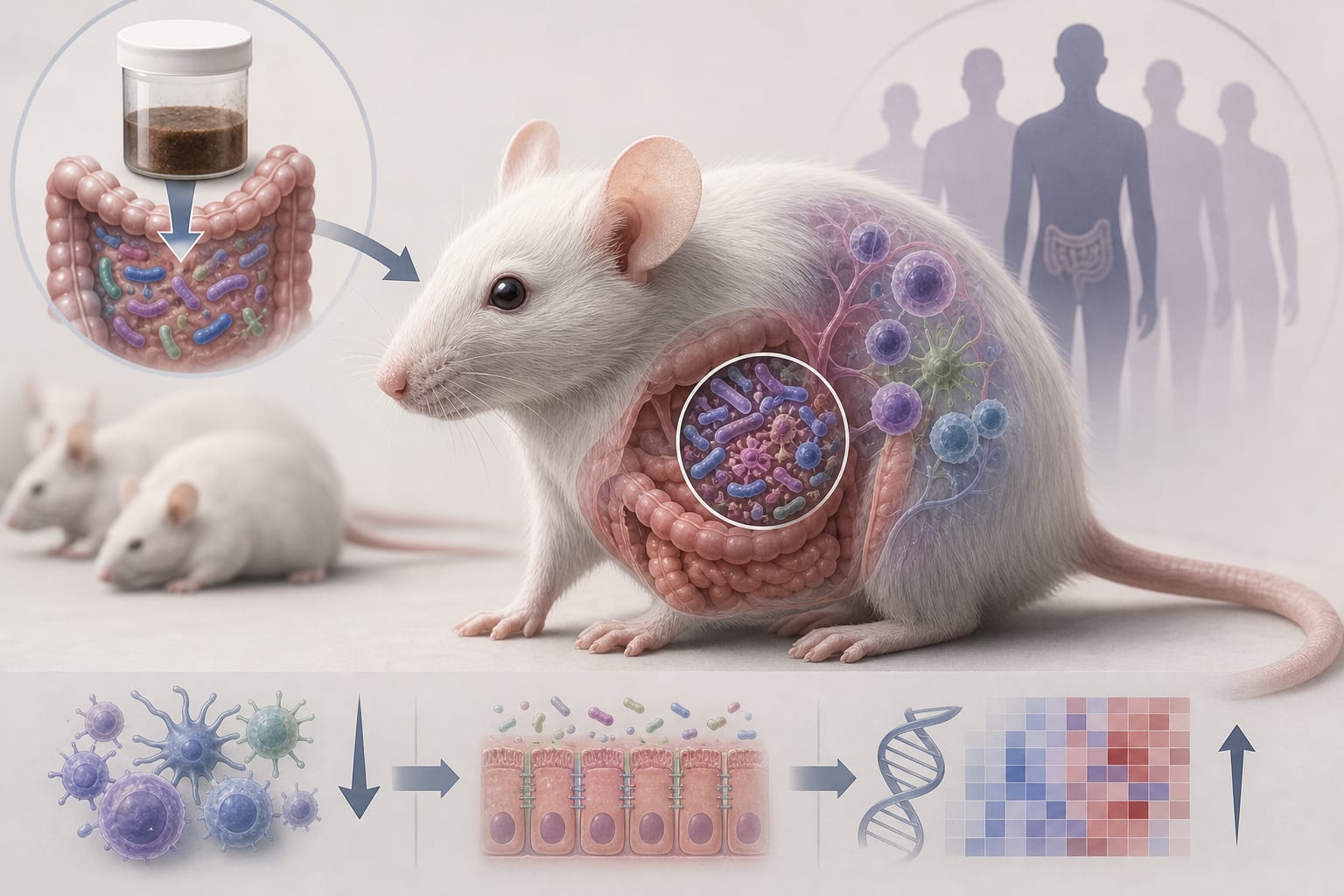
Fecal Microbiota Transplantation Alleviates Inflammation and Influences Gene Expression in HIV-Infected Double Humanized-BLT Mice Under Antiretroviral Treatment
-
By
-
Saroj Chandra Lohani
-
Chi Zhang
-
Subhra Mandal
-
Miaoyun Zhao
-
Yilun Cheng
-
Amanda E. Ramer-Tait
-
Qingsheng Li
-
June 3, 2026
Clinical Scorecard: Fecal Microbiota Transplantation Alleviates Inflammation and Influences Gene Expression in HIV-Infected Double Humanized-BLT Mice Under Antiretroviral Treatment
At a Glance
| Category | Detail |
|---|
| Condition | |
| Key Mechanisms | |
| Target Population | HIV-infected individuals on antiretroviral therapy (ART) |
| Care Setting | |
Key Highlights
- FMT increased beneficial gut bacteria in HIV-infected mice on ART
- Significant reduction in plasma inflammatory markers observed with FMT
- Transcriptomic changes indicated upregulation of genes related to tissue maintenance
- Inflammatory signaling pathways were downregulated in FMT-supplemented group
- FMT may mitigate systemic inflammation and improve gut health in PLWH
- Potential implications for clinical practice include improved management of comorbidities.
Guideline-Based Recommendations
Diagnosis
Management
Monitoring & Follow-up
Risks
- Consider potential risks of FMT, including infection and adverse reactions.
Patient & Prescribing Data
FMT may enhance gut microbial diversity and reduce inflammation, potentially improving overall health outcomes.
Clinical Best Practices
- Utilize FMT to address gut dysbiosis in PLWH on ART
- Assess gut health and inflammatory markers regularly in patients receiving FMT
- Establish patient selection criteria for FMT to ensure safety and efficacy.
Related Resources & Content