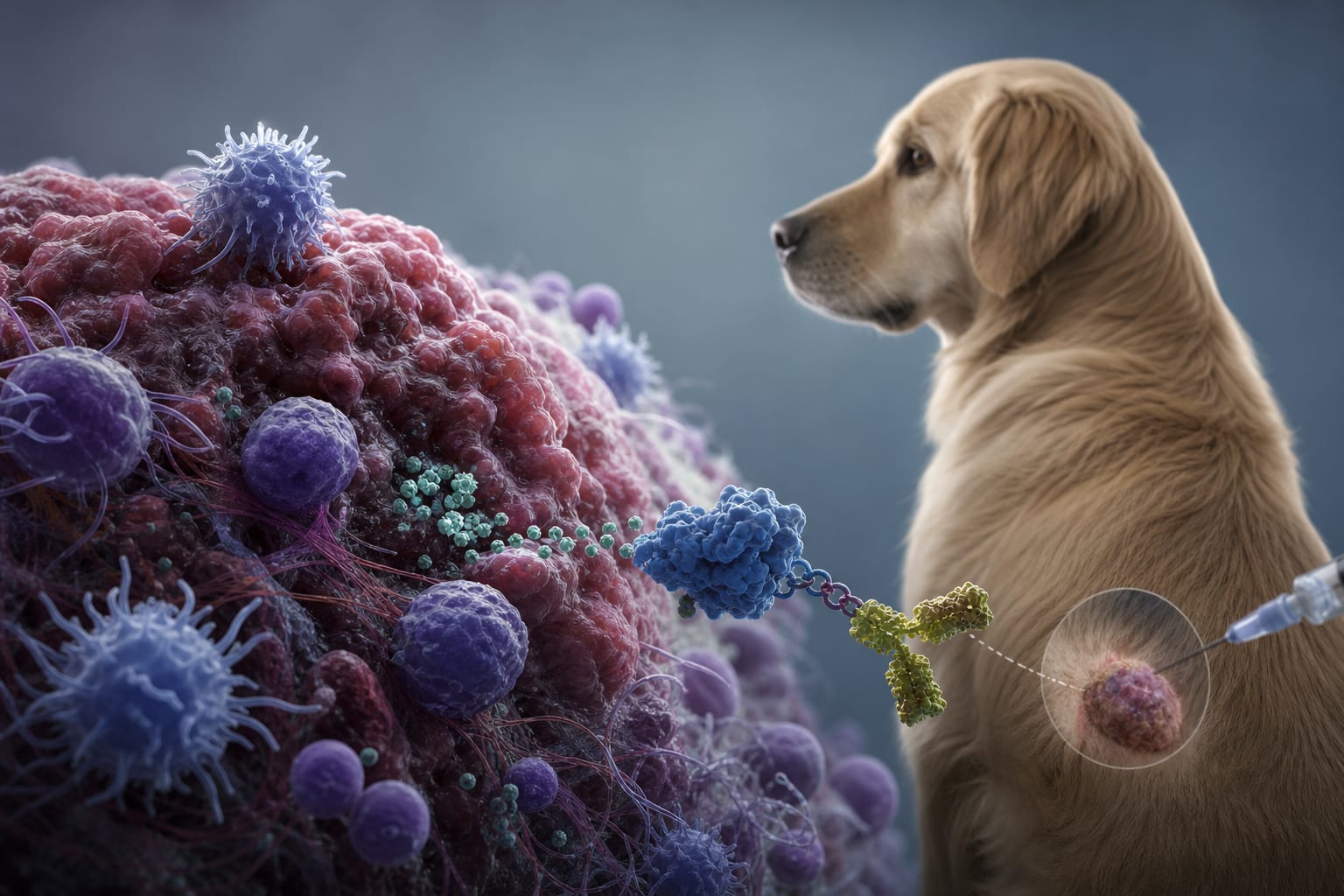
Cytokine delivery and targeting strategies in pet dogs with cancer: a comparative immuno-oncology approach
Clinical Scorecard: Strategies for Targeting and Delivering Cytokines in Canine Cancer: A Comparative Approach in Immuno-Oncology
At a Glance
| Category | Detail |
|---|
| Condition | Canine Cancer |
| Key Mechanisms | Cytokine therapies targeting tumor microenvironment to enhance local immunostimulatory effects while minimizing systemic toxicity. |
| Target Population | Pet dogs with spontaneous cancers. |
| Care Setting | Comparative oncology research. |
Key Highlights
- Cytokine therapies face challenges due to systemic absorption and immune-related toxicity.
- Pet dogs provide a model for evaluating cytokine-based immunotherapies due to shared tumor immunobiology with humans.
- Engineered cytokines with tunable biodistribution properties show promise in targeting tumors.
- Cytokine delivery platforms evaluated include various fusion proteins and oncolytic viruses.
- Comparative oncology can inform drug development and therapeutic strategies for both dogs and humans.
Guideline-Based Recommendations
Diagnosis
- Investigate naturally occurring tumors in pet dogs for insights into human cancer.
Management
- Utilize engineered cytokine strategies to enhance therapeutic efficacy while reducing toxicity.
Monitoring & Follow-up
- Assess pharmacodynamic immune biomarkers to evaluate tolerability and antitumor activities.
Risks
- Be aware of potential immune-related adverse events associated with cytokine therapies.
Patient & Prescribing Data
Pet dogs with various solid malignancies.
Cytokine therapies can be evaluated in dogs to inform human clinical applications.
Clinical Best Practices
- Leverage comparative oncology to address gaps in drug development.
- Collect serial tumor biopsies for nuanced insights into therapeutic responses.
- Consider the immune system similarities between dogs and humans when designing studies.
Related Resources & Content