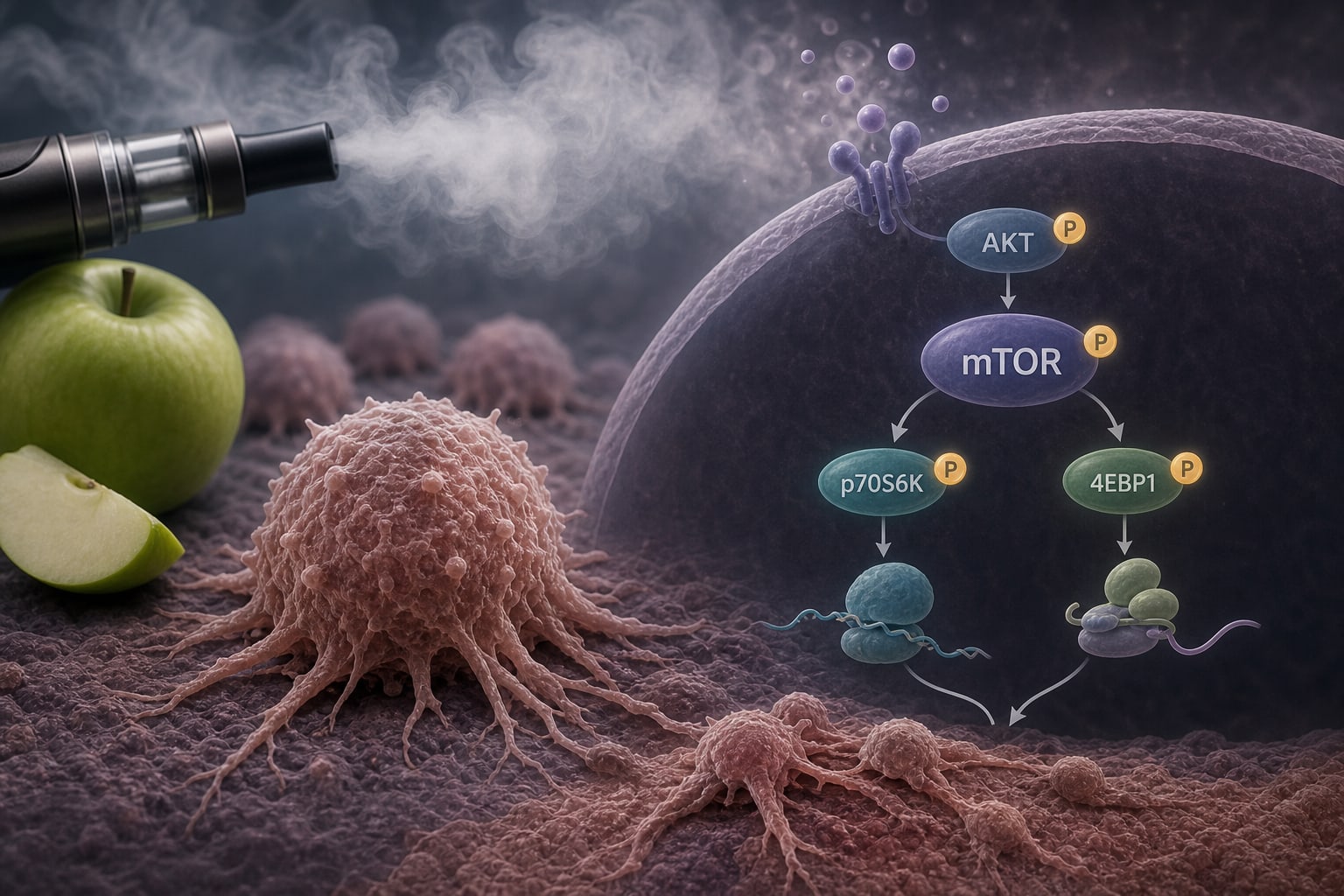
Impact of Sweet Apple E-cigarette Vapor on mTOR Pathway Activation in Oral Squamous Cell Carcinoma Cell Lines
-
By
-
Kristina Vu
-
Logan Ponder
-
Ryan Kinney
-
Ankita Chatterje
-
Harishma Sidhu
-
Neha Patel
-
Benjamin T. Bikman
-
Paul R. Reynolds
-
Juan A. Arroyo
-
July 21, 2026
Clinical Scorecard: Impact of Sweet Apple E-cigarette Vapor on mTOR Pathway Activation in Oral Squamous Cell Carcinoma Cell Lines
At a Glance
| Category | Detail |
|---|
| Condition | Oral Squamous Cell Carcinoma (OSCC) |
| Key Mechanisms | mTOR pathway activation and modulation by e-cigarette vapor extract |
| Target Population | Individuals exposed to e-cigarette vapor, particularly adolescents and young adults |
| Care Setting | Laboratory research on cancer cell lines |
Key Highlights
- OSCC is the most common head and neck cancer with high recurrence rates.
- Nicotine-containing Sweet Apple e-cigarette vapor significantly increased p-mTOR levels.
- Differential effects on mTOR pathway components were observed between OSCC cell lines.
- No significant changes in cell invasion were noted in either cell line.
- The study highlights the need for further investigation into e-cigarette impacts on cancer pathways.
Guideline-Based Recommendations
Diagnosis
- OSCC diagnosis should consider environmental exposures, including e-cigarette use.
Management
- Further research is needed to understand the implications of e-cigarette use in OSCC management.
Monitoring & Follow-up
- Monitoring of mTOR pathway activation may be relevant in OSCC research.
Risks
- E-cigarette use may pose additional risks for oral carcinogenesis.
Patient & Prescribing Data
Patients with or at risk for OSCC, particularly those using e-cigarettes.
Understanding the effects of e-cigarette vapor on cancer pathways may inform treatment strategies.
Clinical Best Practices
- Consider the role of e-cigarette exposure in OSCC risk assessment.
- Encourage cessation of e-cigarette use among at-risk populations.
Related Resources & Content