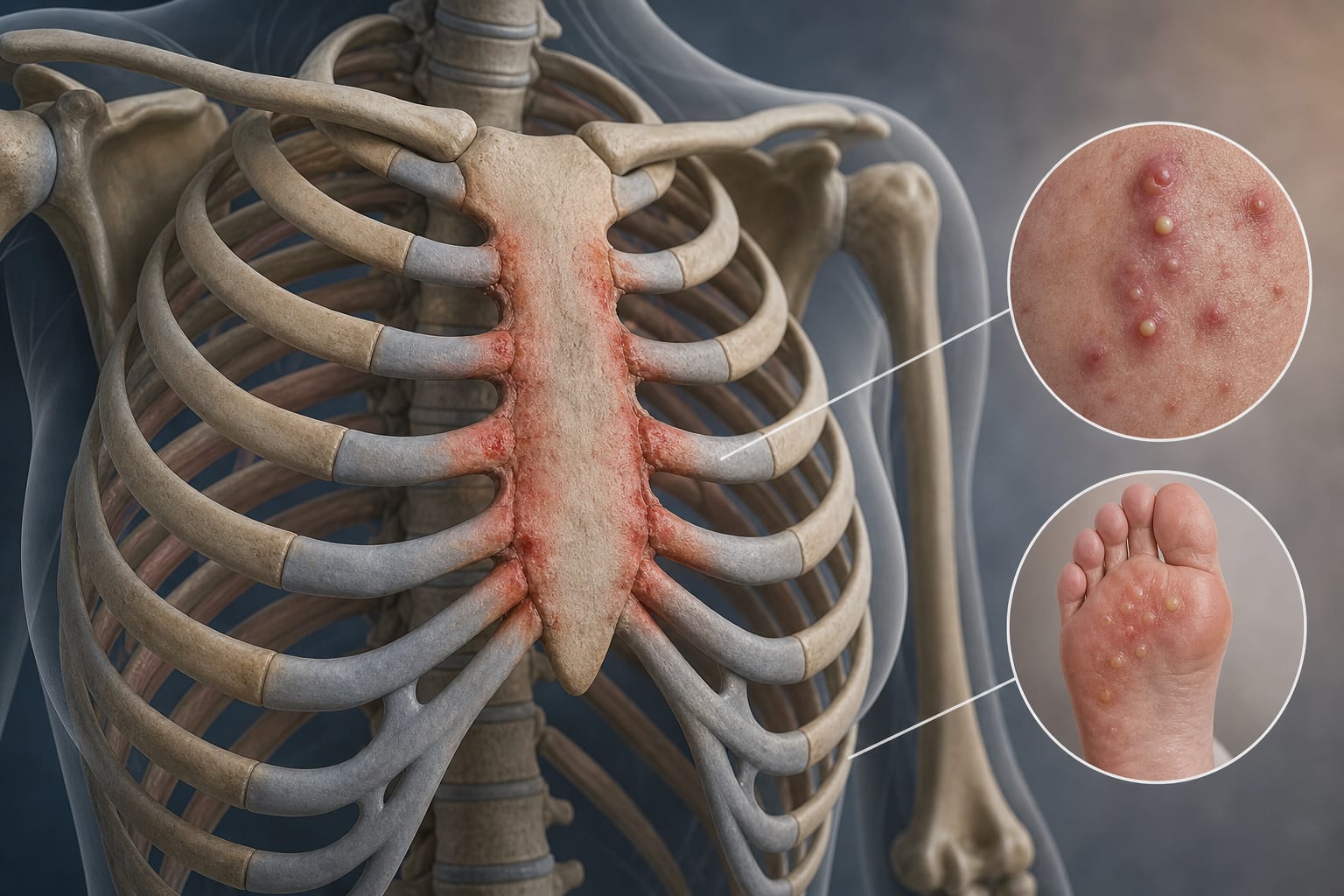
Risk prediction models for peristomal moisture-associated skin damage in China: a systematic review and meta-analysis
-
By
-
Haijia Liu
-
Mengzhen Huang
-
Yuanfan Yang
-
Fen Zhao
-
Huilin Long
-
Bo Huang
-
June 4, 2026
-
Clinical Scorecard: Evaluating Risk Prediction Models for Peristomal Moisture-Associated Skin Damage in China: A Systematic Review and Meta-Analysis
At a Glance
| Category | Detail |
|---|
| Condition | Peristomal Moisture-Associated Skin Damage (PMASD) |
| Key Mechanisms | Chronic contact with effluent and chemical irritants around the stoma |
| Target Population | Patients with enterostomy, particularly those with colorectal cancer |
| Care Setting | Clinical settings involving ostomy care management |
Key Highlights
- Incidence rate of PMASD ranges from 22.8% to 59.1%
- 11 prediction models evaluated with AUC values from 0.812 to 0.914
- Strongest predictors include history of radiotherapy, type of stoma, stoma opening height, and surgical wound in the plate area
- All models exhibited substantial risk of bias limiting clinical utility
- Future studies should focus on large-sample, multicenter, and high-quality prospective designs
Guideline-Based Recommendations
Diagnosis
- Utilize existing PMASD assessment tools for description and assessment
Management
- Implement tailored interventions to prevent PMASD based on risk factors
Monitoring & Follow-up
- Regular follow-up visits to manage ostomy care and monitor for PMASD
Risks
- High risk of bias in current prediction models limits their clinical application
Patient & Prescribing Data
Patients undergoing enterostomy, particularly those with colorectal cancer
Early identification and management of risk factors are critical for preventing PMASD
Clinical Best Practices
- Leverage risk prediction models to identify high-risk patients early
- Conduct comprehensive evaluations of existing PMASD prediction models for clinical applicability
- Encourage multidisciplinary approaches in ostomy care management
Related Resources & Content