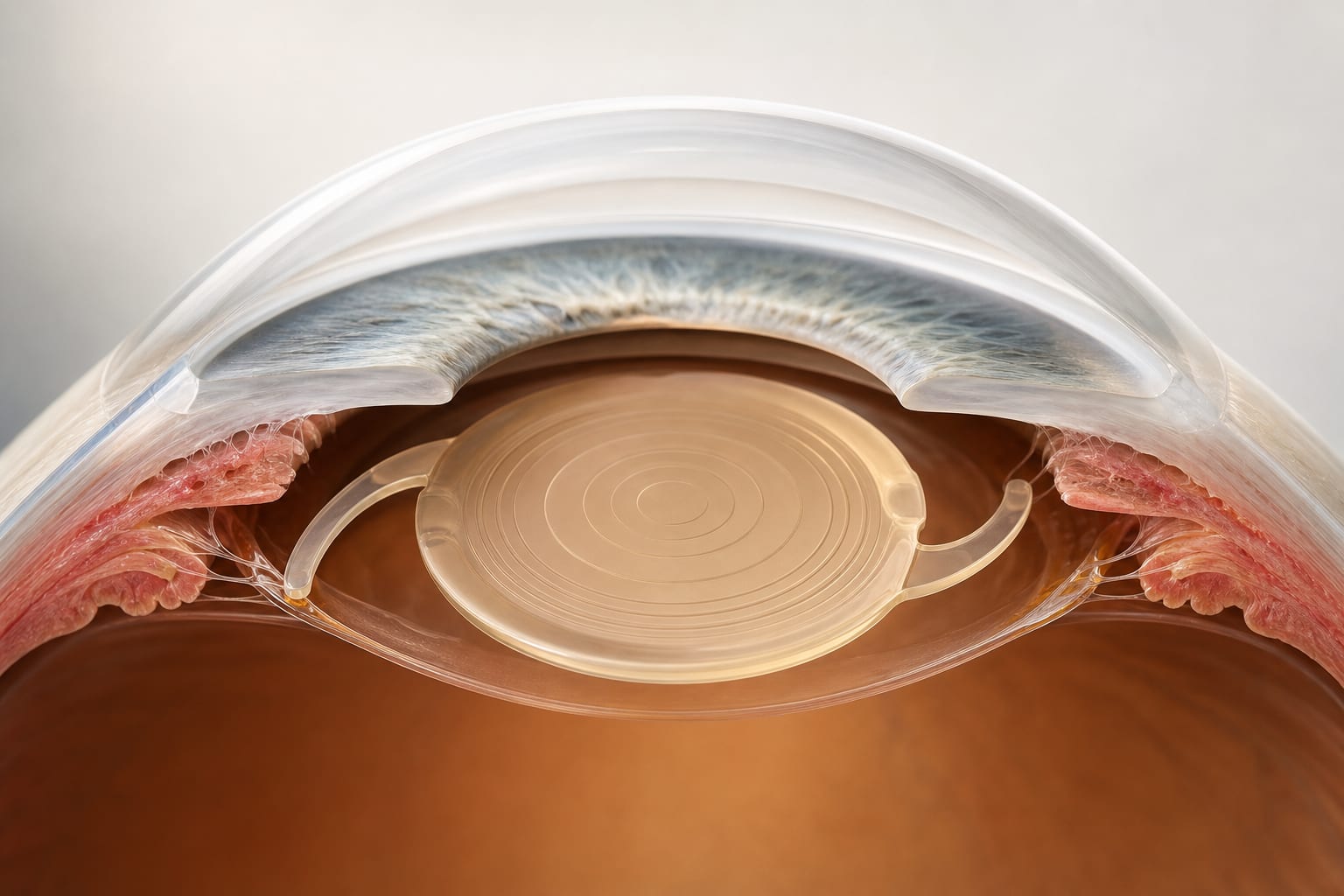
Dry Eye After Cataract Surgery
Scientific Reports study compares dry eye effects of phacoemulsification and MSICS
Clinical Scorecard: Dry Eye After Cataract Surgery
At a Glance
| Category | Detail |
|---|
| Condition | Dry Eye Disease (DED) |
| Key Mechanisms | Postoperative inflammation and ocular surface disruption due to surgical techniques. |
| Target Population | Patients aged ≥40 years undergoing cataract surgery. |
| Care Setting | Ophthalmology clinics performing cataract surgery. |
Key Highlights
- DED is a common cause of dissatisfaction post-cataract surgery.
- Both MSICS and phacoemulsification lead to acute deterioration in ocular surface health.
- Tear film stability is significantly lower in the MSICS group postoperatively.
- Recovery of ocular surface health is incomplete by Day 60.
- Routine screening tools like OSDI and TBUT are effective for monitoring.
Guideline-Based Recommendations
Diagnosis
- Use OSDI, Schirmer test, and TBUT for assessing dry eye preoperatively and postoperatively.
Management
- Consider routine topical steroid/antibiotic regimen to mitigate MGD post-surgery.
Monitoring & Follow-up
- Integrate OSDI, fluorescein TBUT, and Schirmer into perioperative care.
Risks
- Increased risk of persistent dry eye symptoms and meibomian gland dysfunction post-surgery.
Patient & Prescribing Data
Patients undergoing cataract surgery, particularly those with pre-existing dry eye conditions.
Postoperative DED may persist beyond the early inflammatory phase, necessitating ongoing assessment.
Clinical Best Practices
- Monitor ocular surface health closely in the postoperative period.
- Educate patients about the potential for prolonged dry eye symptoms after surgery.
- Tailor postoperative care based on the surgical technique used.
Related Resources & Content