Development and feasibility testing of a dynamic image-derived simulation framework for assessing left atrioventricular valve repair strategies - Scorecard - MDSpire

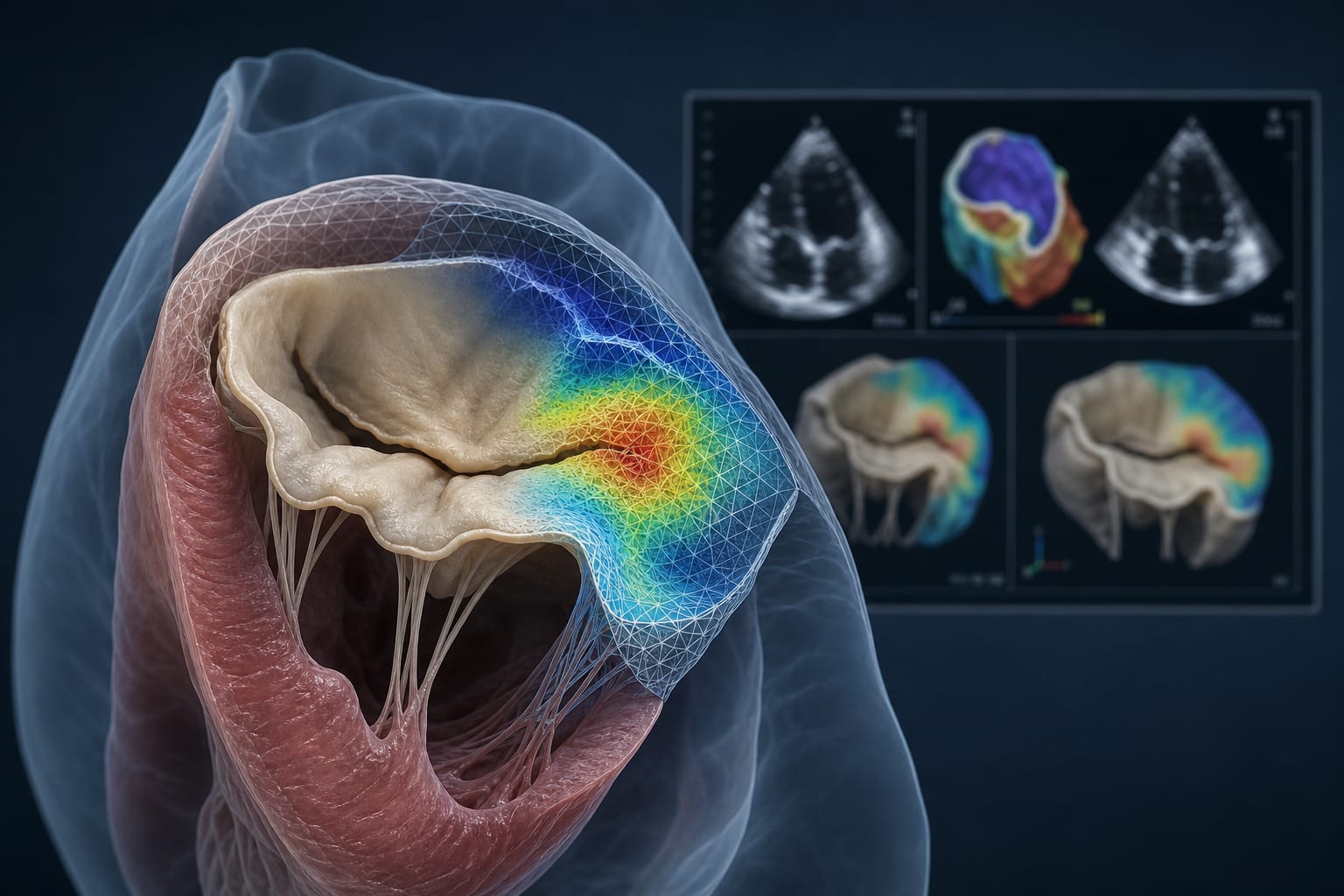
Development and feasibility testing of a dynamic image-derived simulation framework for assessing left atrioventricular valve repair strategies

  • By

  • Stephen Ching

  • Christopher Zelonis

  • Christian Herz

  • Patricia Sabin

  • Matthew Daemer

  • Muhammad Nuri

  • Yan Wang

  • Devin W. Laurence

  • Jonathan M. Chen

  • Lindsay S. Rogers

  • Michael D. Quartermain

  • John Moore

  • Terry Peters

  • Elvis Chen

  • Matthew A. Jolley

  • June 8, 2026

  • 0 min

Share

Clinical Scorecard: Creation and evaluation of a dynamic simulation framework based on imaging for analyzing strategies in left atrioventricular valve repair

At a Glance

CategoryDetail
Condition
Key MechanismsSurgical repair of a common atrioventricular valve to create a mitral-equivalent left atrioventricular valve.
Target Population
Care Setting

Key Highlights

  • 5-20% of LAVV repairs require reintervention due to left atrioventricular valve regurgitation.
  • Key predictors of reintervention include age at repair younger than 72 months and multiple regurgitant jets.

Guideline-Based Recommendations

Diagnosis

  • Use transesophageal echocardiography to assess valve function and morphology.

Management

  • Repair regurgitating valves in pediatric patients to accommodate growth and avoid complications.

Monitoring & Follow-up

  • Regular follow-up with echocardiography to monitor valve function post-repair.

Risks

  • Reintervention carries significant risks, including poor long-term outcomes and increased morbidity.

Patient & Prescribing Data

Children with atrioventricular canal defects, particularly those with Down Syndrome.

Clinical Best Practices

  • Utilize 3D echocardiography for detailed analysis of cardiac structures.

Related Resources & Content

Original Source(s)

Related Content