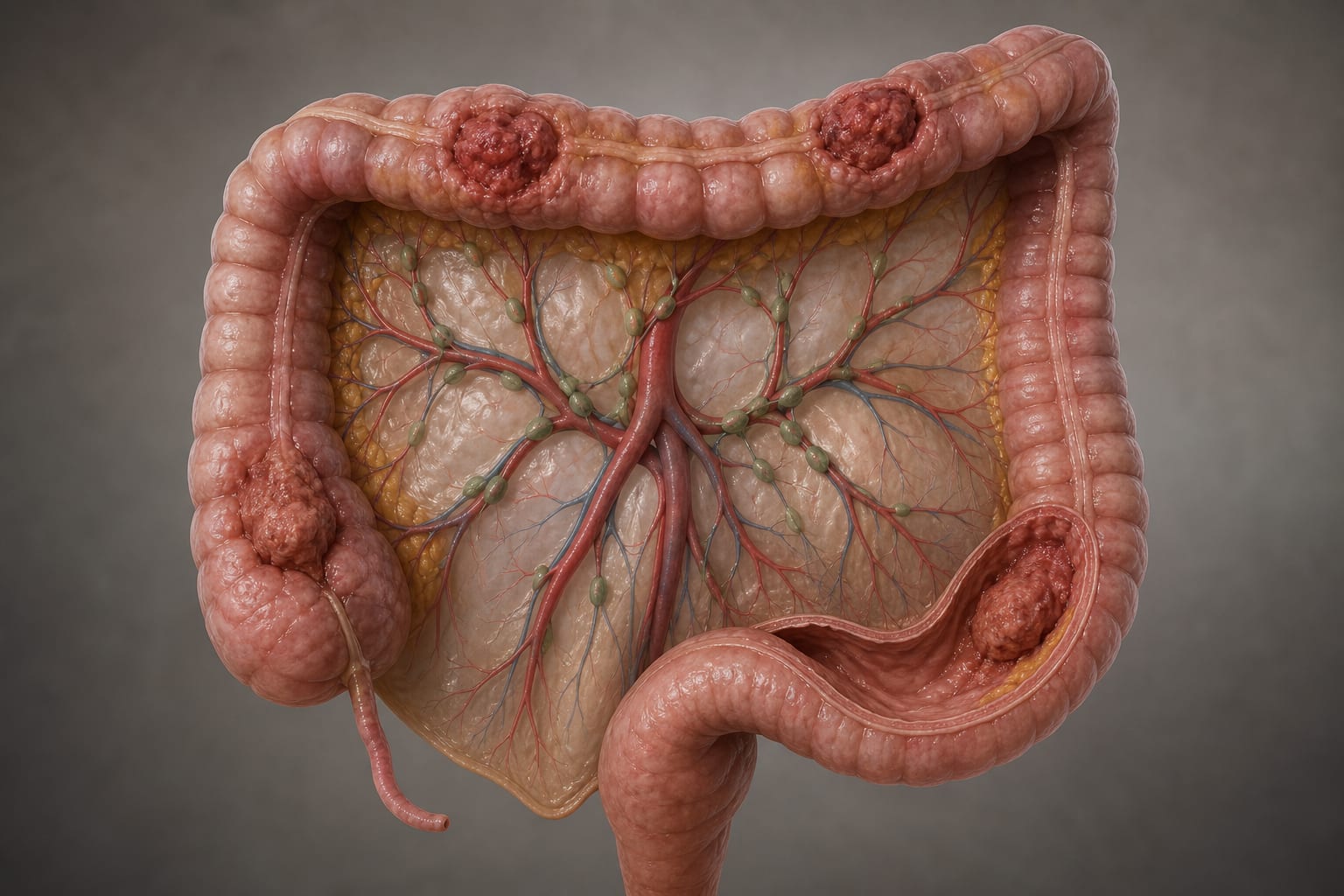
A Case Report of Synchronous Multiple Primary Colon Cancers: A Rare Presentation Often Overlooked
-
By
-
Xinmin Bao
-
Haoru Liu
-
Ming Wu
-
Xianwei Liu
-
September 15, 2026
Clinical Scorecard: A Case Report of Synchronous Multiple Primary Colon Cancers: A Rare Presentation Often Overlooked
At a Glance
| Category | Detail |
|---|
| Condition | Multiple Primary Colon Cancer |
| Key Mechanisms | Presence of at least two primary colon cancers in one patient, often associated with endoscopic obstruction. |
| Target Population | Elderly patients, particularly those with risk factors such as familial adenomatous polyposis, Lynch syndrome, and inflammatory bowel disease. |
| Care Setting | Surgical oncology and gastroenterology |
Key Highlights
- Synchronous colon cancer (SCC) is defined as primary colon cancers identified concurrently or within 6 months of the initial diagnosis.
- Endoscopic obstruction can prevent complete assessment of proximal colonic lesions.
- Comprehensive intraoperative exploration is critical for accurate diagnosis and management.
- Patients with SCC generally have poorer prognoses compared to those with isolated colon cancer.
Guideline-Based Recommendations
Diagnosis
- Utilize enhanced imaging techniques such as CT for preoperative assessment.
- Conduct thorough intraoperative exploration to identify synchronous lesions.
Management
- Perform laparoscopic surgeries such as sigmoidectomy and hemicolectomy as indicated.
Monitoring & Follow-up
- Regular follow-up with imaging and tumor markers post-surgery.
Risks
- Increased risk of missed diagnoses due to endoscopic obstruction.
Patient & Prescribing Data
Elderly patients with multiple primary colon cancers.
Surgical intervention is necessary for managing obstructive colon cancer and ensuring comprehensive evaluation.
Clinical Best Practices
- Engage multidisciplinary teams for comprehensive patient management.
- Ensure preoperative optimization of patient conditions, such as correcting anemia.
Related Resources & Content