Evaluation of the Learning Curve Associated with Neuroendoscopic Evacuation for Basal Ganglia Hemorrhage
-
By
-
Xuqiang Wang
-
Fei Gao
-
Qiang Zhu
-
Yunfeng Jia
-
Ganggang She
-
June 23, 2026
Clinical Scorecard: Evaluation of the Learning Curve Associated with Neuroendoscopic Evacuation for Basal Ganglia Hemorrhage
At a Glance
| Category | Detail |
|---|
| Condition | Basal Ganglia Hemorrhage |
| Key Mechanisms | Neuroendoscopic evacuation as a minimally invasive surgical technique. |
| Target Population | Patients aged 18–80 with hypertensive intracerebral hemorrhage in the basal ganglia. |
| Care Setting | Single-center observational study in a neurosurgery department. |
Key Highlights
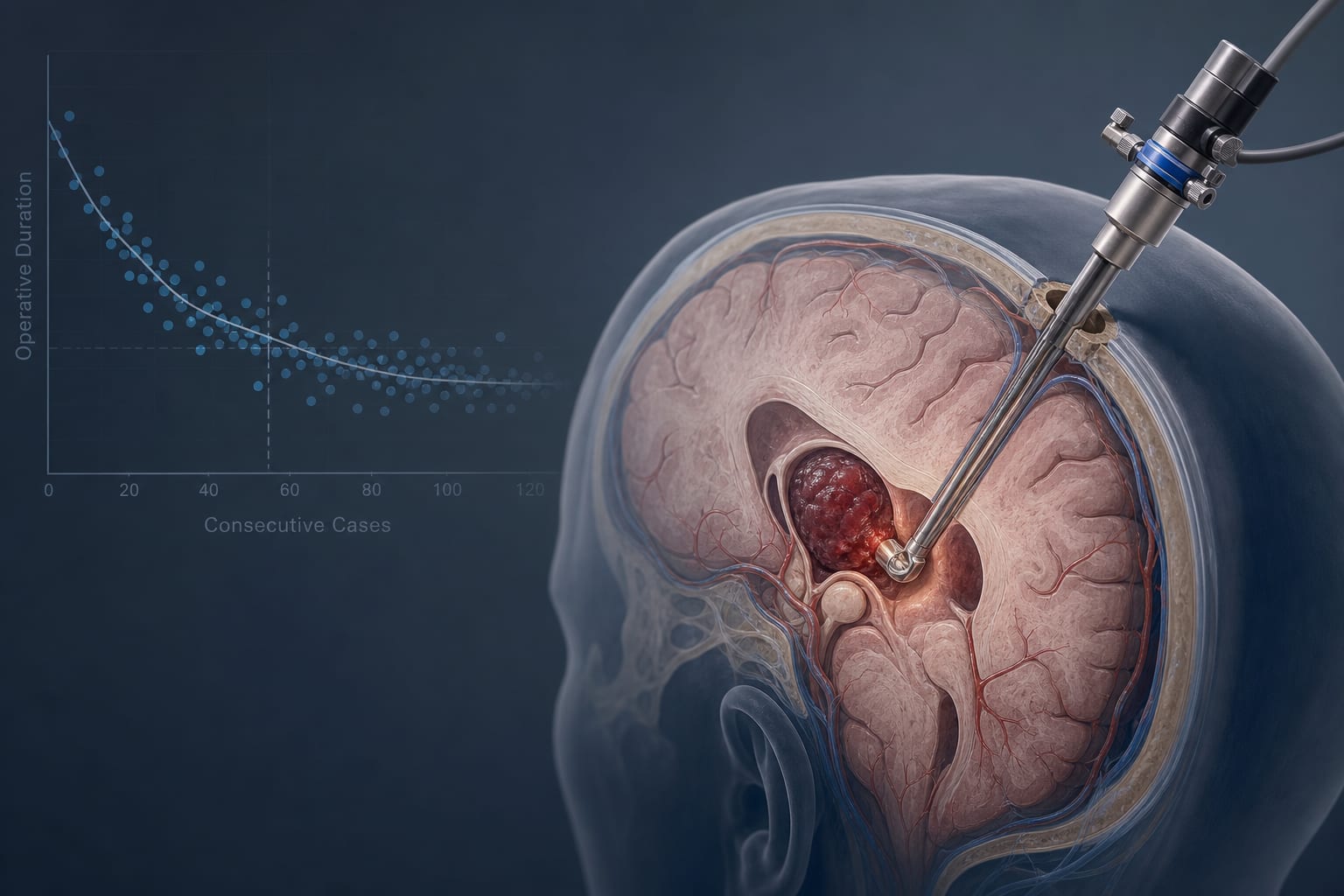
- Learning curve identified with a significant inflection point at the 25th case.
- Operative time decreased significantly across learning phases.
- Hematoma evacuation rate improved significantly from initial to proficiency phases.
- Use of electrocoagulation and hemostatic materials decreased significantly.
- Overall complication rates reduced with improved postoperative imaging indicators.
Guideline-Based Recommendations
Diagnosis
- Confirm diagnosis of hypertensive intracerebral hemorrhage via imaging.
Management
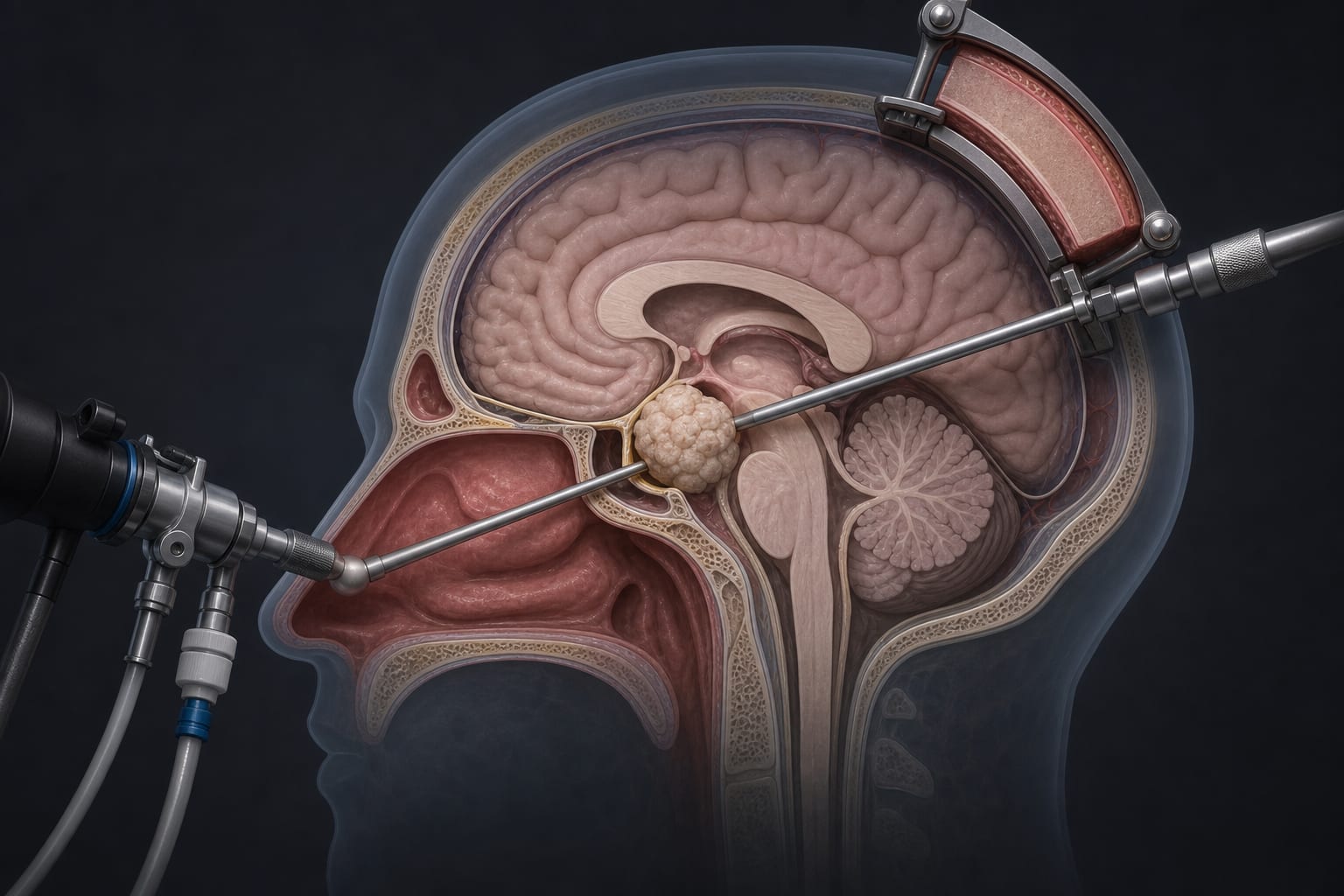
- Utilize neuroendoscopic evacuation for hematoma located in the basal ganglia.
Monitoring & Follow-up
- Monitor operative time and hematoma evacuation rates across learning phases.
Risks
- Consider risks associated with technical complexity and potential complications.
Patient & Prescribing Data
120 consecutive patients with basal ganglia hemorrhage.
Surgical outcomes improve significantly with experience, particularly after 25 cases.
Clinical Best Practices
- Implement standardized operational procedures for neuroendoscopic evacuation.
- Focus on training to achieve technical proficiency in neuroendoscopic techniques.
Related Resources & Content