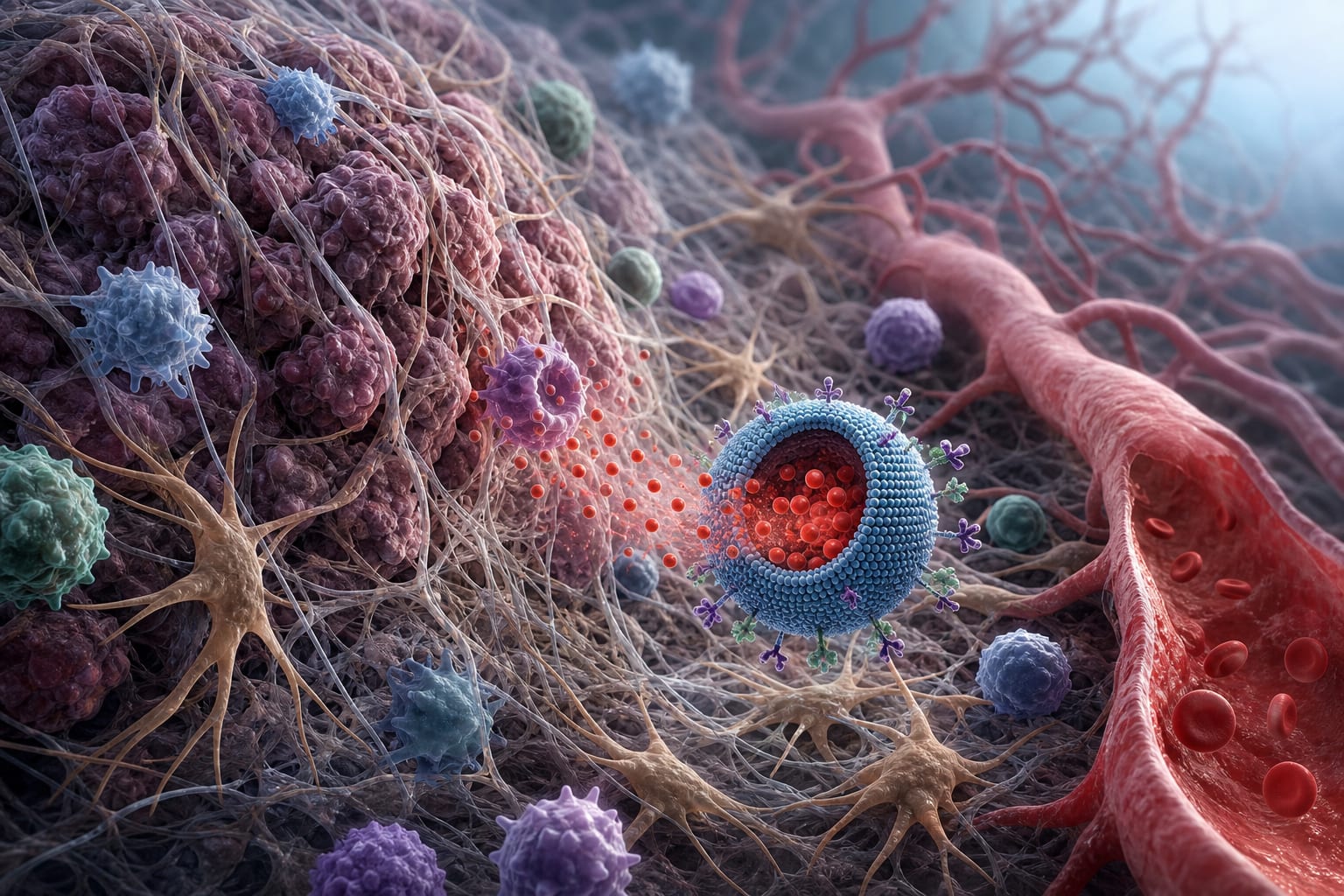
Tumor microenvironment conversion through intelligent nanomedicine: a paradigm shift in overcoming chemoresistance
-
By
-
Maliheh Hasannia
-
Mahdi Abounoori
-
Fatemeh Mahmoudian
-
Maryam Shirzad
-
Abbas Rahdar
-
Selamu Duguna
-
Sadanand Pandey
-
June 17, 2026
-
Clinical Scorecard: Transforming the Tumor Microenvironment with Advanced Nanomedicine: A New Approach to Address Chemoresistance
At a Glance
| Category | Detail |
|---|
| Condition | Chemoresistance in cancer |
| Key Mechanisms | Tumor microenvironment (TME) factors such as hypoxia, acidic pH, abnormal vasculature, elevated interstitial fluid pressure, immune suppression, and dense extracellular matrix deposition. |
| Target Population | Cancer patients experiencing chemoresistance |
| Care Setting | Oncology |
Key Highlights
- TME plays a critical role in therapeutic resistance.
- Intelligent nanomedicine can modulate the TME to enhance drug delivery.
- Stimuli-responsive nanocarriers improve drug accumulation and penetration.
- Nanomedicine strategies can reverse chemoresistance.
- TME-targeted approaches represent a shift in cancer therapeutics.
Guideline-Based Recommendations
Diagnosis
- Assess the tumor microenvironment characteristics.
Management
- Utilize intelligent nanomedicine for targeted therapy.
Monitoring & Follow-up
- Evaluate changes in TME during treatment.
Risks
- Consider potential systemic toxicity from nanomedicine.
Patient & Prescribing Data
Patients with solid tumors exhibiting chemoresistance.
Nanomedicine can enhance therapeutic efficacy while minimizing side effects.
Clinical Best Practices
- Incorporate TME modulation strategies in treatment plans.
- Monitor interstitial fluid pressure and its impact on drug delivery.
- Utilize multifunctional nanosystems for improved outcomes.
Related Resources & Content