Advances in Janus kinase inhibitors for vitiligo
-
By
-
Xinyu Wen
-
Ge Yang
-
Jing Xue
-
Lixia Zhang
-
July 7, 2026
-
Clinical Scorecard: Recent Developments in Janus Kinase Inhibitors for the Treatment of Vitiligo
At a Glance
| Category | Detail |
|---|
| Condition | Vitiligo |
| Key Mechanisms | Autoimmune destruction of melanocytes influenced by genetic and environmental factors. |
| Target Population | Individuals with vitiligo of all ages. |
| Care Setting | Dermatology clinics and specialized treatment centers. |
Key Highlights
- Vitiligo is characterized by hypopigmented or depigmented macules and patches.
- Conventional treatments have limited long-term efficacy.
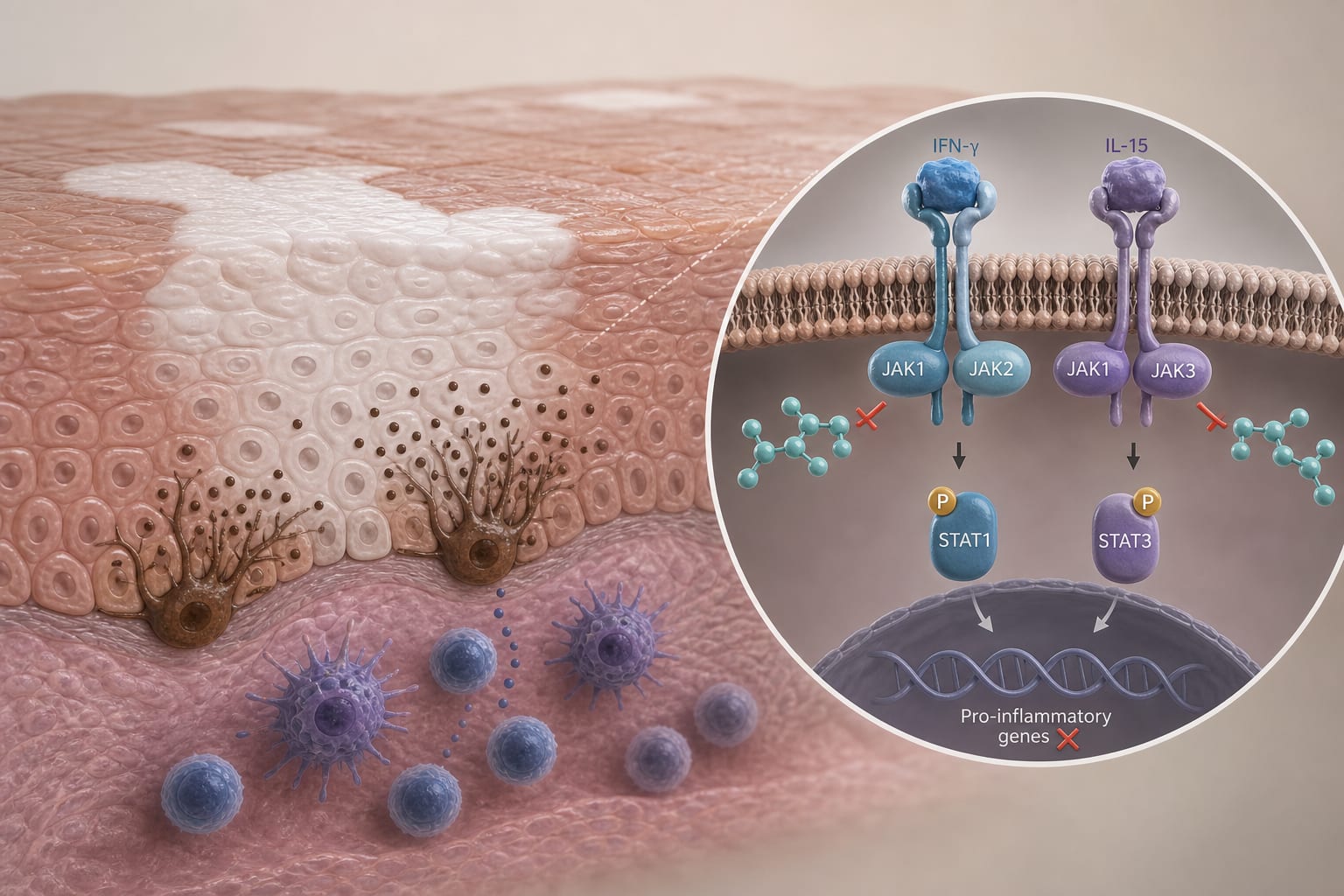
- JAK inhibitors show promise in promoting repigmentation.
- Three JAK inhibitors evaluated: ruxolitinib, upadacitinib, and abrocitinib.
- Emerging evidence supports the efficacy and safety of JAK inhibitors.
Guideline-Based Recommendations
Diagnosis
- Diagnosis based on clinical evaluation and characteristic skin findings.
Management
- Consider JAK inhibitors for patients with inadequate response to conventional therapies.
Monitoring & Follow-up
- Regular assessment of treatment response and side effects.
Risks
- Potential adverse events associated with JAK inhibitors.
Patient & Prescribing Data
Patients diagnosed with vitiligo, including both non-segmental and segmental types.
JAK inhibitors may offer new therapeutic options for repigmentation.
Clinical Best Practices
- Utilize a comprehensive approach combining JAK inhibitors with other therapeutic modalities.
- Monitor psychosocial impact and quality of life in patients.
Related Resources & Content