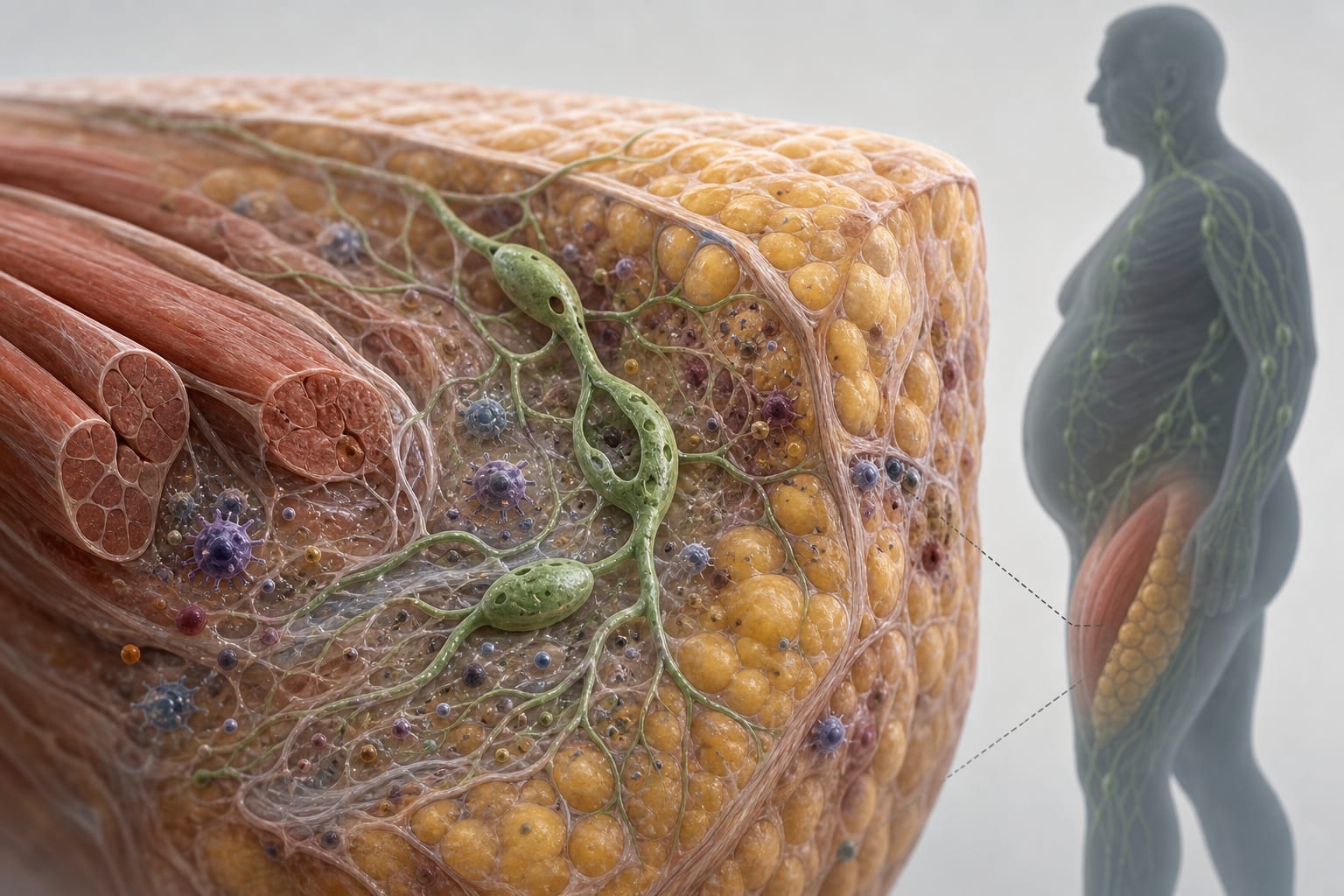
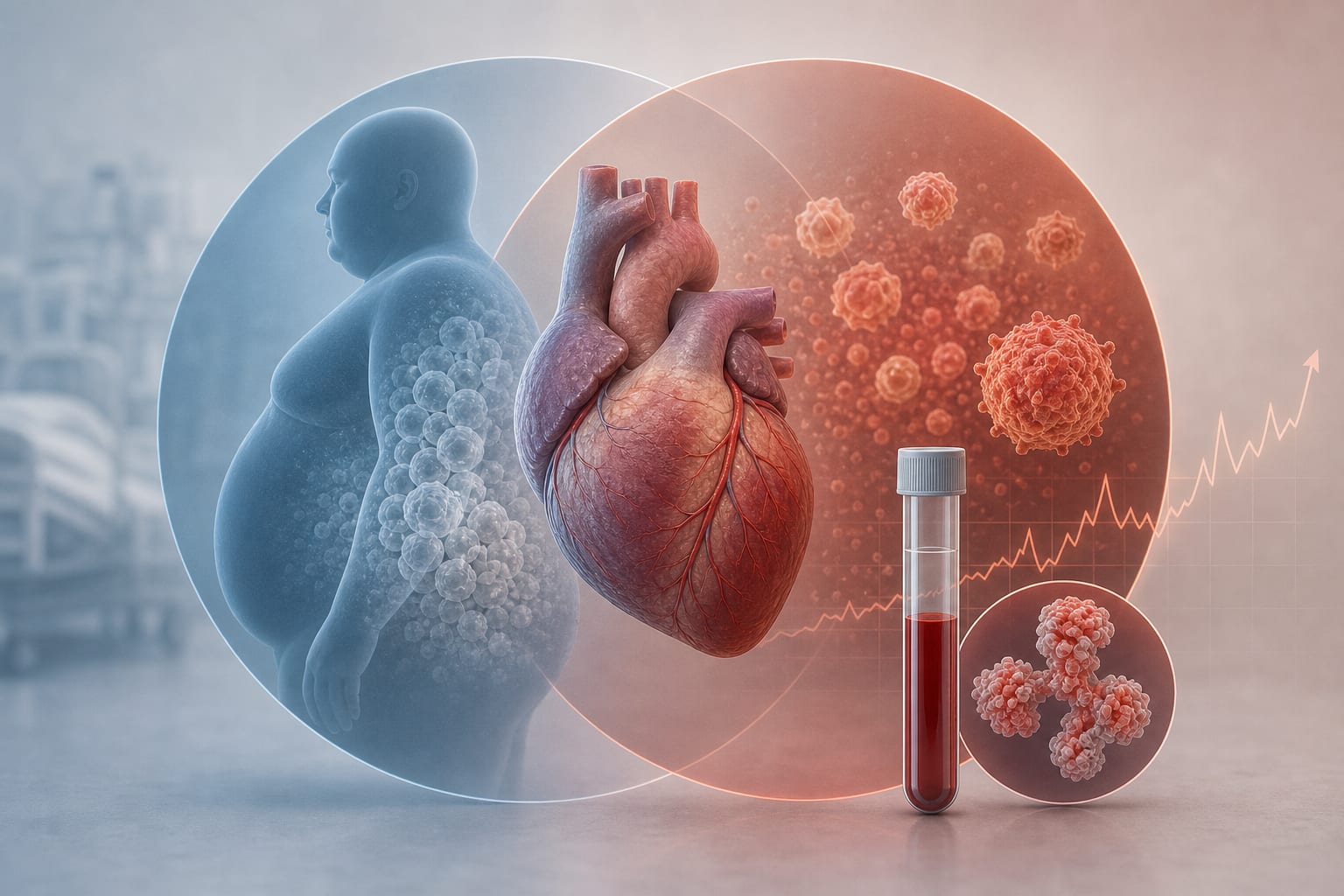
Lymphatic dysfunction and impaired interstitial clearance in sarcopenic obesity: a hypothesis-generating review
By
Chunli Yu
Xinyu Zou
Rongli Dai
Yan Yang
July 2, 2026
Clinical Scorecard: Impaired Interstitial Clearance and Lymphatic Dysfunction in Sarcopenic Obesity: A Review to Generate Hypotheses
At a Glance
Category Detail
Condition Sarcopenic Obesity Key Mechanisms Chronic low-grade inflammation, insulin resistance, ectopic lipid accumulation, mitochondrial dysfunction, impaired lymphatic function. Target Population Older adults with excess adiposity. Care Setting Public health concern related to aging and obesity.
Key Highlights
Sarcopenic obesity is characterized by excess adiposity and reduced skeletal muscle mass. Impaired lymphatic function may sustain a pro-inflammatory and pro-lipotoxic interstitial environment. The condition is associated with poorer clinical outcomes compared to obesity or sarcopenia alone. Ageing and obesity jointly impair lymphatic function, affecting interstitial homeostasis. A clearance-centered framework is proposed to understand the mechanisms in sarcopenic obesity. Guideline-Based Recommendations
Diagnosis
Diagnosis should consider adiposity, muscle mass, and muscle function together. Management
Monitoring & Follow-up
Risks
Increased risk of reduced physical performance, falls, fractures, cardiometabolic complications, and mortality. Patient & Prescribing Data
Older adults with sarcopenic obesity.
Focus on addressing both adipose tissue dysfunction and skeletal muscle impairment.
Clinical Best Practices
Utilize a comprehensive approach for diagnosis that includes muscle strength assessment. Consider the interplay between adipose tissue, lymphatic system, and skeletal muscle in management. Related Resources & Content