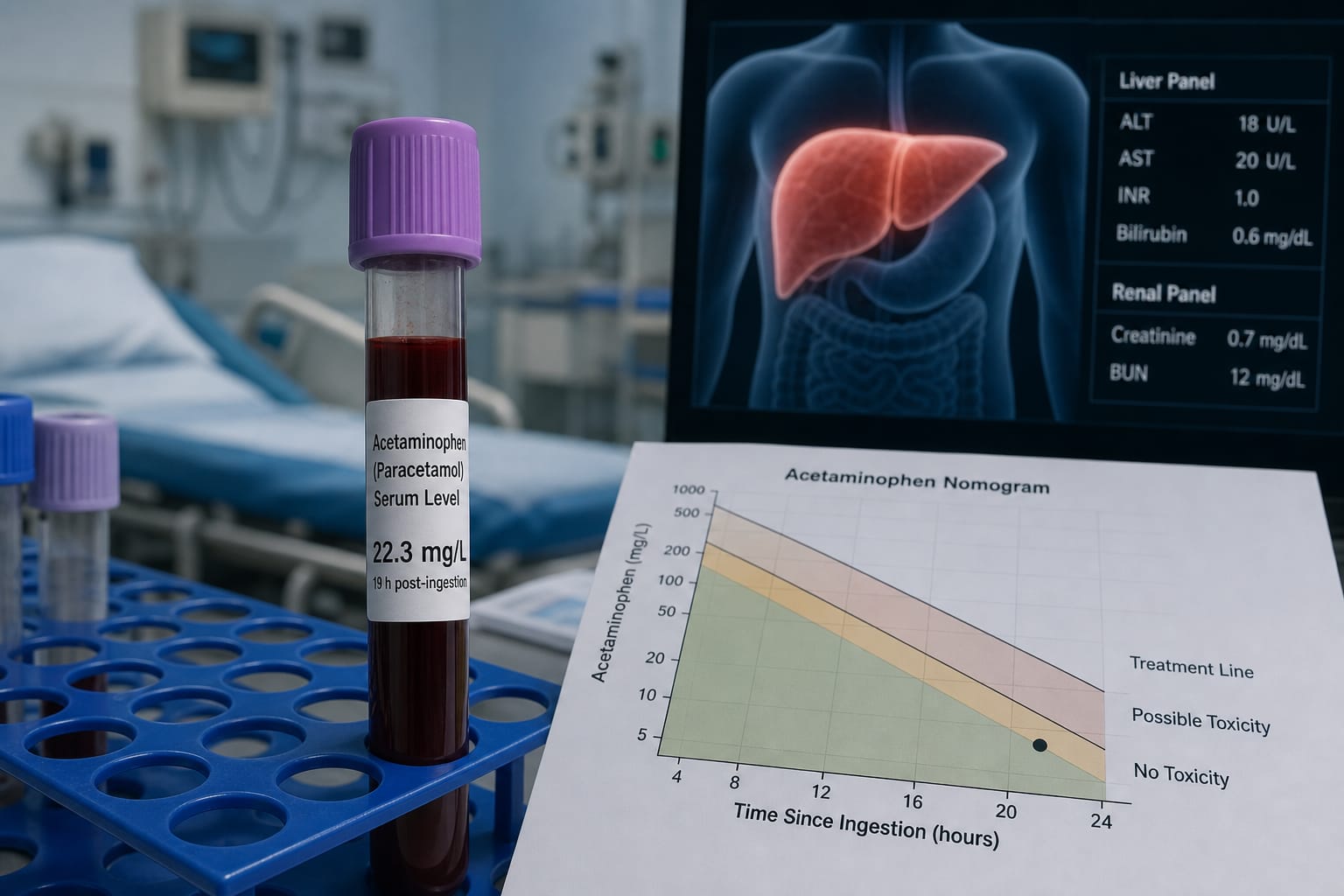
Ambiguous Timing of Acetaminophen Intake in a Case of Adolescent Analgesic Overdose: A Clinical Report
-
By
-
Wael A. Alghamdi
-
July 8, 2026
Clinical Scorecard: Ambiguous Timing of Acetaminophen Intake in a Case of Adolescent Analgesic Overdose: A Clinical Report
At a Glance
| Category | Detail |
|---|
| Condition | Acetaminophen Overdose |
| Key Mechanisms | Acetaminophen toxicity can lead to drug-induced liver injury; N-acetylcysteine is the antidote. |
| Target Population | Adolescents with suspected acetaminophen overdose |
| Care Setting | Emergency Department |
Key Highlights
- A 16-year-old male ingested 6,000 mg of acetaminophen and multiple NSAIDs.
- Measured acetaminophen concentration was 22.3 mg/L, inconsistent with reported dose.
- N-acetylcysteine was initiated due to uncertain timing of ingestion.
- Normal aminotransferases indicated no acute liver injury at presentation.
- Patient recovered uneventfully after treatment.
Guideline-Based Recommendations
Diagnosis
- Assess acetaminophen concentration in cases of suspected overdose.
- Use the Rumack–Matthew nomogram cautiously in cases of staggered ingestion.
Management
- Initiate N-acetylcysteine treatment based on measured acetaminophen levels.
Monitoring & Follow-up
- Monitor liver function tests and renal function during treatment.
Risks
- Consider potential for false-positive acetaminophen concentrations due to hyperbilirubinemia.
Patient & Prescribing Data
Adolescents presenting with analgesic overdose.
Standard three-bag intravenous NAC protocol was followed.
Clinical Best Practices
- Prioritize measured acetaminophen concentrations over reported doses.
- Evaluate for potential confounding factors such as hyperbilirubinemia.
Related Resources & Content