Cardiometabolic Index: a novel prognostic biomarker for recurrent stroke risk in acute ischemic stroke patients
-
By
-
Yue Wang
-
Yingying Ding
-
Min Han
-
Yehong Liu
-
Tao Xin
-
June 10, 2026
-
Clinical Scorecard: Cardiometabolic Index: An Innovative Prognostic Marker for Assessing Recurrent Stroke Risk in Patients with Acute Ischemic Stroke
At a Glance
| Category | Detail |
|---|
| Condition | |
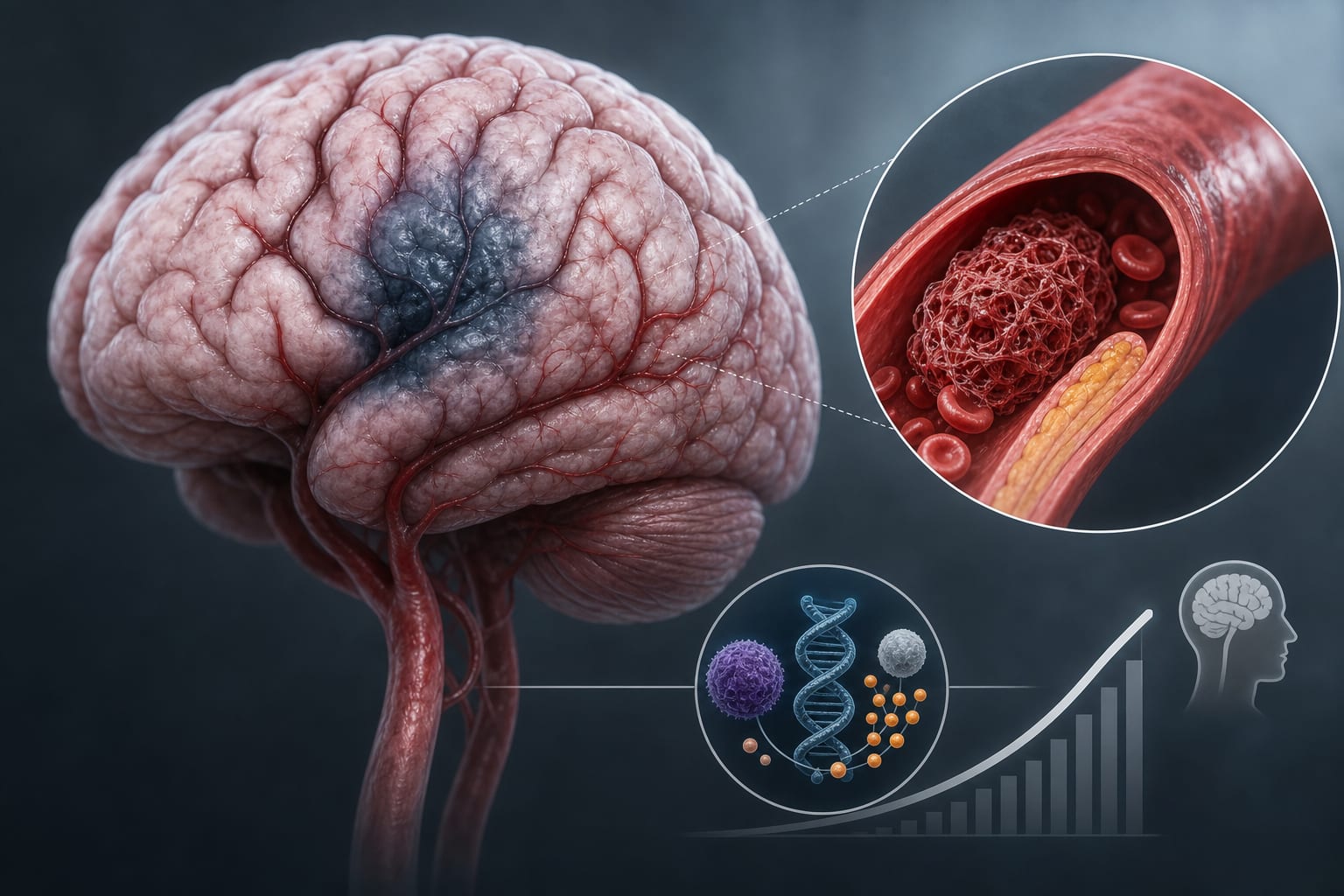
| Key Mechanisms | Dysregulated lipid metabolism and immune-inflammatory responses (source needed). |
| Target Population | |
| Care Setting | |
Key Highlights
- CMI is a reliable prognostic biomarker for predicting adverse cerebrovascular events in AIS patients post-thrombolysis (source needed).
- A high CMI value (≥0.80) correlates with increased risk of major adverse cerebrovascular events (MACEs) (source needed).
- Systemic inflammation partially mediates the predictive effect of CMI on adverse outcomes (source needed).
- CMI outperforms traditional biomarkers in predicting long-term outcomes for AIS patients (source needed).
Guideline-Based Recommendations
Diagnosis
- Utilize CMI as a prognostic marker for assessing recurrent stroke risk (source needed).
Management
- Incorporate CMI in risk stratification and individualized treatment strategies for AIS patients (source needed).
Monitoring & Follow-up
- Monitor CMI values to assess the risk of MACEs in post-thrombolytic therapy patients (source needed).
Risks
- High CMI values are associated with increased risk of recurrent strokes and adverse cerebrovascular events (source needed).
Patient & Prescribing Data
588 patients with Acute Ischemic Stroke who underwent thrombolytic therapy.
CMI reflects both metabolic and inflammatory status, aiding in the optimization of post-discharge care.
Clinical Best Practices
- Employ CMI for comprehensive risk assessment in AIS patients (source needed).
- Consider systemic inflammation markers alongside CMI for better prognostic accuracy (source needed).
Related Resources & Content