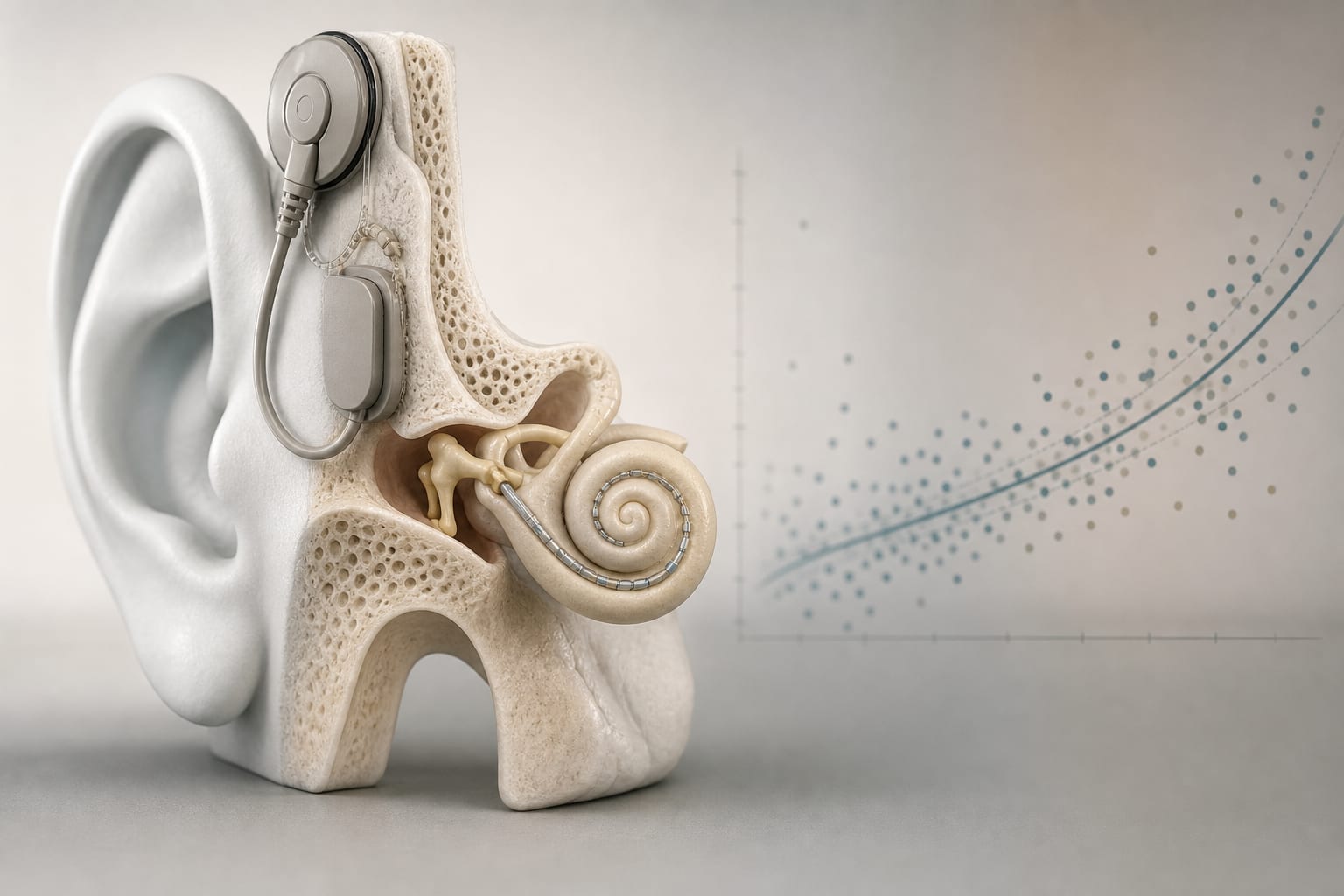
A predictive equation for operative time estimation in cochlear implant surgery
-
By
-
Mariam Aljehani
-
Faris Abdulaziz Albassam
-
Fida Al-Muhawas
-
Abdulrahman Hagr
-
July 13, 2026
Clinical Scorecard: A Model for Estimating Surgical Duration in Cochlear Implant Procedures
At a Glance
| Category | Detail |
|---|
| Condition | Cochlear Implant Surgery |
| Key Mechanisms | Predictive model for estimating surgical duration based on clinical and procedural factors. |
| Target Population | Cochlear implant patients, both adult and pediatric. |
| Care Setting | Tertiary academic institution |
Key Highlights
- The round window surgical approach and sealing of the insertion route were linked to shorter surgical durations.
- Operating times are affected by gender, age, unilateral implantation, and surgeon combinations.
- A predictive equation model was developed, associating male gender, unilateral implantation, and round window technique with shorter surgical times.
- The model offers a simple, internally validated alternative to complex machine-learning approaches.
- A bilingual web-based calculator was developed to estimate surgical time using patient and procedural variables.
Guideline-Based Recommendations
Diagnosis
Management
Monitoring & Follow-up
Risks
Patient & Prescribing Data
216 cochlear implant patients enrolled between 2019 and 2025.
Factors influencing surgical duration include gender, age, type of implantation, and surgical technique.
Clinical Best Practices
- Utilize the predictive model for surgical planning and resource allocation.
- Consider demographic and procedural factors when estimating surgical duration.
Related Resources & Content