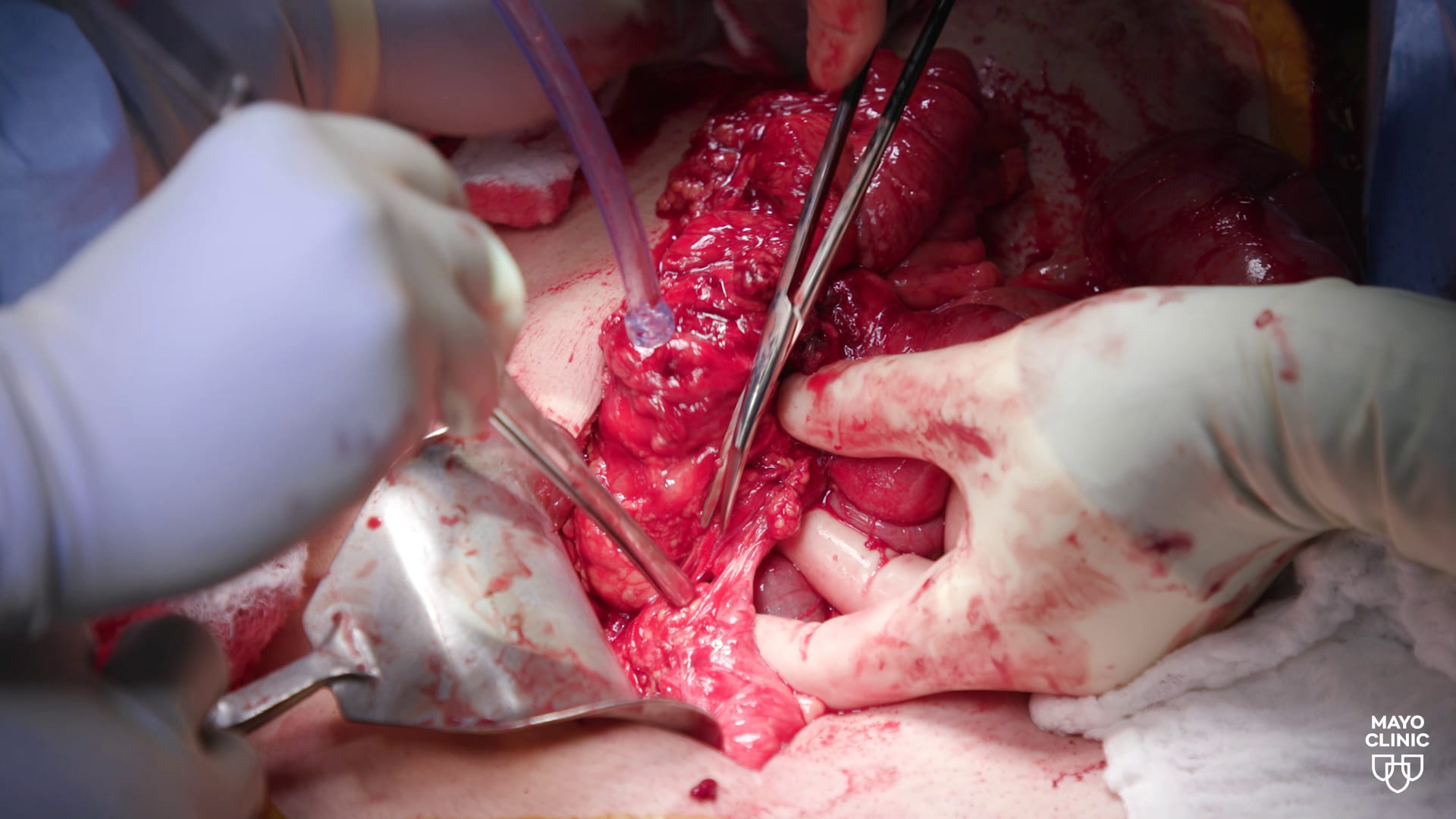
Fistulizing Crohn's disease
Luca Stocchi, M.D., a colorectal surgeon at Mayo Clinic in Florida, presents a surgical case involving a 53-year-old male with long-standing, fistulizing Crohn's disease. The patient had a prior open ileocolic resection and subsequently developed progressive weight loss and anemia.
Clinical Scorecard: Fistulizing Crohn's Disease
At a Glance
Category Detail
Condition Fistulizing Crohn's Disease
Key Mechanisms Inflammation leading to fistula formation and complications such as abscesses.
Target Population Adults with long-standing Crohn's disease and complications.
Care Setting Surgical intervention in a hospital setting.
Key Highlights
Patient had a history of open ileocolic resection and developed progressive weight loss and anemia. Colonoscopic biopsy revealed an inflammatory polyp near a colonic fistula. Surgical management involved resection of diseased bowel segments and closure of fistulas. Diverting ileostomy was created due to the complexity of the operation. Post-operative pathology assessment of resected specimens is planned.
Guideline-Based Recommendations
Diagnosis
Use colonoscopy and biopsy to assess for inflammatory changes and polyp formation.
Management
Surgical intervention is indicated for complex fistulas and significant complications.
Monitoring & Follow-up
Regular follow-up for weight, anemia, and signs of recurrence or complications.
Risks
Potential for abscess formation, bowel obstruction, and need for further surgeries.
Patient & Prescribing Data
Adults with chronic fistulizing Crohn's disease.
Limited use of medications; surgical management is preferred in complex cases.
Clinical Best Practices
Multidisciplinary approach for complex cases involving surgery. Consideration of diverting ileostomy in complicated surgical scenarios.
References