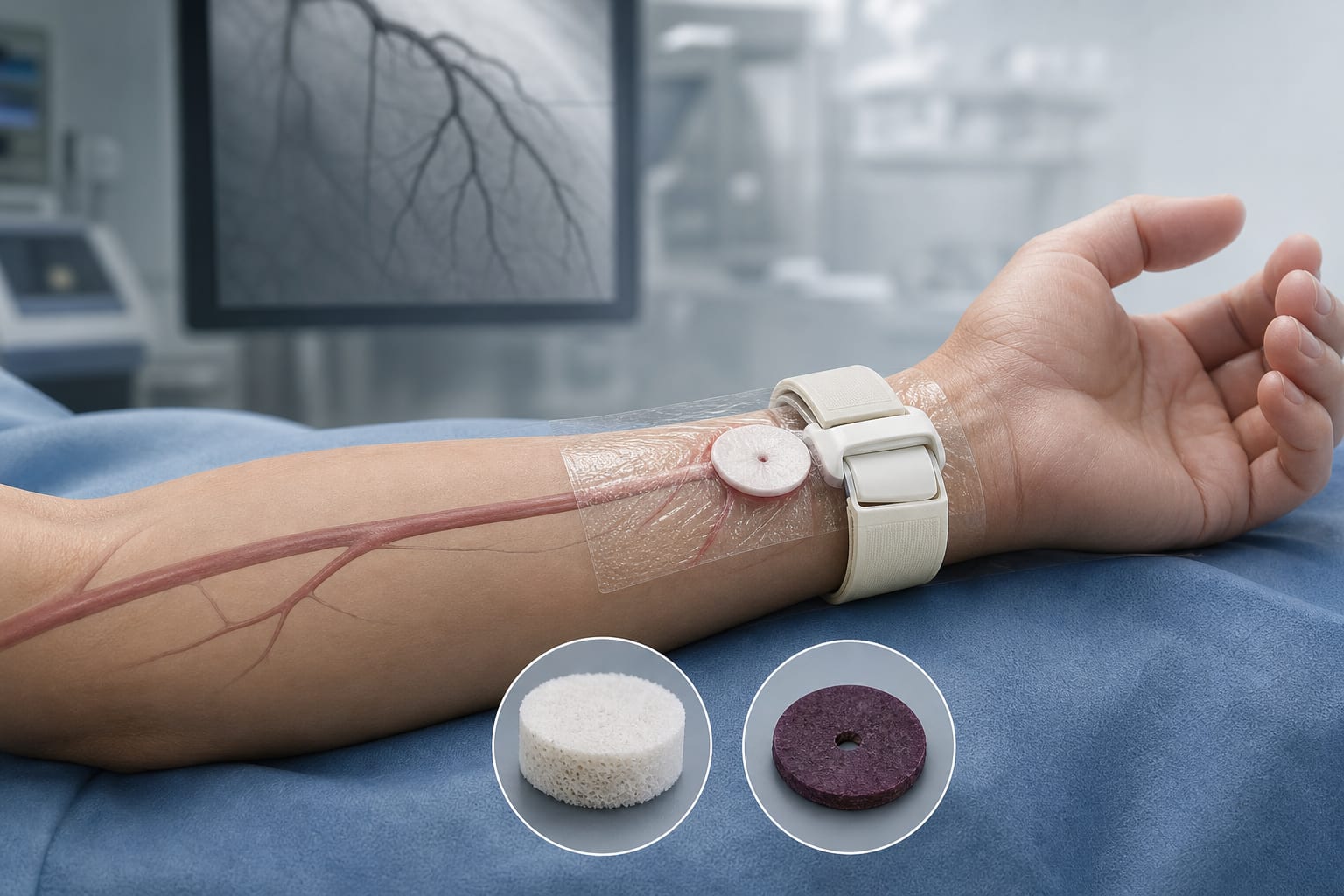
Endovascular Management of Acute External Iliac Artery Rupture via Transradial Access in Patients with Hemorrhagic Shock
-
By
-
Shadi Halabi
-
September 24, 2026
Clinical Scorecard: Endovascular Management of Acute External Iliac Artery Rupture via Transradial Access in Patients with Hemorrhagic Shock
At a Glance
| Category | Detail |
|---|
| Condition | Acute External Iliac Artery Rupture |
| Key Mechanisms | Transradial access for endovascular repair |
| Target Population | Patients with hemorrhagic shock and iliac artery injury |
| Care Setting | Emergent catheterization laboratory |
Key Highlights
- Transradial access is a feasible bailout strategy for iliac artery rupture.
- Lower incidence of vascular complications compared to femoral access.
- Successful deployment of a covered stent eliminated active contrast extravasation.
- Procedure duration was 14 minutes with no complications at the access site.
- Patient discharged after 14 days with improved hemodynamic status.
Guideline-Based Recommendations
Diagnosis
- Emergency angiography to identify active bleeding.
Management
- Transradial endovascular repair for iliac artery rupture.
Monitoring & Follow-up
- Continuous hemodynamic monitoring post-procedure.
Risks
- Potential complications include radial artery spasm, occlusion, and hand ischemia.
Patient & Prescribing Data
68-year-old male with ST-segment elevation myocardial infarction and hemorrhagic shock.
Dual antiplatelet therapy was maintained during the procedure.
Clinical Best Practices
- Select patients with suitable upper-extremity access for transradial procedures.
- Utilize long-shaft equipment for iliac artery interventions.
- Ensure operator expertise in radial-to-peripheral interventions.
Related Resources & Content