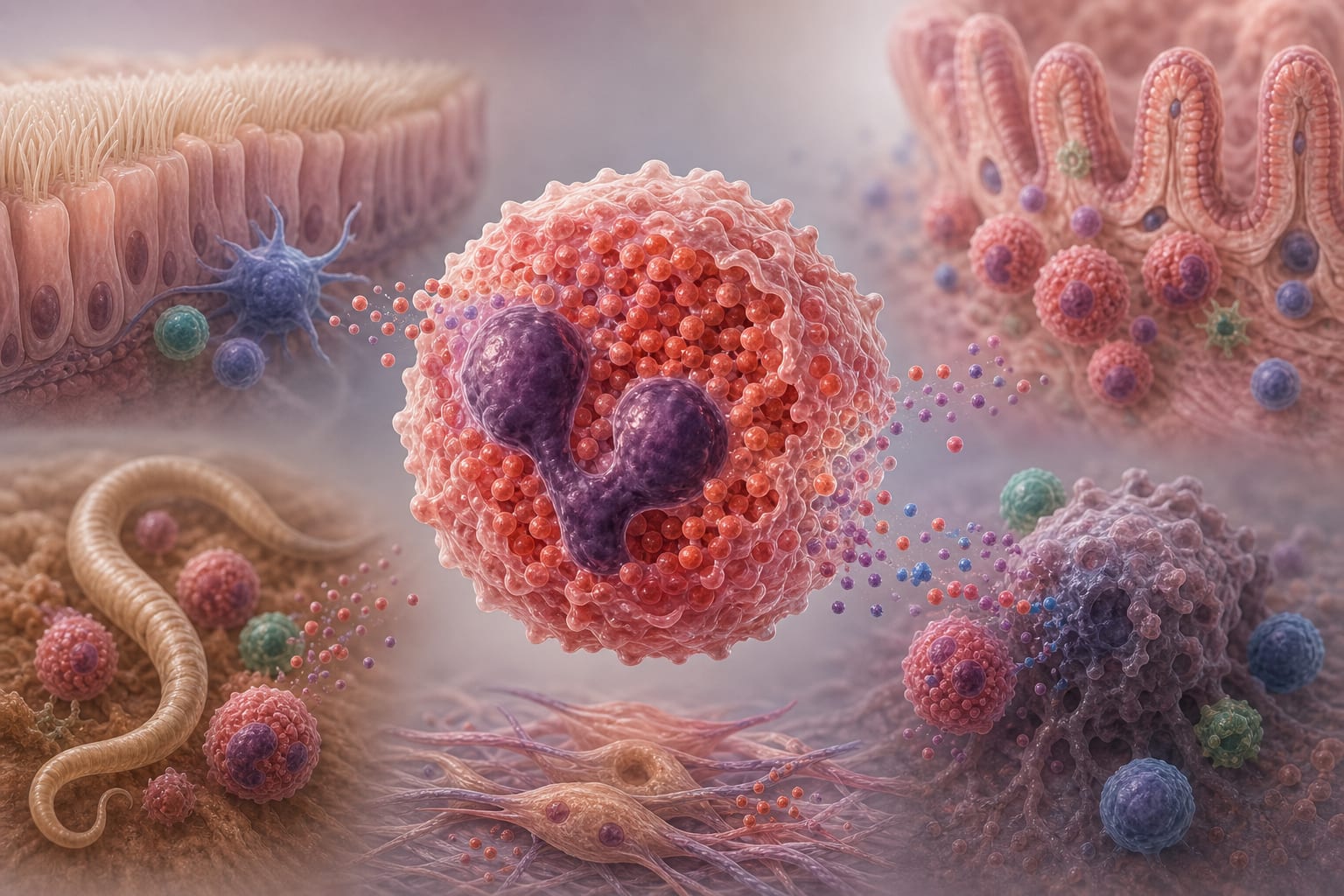
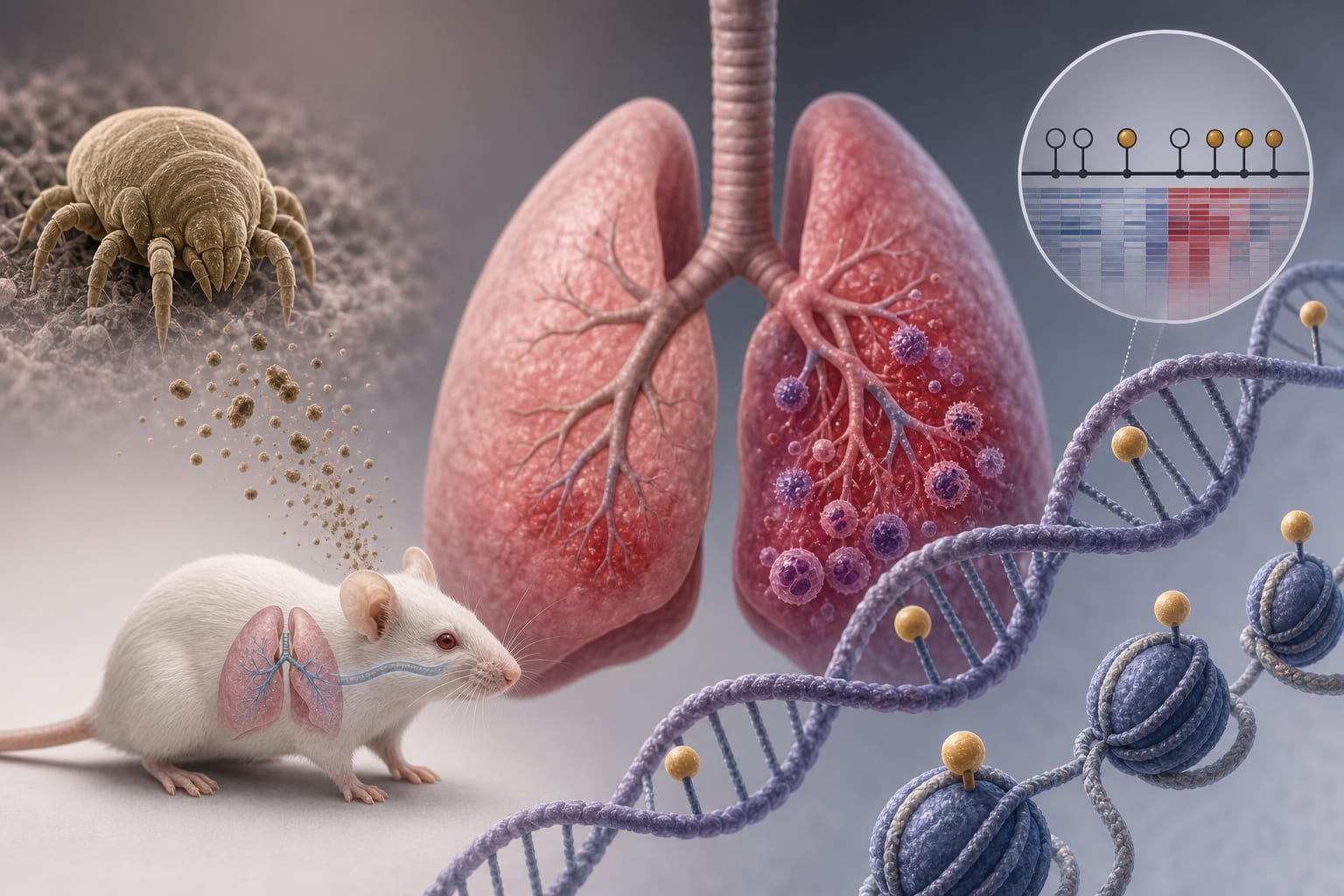
The Evolving Functions of Eosinophils in Immune Modulation Across Health and Disease
-
By
-
William Zhang
-
Marie Caligaris
-
Surabhi Tiwary
-
Dan Nicolau
-
July 9, 2026
Clinical Scorecard: The Evolving Functions of Eosinophils in Immune Modulation Across Health and Disease
At a Glance
| Category | Detail |
|---|
| Condition | Eosinophil-mediated disorders |
| Key Mechanisms | Involvement in Th2 responses, tissue repair, and dual roles in cancer as pro- and anti-tumorigenic mediators. |
| Target Population | Mammals, including humans. |
| Care Setting | Clinical evaluation of eosinophil counts and associated disorders. |
Key Highlights
- Eosinophils are involved in diverse homeostatic conditions and diseases.
- Traditionally linked to allergic asthma and helminth infections.
- Emerging roles include tissue regeneration and cancer modulation.
- Eosinophils can act as both pro-inflammatory and anti-inflammatory cells.
- High eosinophil counts in blood are associated with clinical concerns.
Guideline-Based Recommendations
Diagnosis
- Evaluate eosinophil counts in patients with suspected eosinophilic disorders.
Management
- Consider targeted therapies based on eosinophil roles in specific diseases.
Monitoring & Follow-up
- Regular monitoring of eosinophil levels in patients with eosinophilic conditions.
Risks
- High eosinophil counts may indicate underlying health issues requiring further evaluation.
Patient & Prescribing Data
Patients with eosinophilic disorders and related conditions.
Targeted therapies are emerging based on the dual roles of eosinophils.
Clinical Best Practices
- Assess eosinophil levels in patients with respiratory allergies and parasitic infections.
- Investigate eosinophil involvement in cancer prognosis and treatment.
Related Resources & Content