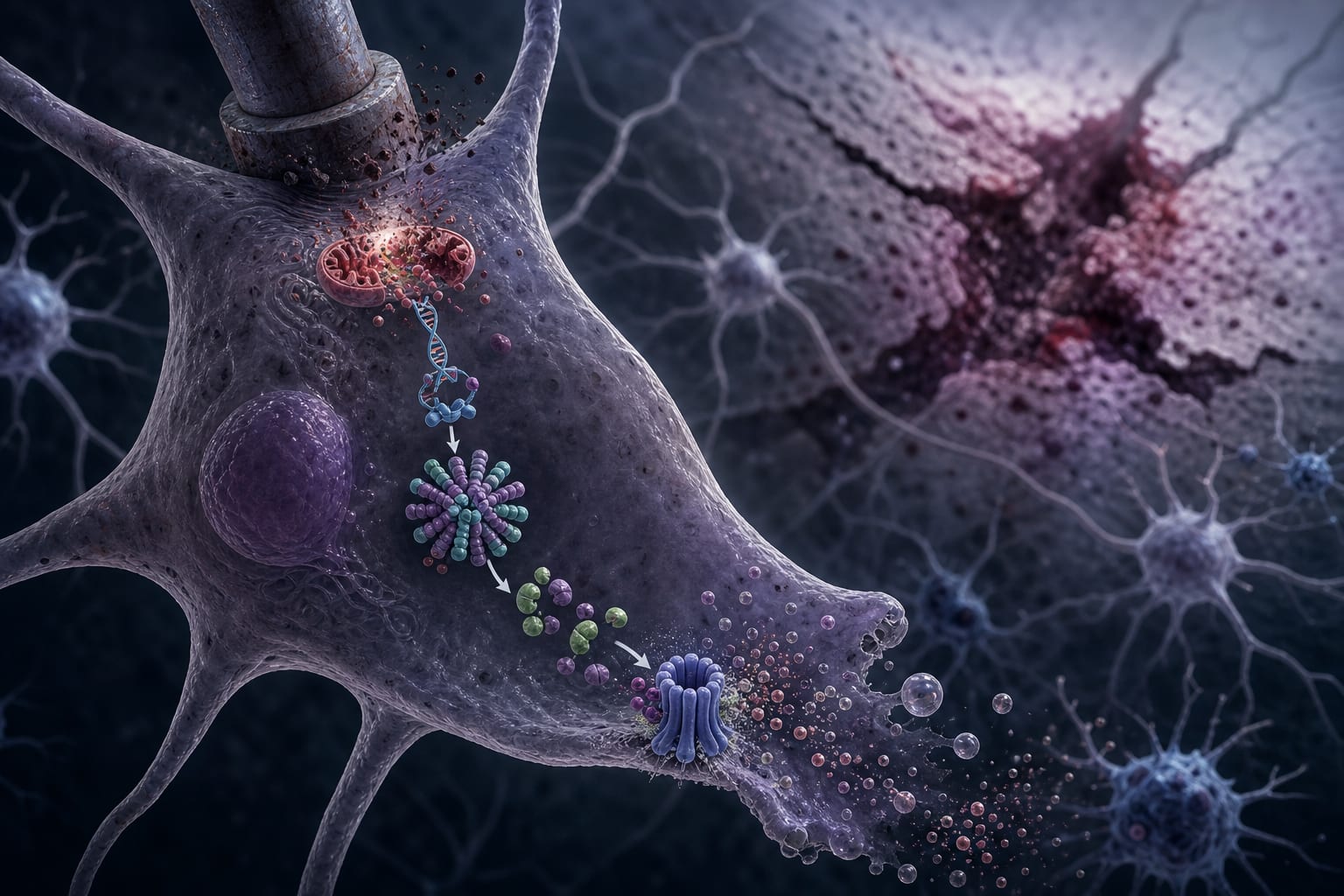
A self-perpetuating neuron-intrinsic GSDMD–mtDNA–AIM2 inflammasome axis drives neuronal pyroptosis and cognitive impairment after traumatic brain injury
-
By
-
Tian Li
-
Siyu Huang
-
Junjun Zhang
-
Xueer Liu
-
Lihong Zhu
-
Yue Li
-
Runmin Lin
-
Xiaoxuan Chen
-
Kangsheng Li
-
Weiqiang Chen
-
Jiangtao Sheng
-
June 19, 2026
-
Clinical Scorecard: An Intrinsic Neuronal GSDMD–mtDNA–AIM2 Inflammasome Pathway Promotes Pyroptosis and Cognitive Decline Following Traumatic Brain Injury
At a Glance
| Category | Detail |
|---|
| Condition | Traumatic Brain Injury (TBI) |
| Key Mechanisms | GSDMD–mtDNA–AIM2 inflammasome pathway driving neuronal pyroptosis and cognitive decline. |
| Target Population | Individuals with traumatic brain injury. |
| Care Setting | Neuroscience and neurotrauma research. |
Key Highlights
- AIM2 inflammasome activation occurs in cortical and hippocampal neurons post-TBI.
- Neuron-specific AIM2 knockdown reduces neuronal loss and improves cognitive performance.
- Mechanical injury leads to early release of mitochondrial DNA into the cytosol.
- Caspase-1 inhibition attenuates late-phase mtDNA release and neuronal injury.
- A self-perpetuating GSDMD–mtDNA–AIM2 axis is identified as a driver of cognitive decline.
Guideline-Based Recommendations
Diagnosis
- Assess cognitive function and neurological status following TBI.
Management
- Consider neuron-targeted AIM2 silencing as a therapeutic strategy.
Monitoring & Follow-up
- Monitor for signs of neuroinflammation and cognitive decline post-TBI.
Risks
- Potential for sustained neuroinflammation and cognitive impairment following TBI.
Patient & Prescribing Data
Patients with traumatic brain injury experiencing cognitive dysfunction.
AIM2 silencing may limit post-TBI neuroinflammation and cognitive decline.
Clinical Best Practices
- Utilize behavioral and molecular assays to assess neuronal health post-TBI.
- Implement early intervention strategies targeting neuroinflammation.
Related Resources & Content