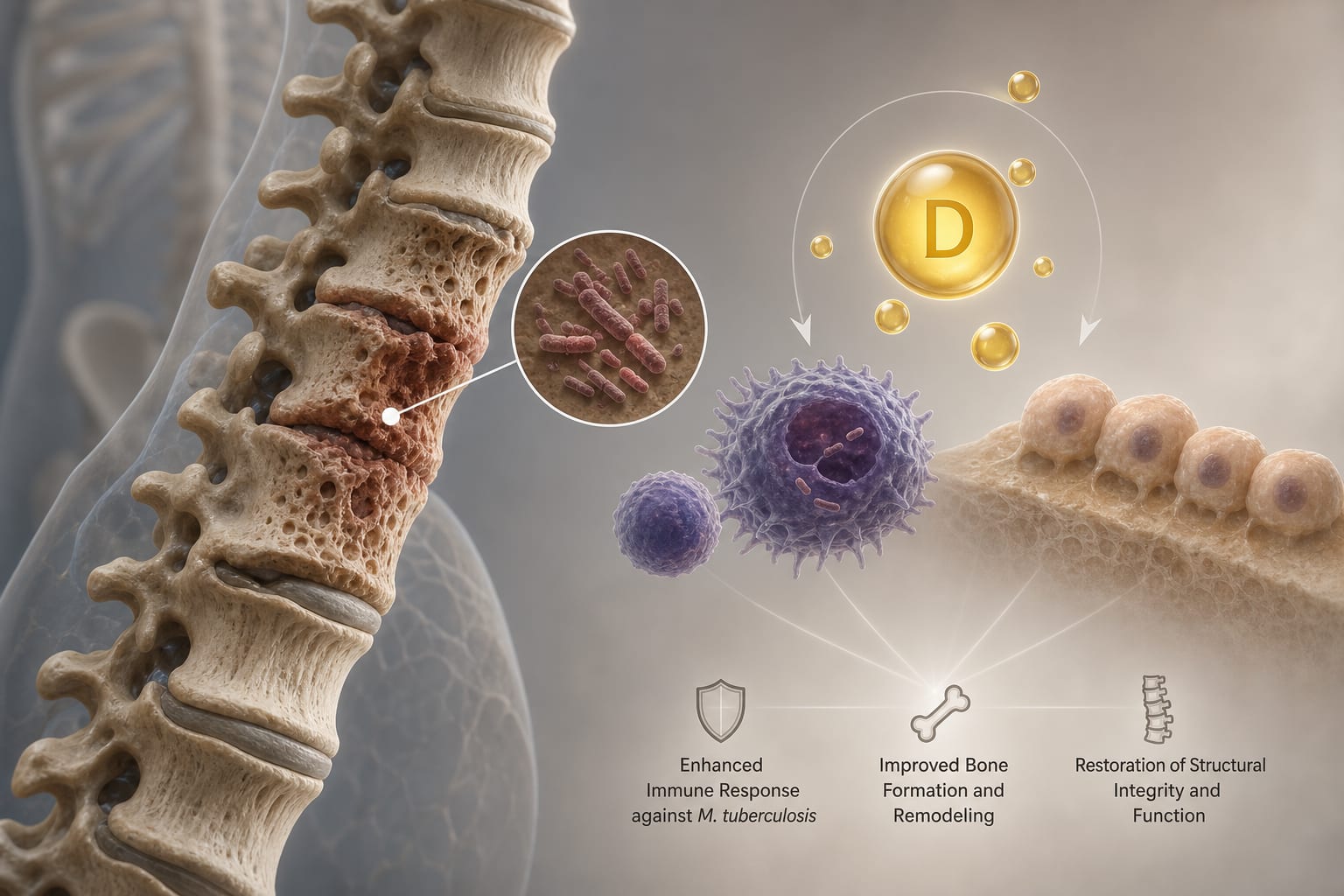
Potential value of vitamin D as adjunctive therapy in osteoarticular tuberculosis: a comprehensive review
By
Chenglong Zhang
Kai Xu
Yang Chen
Zhe Dong
Xiao Wu
June 12, 2026
Clinical Scorecard: Exploring the Role of Vitamin D as an Adjunctive Treatment in Osteoarticular Tuberculosis: A Detailed Review
At a Glance
Category Detail
Condition Key Mechanisms Vitamin D modulates immune responses and bone metabolism, enhancing macrophage function and regulating inflammatory signals. Target Population Care Setting
Key Highlights
OATB accounts for 10% to 15% of extrapulmonary tuberculosis cases. Spinal tuberculosis constitutes approximately 50% of OATB cases. Vitamin D deficiency is associated with increased risk of developing active tuberculosis. Rifampicin may accelerate the degradation of vitamin D, complicating treatment. Guideline-Based Recommendations
Diagnosis
Assess vitamin D levels in patients with osteoarticular tuberculosis. Management
Consider vitamin D as an adjunctive treatment in osteoarticular tuberculosis. Monitoring & Follow-up
Monitor vitamin D levels and adjust supplementation as needed. Risks
Be aware of the potential for rifampicin to reduce vitamin D levels. Patient & Prescribing Data
Vitamin D may enhance immune response and support bone health in the context of tuberculosis treatment.
Clinical Best Practices
Incorporate vitamin D assessment in the management of osteoarticular tuberculosis. Evaluate the interaction between rifampicin and vitamin D metabolism. Related Resources & Content