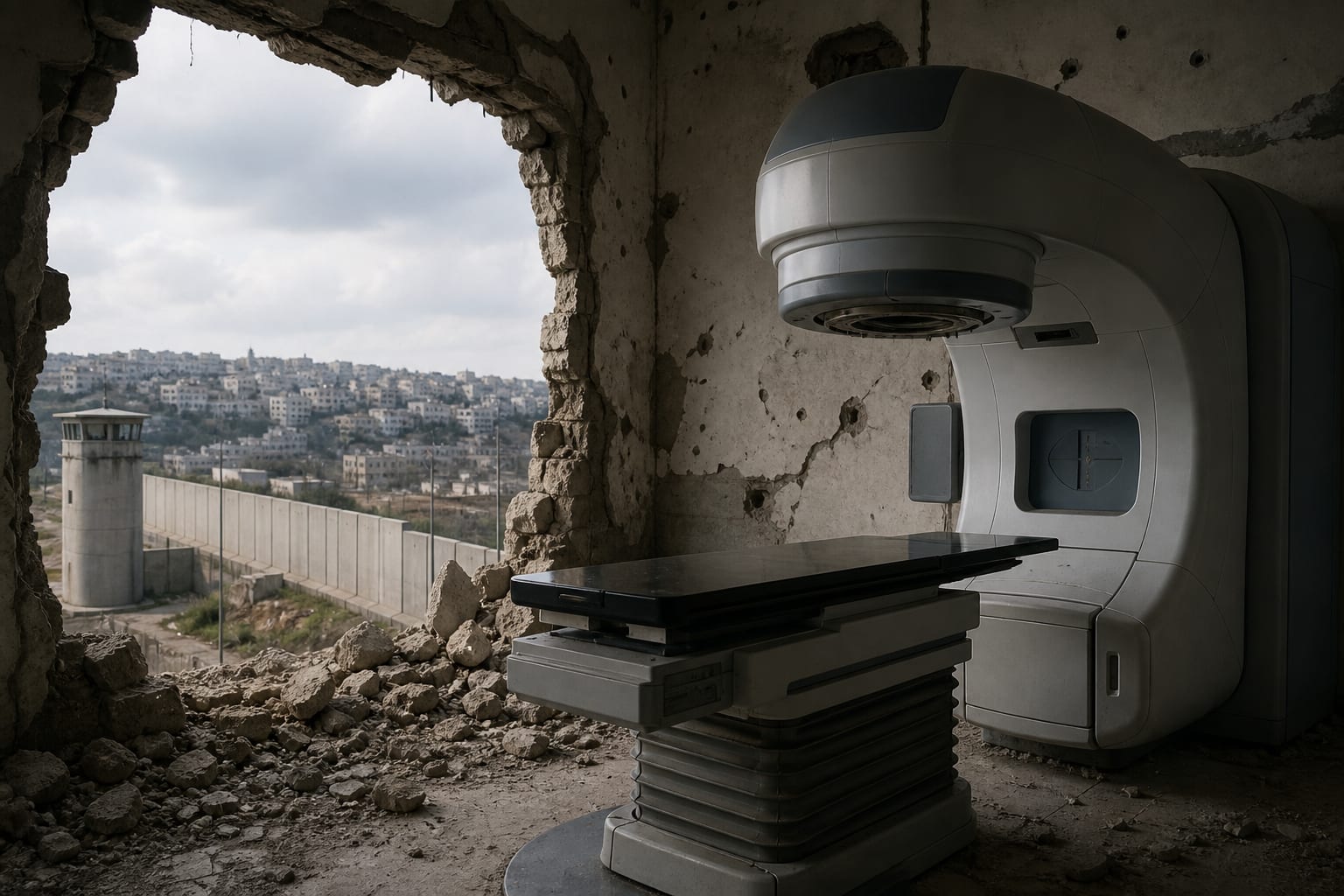
Cancer Management in Palestine: The Impact of Occupation on Oncology Care
By
Layth Mula-Hussain
Zahi Abdul-Sater
Caroline Samaha Jabbour
Fadi Atrash
Hibah Osman
Gevorg Tamamyan
Shada Wadi-Ramahi
Jemma Arakelyan
Khamis Elessi
Asem Mansour
Richard Sullivan
September 4, 2026
Clinical Scorecard: Cancer Management in Palestine: The Impact of Occupation on Oncology Care
At a Glance
Category Detail
Condition Cancer care in conflict-affected environments Key Mechanisms Impact of occupation, armed conflict, restricted movement, and governance on oncology services Target Population Patients in Palestine, particularly in Gaza and the West Bank Care Setting Oncology services in fragile health systems
Key Highlights
Occupation and conflict severely disrupt cancer diagnosis and treatment continuity. Gaza faces a lack of radiotherapy and restricted access to essential medicines. Referral routes for oncology care are heavily dependent on permits. Patients' rights are compromised due to structural violence and governance issues. Practical priorities include restoring radiotherapy and protecting chemotherapy access. Guideline-Based Recommendations
Diagnosis
Accelerate cancer diagnosis to prevent advanced disease. Management
Protect access to chemotherapy and essential medicines. Monitoring & Follow-up
Implement rights-based tracking of delays and avoidable deaths. Risks
Increased cancer incidence due to environmental contamination and diagnostic delays. Patient & Prescribing Data
Cancer patients in Gaza and the West Bank
Access to treatment is hindered by political and logistical barriers.
Clinical Best Practices
Enable accompanied medical evacuation for patients needing specialized care. Enhance oncology referral routes and audited cancer financing. Invest in electronic oncology documentation and workforce assistance. Related Resources & Content