Visual Rehabilitation With a Scleral Lens in an Eye With Corneal Scarring
By
Maddison Fortman, OD
September 17, 2026
Clinical Scorecard: Visual Rehabilitation With a Scleral Lens in an Eye With Corneal Scarring
At a Glance
Category Detail
Condition Corneal Scarring Key Mechanisms Scleral lenses provide optical benefits and sustained ocular drug delivery. Target Population Patients with corneal scarring from disease, trauma, or surgical complications. Care Setting Ophthalmology clinic
Key Highlights
Successful visual rehabilitation using a BostonSight Scleral lens. Topical losartan administered to reduce corneal scar density. Best-corrected visual acuity improved from hand motion to 20/20. Scleral lens design included SmartChannels for enhanced tear exchange. Topical losartan is off-label for reducing corneal scarring. Guideline-Based Recommendations
Diagnosis
Assess visual acuity and slit lamp findings for corneal scarring. Management
Fit scleral lenses for visual rehabilitation and sustained drug delivery. Monitoring & Follow-up
Monitor visual acuity and ocular surface condition during treatment. Risks
Topical losartan is not FDA approved for corneal scarring; potential for epithelial toxicity. Patient & Prescribing Data
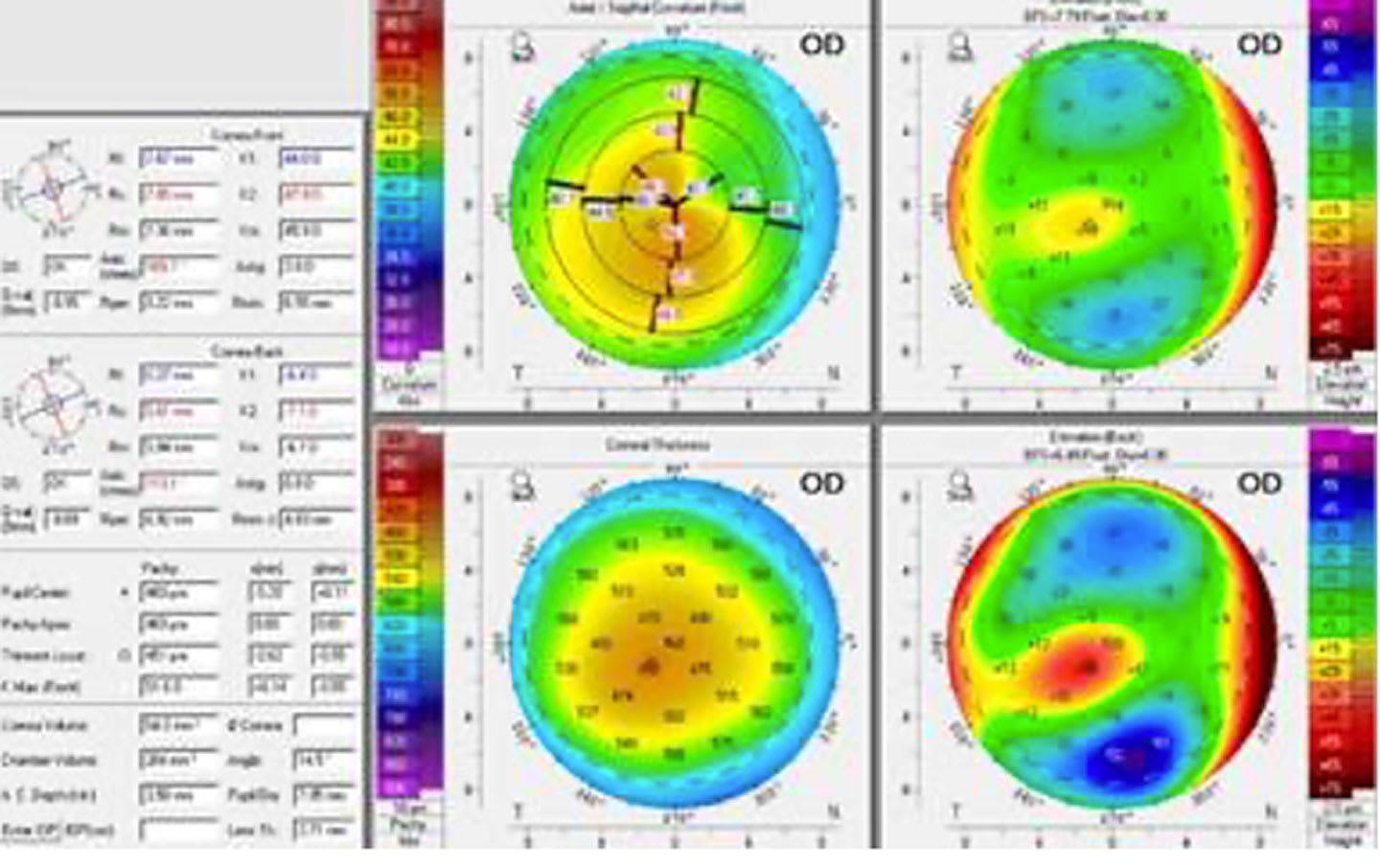
25-year-old female with keratoconus and corneal scarring.
Topical losartan 0.8 mg/ml administered 4 times daily in the scleral lens.
Clinical Best Practices
Incorporate SmartChannels in scleral lenses for patients with neovascularization. Continue monitoring for optimal visual acuity and subjective visual quality. Related Resources & Content