MSSA Bacteremia–Associated Staphylococcal Scalded Skin Syndrome in an Older Adult Resembling Toxic Epidermal Necrolysis
-
November 3, 2026
Clinical Scorecard: MSSA Bacteremia–Associated Staphylococcal Scalded Skin Syndrome in an Older Adult Resembling Toxic Epidermal Necrolysis
At a Glance
| Category | Detail |
|---|---|
| Condition | Adult staphylococcal scalded skin syndrome (SSSS), a toxin-mediated blistering disorder associated with Staphylococcus aureus. |
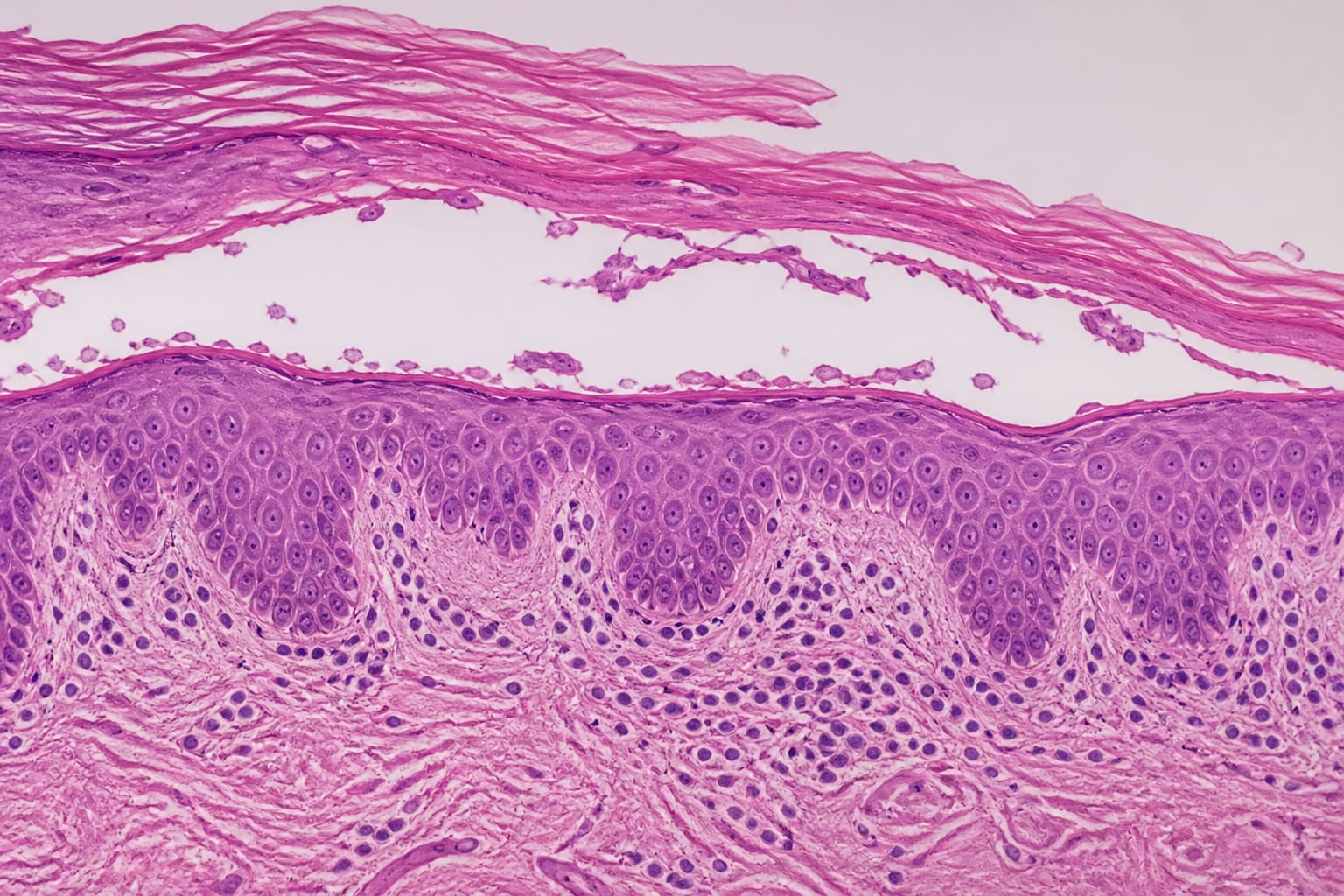
| Key Mechanisms | The case report describes biopsy findings of intraepidermal cleavage and subcorneal splitting, consistent with SSSS. |
| Target Population | The reported patient was an 88-year-old woman with untreated diffuse large B-cell lymphoma and preserved renal function. |
| Care Setting | The patient received acute hospital evaluation and multidisciplinary care, then continued intravenous antibiotics and wound care at a skilled nursing facility. |
Key Highlights
- SSSS can occur in adults, especially in the presence of immunocompromising conditions such as hematologic malignancy.
- Mucosal sparing and superficial desquamation supported SSSS over SJS/TEN in the reported patient.
- MSSA-positive blood cultures and biopsy showing intraepidermal cleavage with subcorneal splitting supported the diagnosis.
- Treatment included targeted intravenous antibiotics, wound care, pain control, and nutritional support.
- The patient improved with progressive re-epithelialization and completed intravenous antibiotic treatment in a skilled nursing facility.
Guideline-Based Recommendations
Diagnosis
- In the reported case, the differential included SSSS, SJS/TEN, and bullous pemphigoid.
- Mucosal sparing and superficial desquamation supported SSSS in this patient; advanced age heightened concern for TEN.
- Blood cultures identified MSSA, and biopsy showed intraepidermal cleavage and subcorneal splitting, supporting SSSS.
Management
- Empirical intravenous vancomycin and ceftriaxone were started while the cause of the eruption was being determined.
- After MSSA identification, treatment was narrowed to intravenous oxacillin and then changed to cefazolin for a planned 4-week regimen after bacteremia cleared.
- Care included daily wound care, pain management, nutritional supplementation, and input from dermatology, burn surgery, and hand surgery.
Monitoring & Follow-up
- Serial assessments showed progressive re-epithelialization and decreased erythema.
- Subsequent blood cultures were negative, and transthoracic echocardiography showed no infective endocarditis.
Risks
- The source describes adult SSSS as uncommon and associated with high morbidity.
- The source identifies renal dysfunction and immunosuppression, including hematologic malignancy, as adult predisposing conditions; it also lists prolonged corticosteroid or immunosuppressive treatment, transplantation, and alcohol use disorder.
- The source notes that TEN occurs more frequently in older adults and is associated with high mortality.
Patient & Prescribing Data
The reported patient was an 88-year-old woman with untreated diffuse large B-cell lymphoma, MSSA bacteremia, and preserved renal function.
She received empirical intravenous vancomycin and ceftriaxone, followed by targeted intravenous oxacillin and then cefazolin for a planned 4-week regimen after bacteremia cleared. Supportive care included daily wound care, acetaminophen and intermittent oxycodone for pain, protein supplementation, multivitamins, and zinc.
Clinical Best Practices
- In this case, clinical examination, microbiology, and histopathology were used to distinguish SSSS from SJS/TEN and bullous pemphigoid.
- Mucosal sparing and superficial desquamation supported SSSS in the reported patient; biopsy showed the level and pattern of epidermal injury.
- The reported patient had untreated diffuse large B-cell lymphoma and preserved renal function.
- The case included wound and nutritional support alongside targeted antimicrobial treatment.
Related Resources & Content
Based on findings from:
Staphylococcal Scalded Skin Syndrome in an Older Adult With MSSA Bacteremia Mimicking Toxic Epidermal Necrolysis
Annals Of Internal Medicine: Clinical Cases, 2026.
https://www.acpjournals.org/doi/10.7326/aimcc.2026.0384
This content is an AI-generated, fully rewritten summary based on a published scholarly article. It does not reproduce the original text and is not a substitute for the original publication. Readers are encouraged to consult the source for full context, data, and methodology.