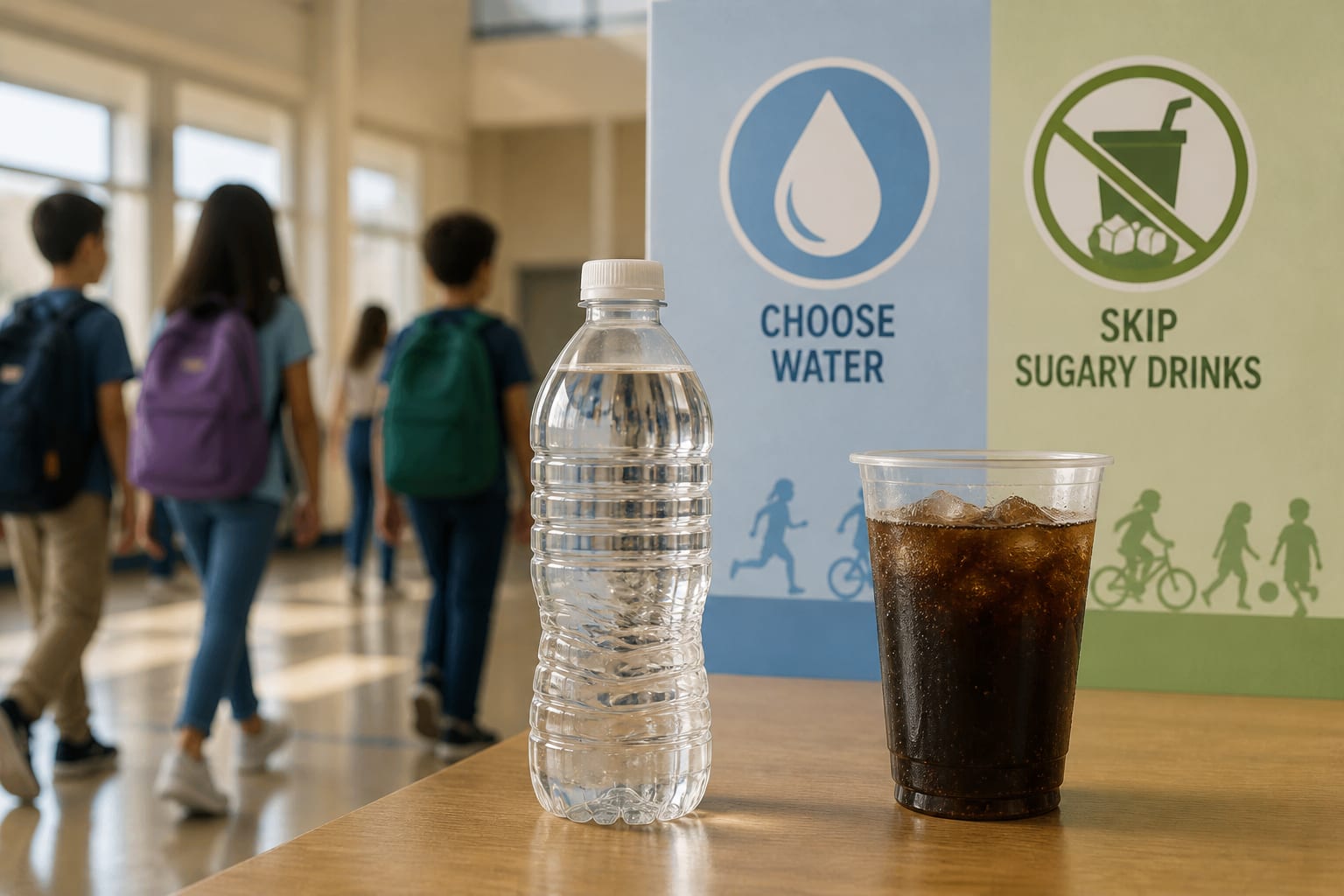
Clinical Scorecard: Effects of a Community-Based Behavioral Program on Body Mass Index in School-Aged Children: A Cluster-Randomized Trial
At a Glance
Category
Detail
Condition
Childhood obesity prevention, with a focus on sugar-sweetened beverage intake
Key Mechanisms
H2GO! aimed to reduce sugar-sweetened beverage intake and increase water intake through interactive activities, youth-generated narratives, and parent–child engagement.
Target Population
Boys & Girls Clubs members aged 8 to 13 years who were English-proficient, had access to Wi-Fi-enabled devices, and had no medical restrictions on beverage intake; participating caregivers were adults meeting corresponding eligibility criteria.
Care Setting
After-school Boys & Girls Clubs sites; the intervention was delivered in person by trained club staff.
Key Highlights
The unblinded, parallel-group cluster-randomized trial assigned Boys & Girls Clubs sites to H2GO! or usual programming.
The intervention consisted of 12 one-hour group sessions delivered over approximately six weeks.
Program activities included taste tests, sugar-measurement demonstrations, youth-generated narratives, take-home parent–child activities, and a youth-led community event.
The primary outcome was change in child BMI z score from baseline at 12 months; secondary outcomes were changes in sugar-sweetened beverage and water intake.
The supplied article excerpt describes the trial design and methods but does not report outcome results.
Guideline-Based Recommendations
Diagnosis
Management
Monitoring & Follow-up
Risks
Patient & Prescribing Data
Eligible children were current Boys & Girls Clubs members aged 8 to 13 years, English-proficient, able to access Wi-Fi-enabled devices, and without medical restrictions on beverage intake. One adult caregiver per child was eligible if aged 18 years or older, English-proficient, and without such restrictions.
H2GO! was a behavioral program, not a medication: trained club staff delivered 12 in-person, one-hour sessions over approximately six weeks. The excerpt provides no trial outcome estimates.
Clinical Best Practices
Use standardized measurement procedures when assessing child height, weight, and BMI.
For community-based behavioral programs, the trial monitored attendance, parent exposure, and intervention-delivery fidelity.
The intervention incorporated parent–child activities and youth participation alongside beverage-focused education.
by Monica L. Wang, Selenne Alatorre, Aviva G. Schwarz, Janice Weinberg, Linda Sprague Martinez, Jennifer Aldworth, Rabindra Kadel, Milagros C. Rosal, Stephenie C. Lemon