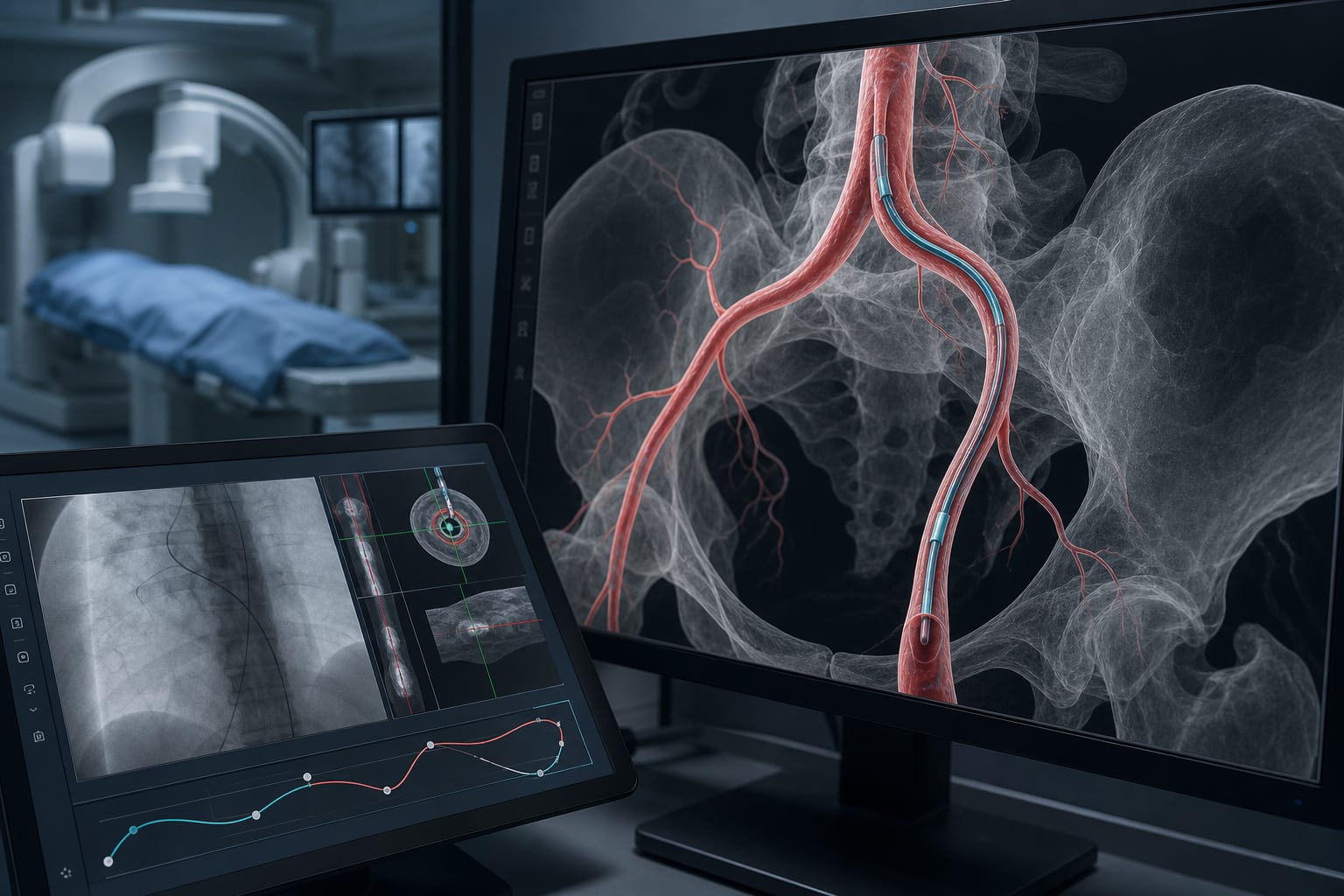
Clinical Scorecard: Utilizing Catheter Monitoring in Advanced Endovascular Navigation: Enhancing Navigational Awareness Through Interactive Simulations and Mixed Reality
At a Glance
Category
Detail
Condition
Key Mechanisms
Target Population
Patients undergoing transcatheter procedures requiring vascular access, including those with specific conditions such as structural heart disease or peripheral artery disease.
Care Setting
Key Highlights
Transfemoral access is commonly used for various transcatheter procedures.
Current navigation methods rely on 2D X-ray fluoroscopy, limiting visualization and posing risks.
Medical Augmented Reality System (MARS) enhances spatial understanding during procedures.
In vitro experiments validate the integration of advanced monitoring techniques.
Combining gamepad-based controls with HMD improves navigation intuitiveness.
Guideline-Based Recommendations
Diagnosis
Utilize imaging techniques such as MRI or CT for preoperative assessment, particularly for complex vascular anatomy.
Management
Monitoring & Follow-up
Risks
Patient & Prescribing Data
Advanced monitoring techniques may reduce complications associated with catheter navigation by providing real-time feedback and improving accuracy.
Clinical Best Practices
Incorporate mixed reality systems to enhance operator situational awareness and integrate with existing navigation tools.
Utilize real-time shape reconstruction for improved catheter navigation.
Combine preoperative imaging with intraoperative modalities for better outcomes.
Surveys captured nearly 7 times as many menopause observations as structured clinical records, with high agreement when both sources identified menopause.
Modeling of nationally representative US data suggested broader implementation of the AHA/ACC 's 2025 recommendations could expand antihypertensive treatment eligibility and reduce long-term mortality among high-risk adults.