Ferroptosis in chemotherapy resistance and resensitization in breast cancer: a systematic review of preclinical evidence and translational implications - Scorecard - MDSpire
Advertisement
Ferroptosis in chemotherapy resistance and resensitization in breast cancer: a systematic review of preclinical evidence and translational implications
Clinical Scorecard: Ferroptosis and Its Role in Chemotherapy Resistance and Resensitization in Breast Cancer: A Comprehensive Review of Preclinical Findings and Clinical Implications
At a Glance
Category
Detail
Condition
Breast Cancer
Key Mechanisms
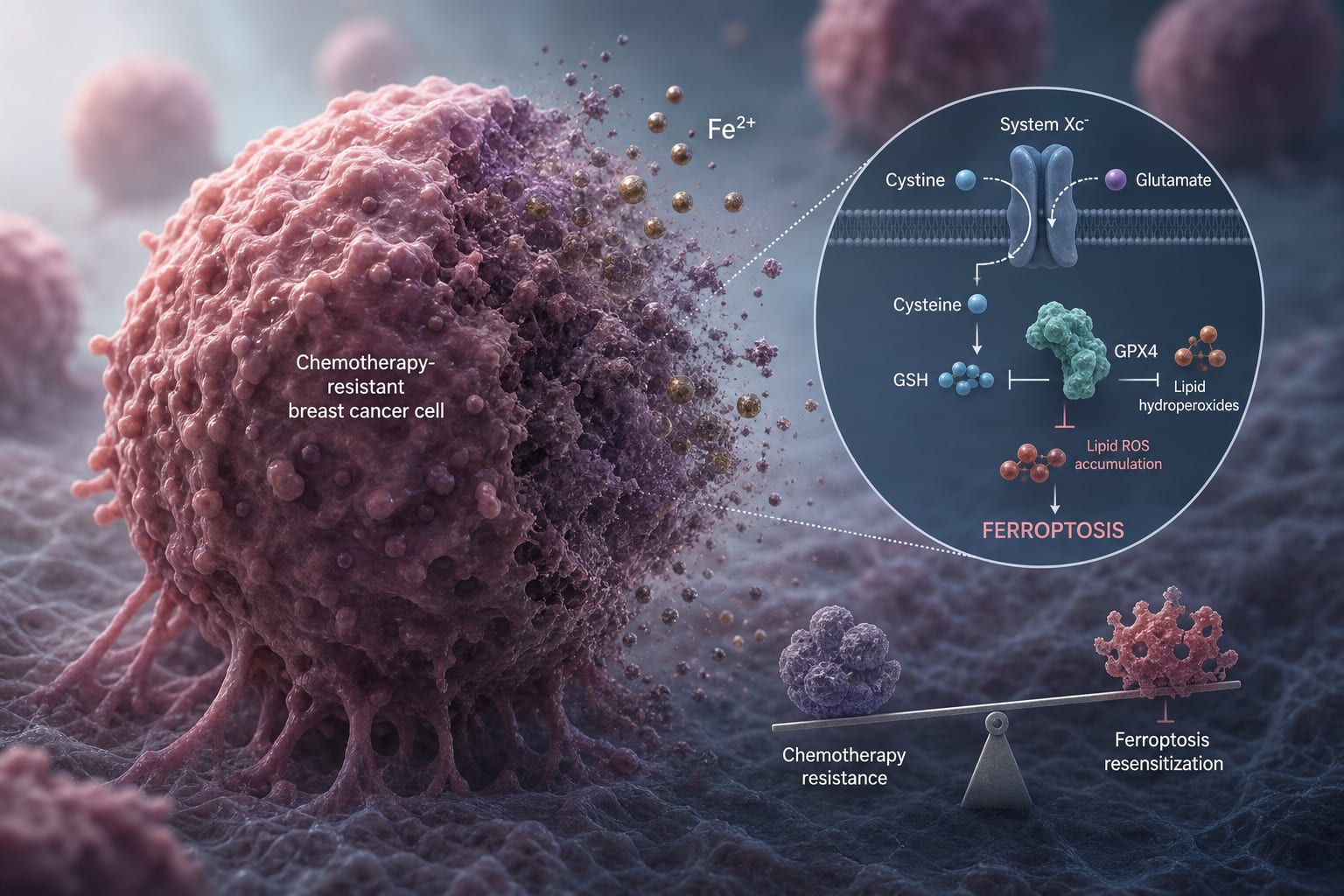
Ferroptosis regulation, particularly the GPX4 axis, iron metabolism regulation, and the SLC7A11/xCT pathway.
Target Population
Patients with triple-negative breast cancer (TNBC).
Care Setting
Oncology, specifically in the context of chemotherapy resistance.
Key Highlights
Ferroptosis is a potential therapeutic vulnerability in drug-resistant cancers.
Approximately 30-50% of TNBC cases exhibit chemoresistance.
The GPX4 axis is the most consistently supported mechanism for overcoming chemoresistance.
Ferroptosis induction may circumvent chemoresistance in TNBC.
Recent studies show TNBC cells are more vulnerable to ferroptosis-inducing agents.
Guideline-Based Recommendations
Diagnosis
Assess the presence of triple-negative breast cancer (TNBC) through receptor status.
Management
Consider ferroptosis modulation as a strategy in chemotherapy-resistant TNBC.
Monitoring & Follow-up
Evaluate treatment response and resistance mechanisms in TNBC patients undergoing chemotherapy.
Risks
Potential for increased oxidative stress and cellular damage if ferroptosis is improperly regulated.
Patient & Prescribing Data
Patients with chemotherapy-resistant triple-negative breast cancer.
Incorporating ferroptosis inducers may enhance treatment efficacy in resistant cases.
Clinical Best Practices
Utilize GPX4 modulation as a therapeutic target in drug-resistant breast cancer.
Conduct in vivo validation for new therapeutic strategies targeting ferroptosis.