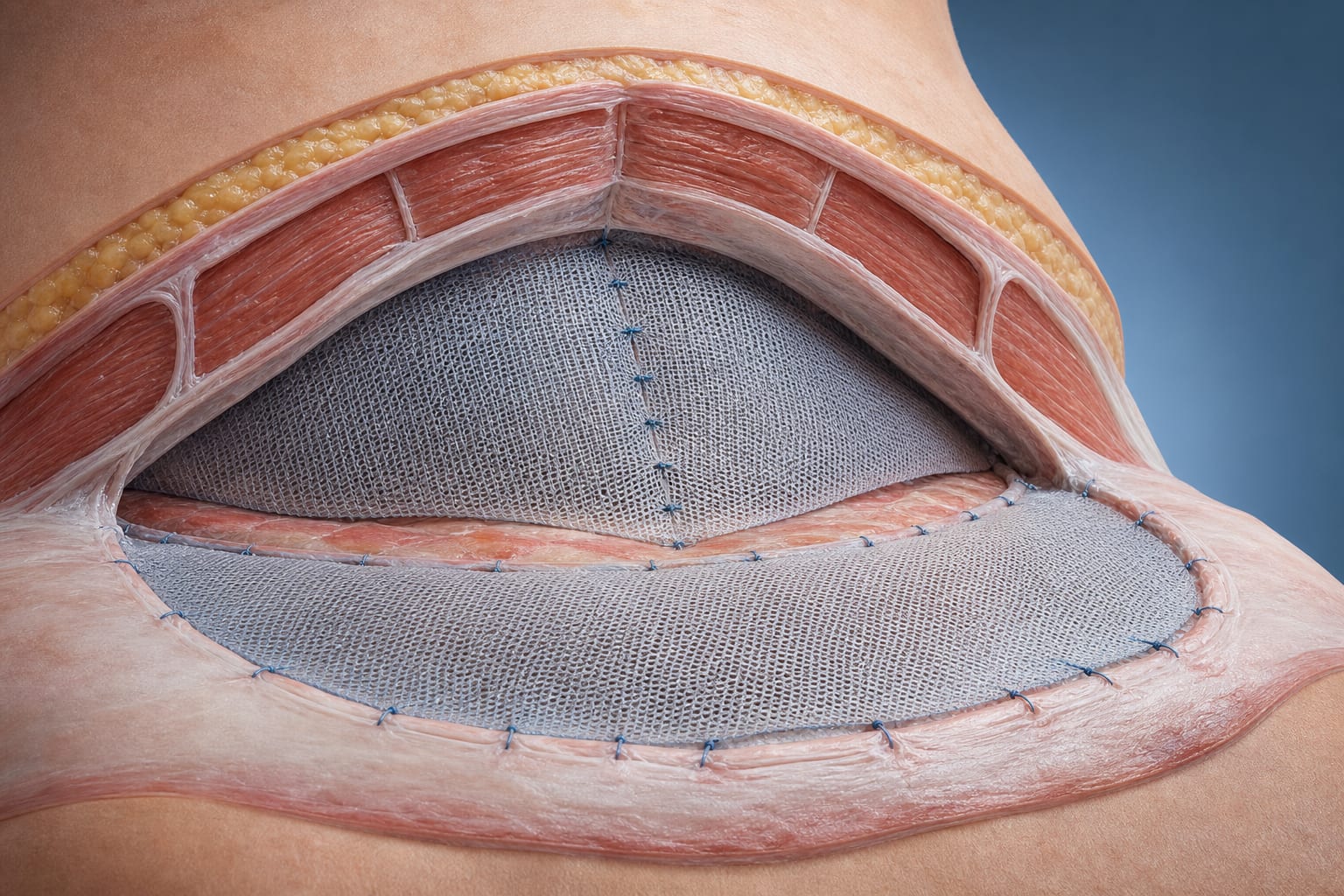
Bikini-line Hiatal Hernia Repair (BLHHR) During Sleeve Gastrectomy
-
By
-
Tamer N Abdelbaki
-
October 20, 2023
-
0 min
Clinical Scorecard: Bikini-Line Approach for Hiatal Hernia Repair During Sleeve Gastrectomy
At a Glance
| Category | Detail |
|---|---|
| Condition | Hiatal hernia concurrent with morbid obesity undergoing laparoscopic sleeve gastrectomy |
| Key Mechanisms | Concurrent laparoscopic hiatal hernia repair during sleeve gastrectomy using bikini-line trocar placement to minimize visible scarring |
| Target Population | Patients with obesity undergoing sleeve gastrectomy who have hiatal hernia ≤ 3 cm and BMI ≤ 55 kg/m2 |
| Care Setting | Laparoscopic bariatric surgery in specialized surgical centers |
Key Highlights
- Hiatal hernia is common in obese patients (23–52.6%) and an independent risk factor for GERD post-sleeve gastrectomy.
- Bikini-Line Sleeve Gastrectomy (BLSG) places trocars along the lower abdomen to conceal scars within the bikini line.
- Bikini-Line Hiatal Hernia Repair (BLHHR) allows safe and feasible concurrent hiatal hernia repair through the same access points.
Guideline-Based Recommendations
Diagnosis
- Perform thorough intraoperative inspection of the gastroesophageal junction and diaphragmatic hiatus to identify hiatal hernia.
- Use upper gastrointestinal endoscopy preoperatively and at 6 months postoperatively to assess hiatal hernia and GERD.
Management
- Perform concurrent laparoscopic hiatal hernia repair during sleeve gastrectomy to reduce postoperative reflux risk.
- Use bikini-line trocar placement for improved cosmetic outcomes without compromising surgical safety.
- Exclude patients with hiatal hernia > 3 cm, BMI > 55 kg/m2, or unfavorable anatomical distances to ensure procedural safety.
Monitoring & Follow-up
- Evaluate postoperative GERD symptoms using a simplified clinical classification system at follow-up.
- Assess scar satisfaction using validated Scar Assessment Questionnaire subscales.
- Monitor weight loss as percentage of excess weight loss (%EWL) and resolution of comorbidities such as diabetes and hypertension.
Risks
- Potential technical challenges in patients with large hiatal hernias or high BMI.
- Exclusion of patients with extensive lower abdominal adhesions or unfavorable anatomical measurements to avoid ergonomic difficulties.
Patient & Prescribing Data
Obese patients undergoing laparoscopic sleeve gastrectomy with concurrent hiatal hernia ≤ 3 cm
Concurrent hiatal hernia repair via bikini-line approach is feasible, safe, and improves cosmetic outcomes without compromising surgical efficacy.
Clinical Best Practices
- Careful patient selection based on BMI, hernia size, and anatomical measurements to optimize surgical ergonomics and safety.
- Standardized perioperative protocols and operative techniques performed by experienced surgeons.
- Use of modified patient positioning (modified split-leg with left leg straight) to facilitate suturing during repair.
- Comprehensive preoperative and postoperative evaluation of GERD symptoms and scar satisfaction.
References
- International Sleeve Gastrectomy Expert Panel Consensus Statement
- Daes et al. on hiatal hernia incidence in LSG patients
- Scar Assessment Questionnaire (PSAQ) validation
This content is an AI-generated, fully rewritten summary based on a published scholarly article. It does not reproduce the original text and is not a substitute for the original publication. Readers are encouraged to consult the source for full context, data, and methodology.