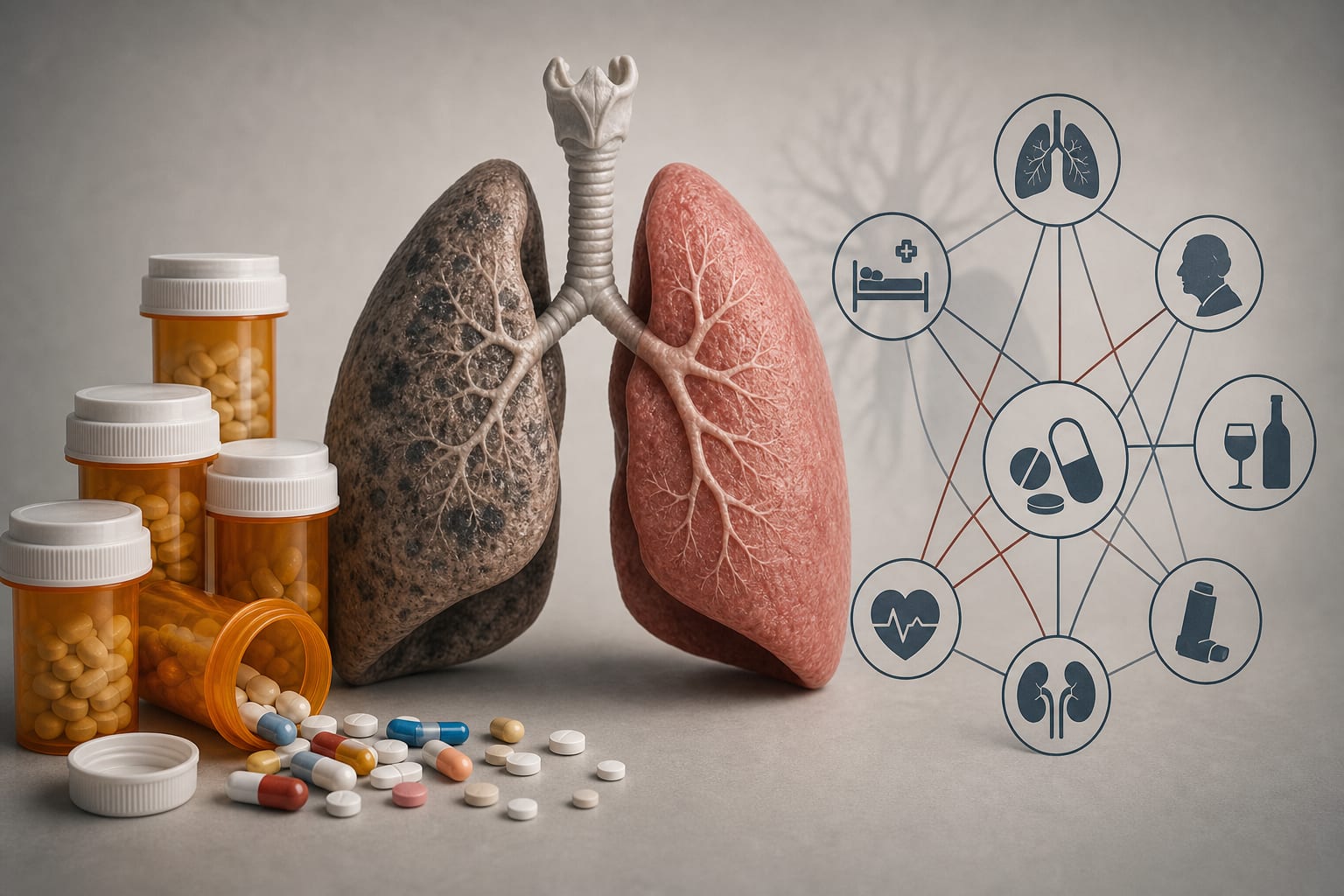
Targeted Approaches and Precision Diagnosis in Neutrophilic Asthma: Exploring Molecular Mechanisms and Clinical Applications
-
By
-
Mengmeng Sun
-
Yan Xu
-
Guihua Song
-
Bingxue Zhang
-
MingHao Peng
-
SuPing Yu
-
GuiChun Zhang
-
July 8, 2026
Clinical Scorecard: Targeted Approaches and Precision Diagnosis in Neutrophilic Asthma: Exploring Molecular Mechanisms and Clinical Applications
At a Glance
| Category | Detail |
|---|
| Condition | Neutrophilic Asthma |
| Key Mechanisms | Th17/IL-17 axis, neutrophil extracellular traps (NETs), NLRP3 inflammasome activation |
| Target Population | Patients with neutrophilic asthma characterized by sputum neutrophilia (≥61%) |
| Care Setting | Clinical settings focusing on asthma management and precision medicine |
Key Highlights
- Neutrophilic asthma is distinct from eosinophilic asthma, exhibiting glucocorticoid resistance.
- The Th17/IL-17 axis plays a central role in neutrophil recruitment and activation.
- Emerging therapies targeting IL-17, NET formation, and inflammasome components are in clinical development.
- Airway microbiome dysbiosis is implicated in the pathogenesis of neutrophilic asthma.
- A precision identification framework integrates molecular endotypes with clinical phenotypes.
Guideline-Based Recommendations
Diagnosis
- Identify neutrophilic asthma through sputum analysis showing ≥61% neutrophils.
Management
- Consider emerging therapies targeting IL-17 and NETs for treatment.
Monitoring & Follow-up
- Monitor neutrophil counts and IL-17 levels in patients with neutrophilic asthma.
Risks
- Patients may experience accelerated lung function decline and poor response to conventional glucocorticoid therapy.
Patient & Prescribing Data
Patients with neutrophilic asthma, particularly those with severe disease and glucocorticoid resistance.
Current therapies are limited; novel approaches targeting specific pathways are under investigation.
Clinical Best Practices
- Utilize a precision medicine approach to tailor treatments based on molecular mechanisms.
- Incorporate biomarker profiles in therapeutic decision-making.
Related Resources & Content