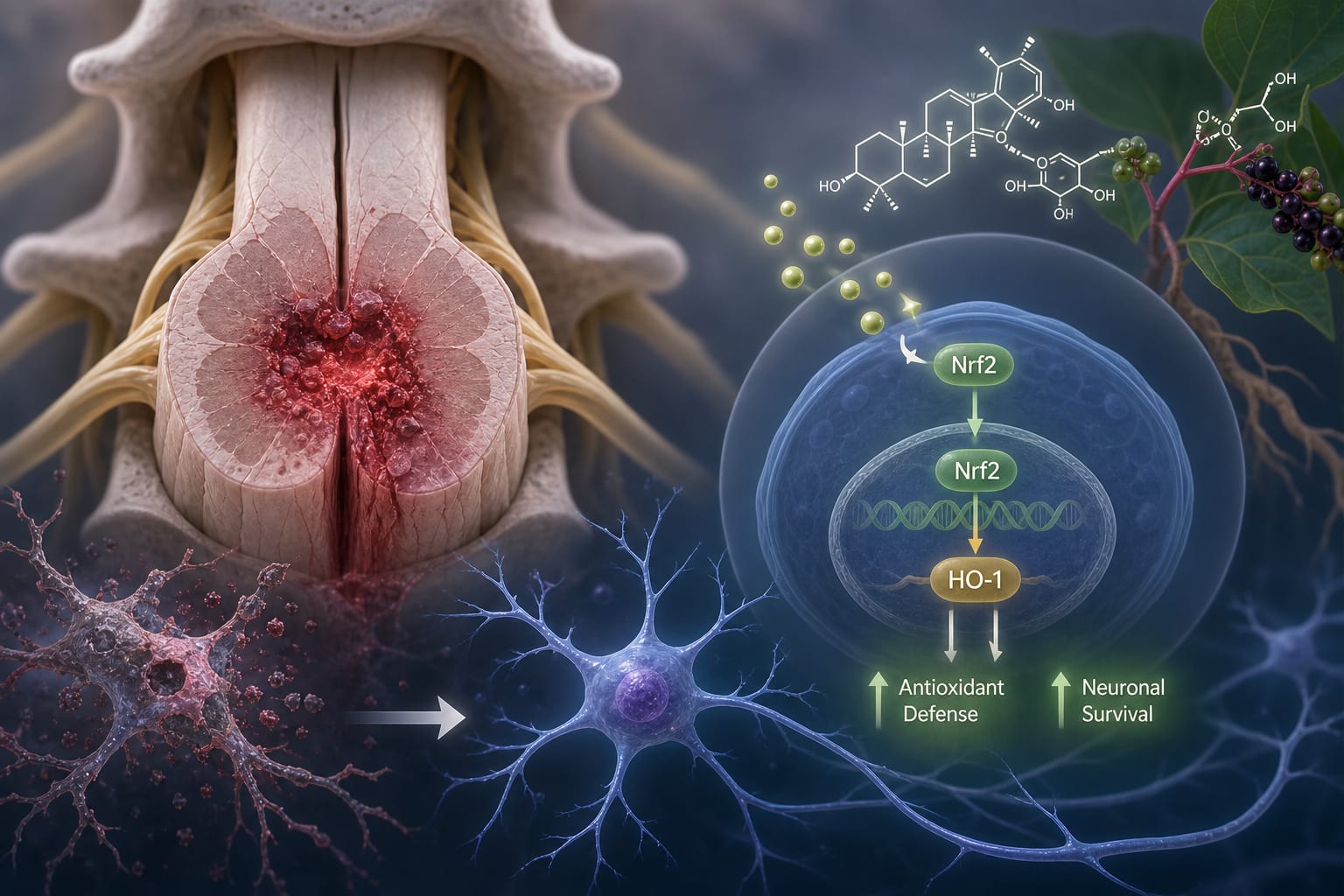
Esculentoside A mitigates oxidative stress and neuronal apoptosis in spinal cord injury by modulating the Nrf2/HO-1 pathway
-
By
-
Guoqing Zhu
-
Weiwei Li
-
Mengge Sun
-
Jingyu Yan
-
Wei Hu
-
June 24, 2026
-
Clinical Scorecard: Esculentoside A Reduces Oxidative Stress and Neuronal Cell Death in Spinal Cord Injury Through the Nrf2/HO-1 Signaling Pathway
At a Glance
| Category | Detail |
|---|
| Condition | Spinal Cord Injury (SCI) |
| Key Mechanisms | Nrf2/HO-1 signaling pathway modulation |
| Target Population | Rats (animal model of SCI) |
| Care Setting | Preclinical neurotrauma research |
Key Highlights
- EsA improves motor function and reduces histopathological damage in SCI rats.
- EsA treatment decreases oxidative stress markers and neuronal apoptosis.
- Activation of the Nrf2/HO-1 pathway is associated with EsA's neuroprotective effects.
Guideline-Based Recommendations
Diagnosis
- Utilize motor function assessments such as the BBB scale and footprint test.
Management
- Consider EsA as a potential therapeutic agent for SCI.
Monitoring & Follow-up
- Evaluate oxidative stress biomarkers and neuronal integrity post-treatment.
Risks
- Conventional pharmacotherapies for SCI have limited efficacy and potential adverse effects.
Patient & Prescribing Data
Not applicable (animal study)
EsA administered intraperitoneally at 10 mg/kg once daily.
Clinical Best Practices
- Focus on neuroprotective strategies targeting oxidative stress and neuronal apoptosis in SCI.
Related Resources & Content