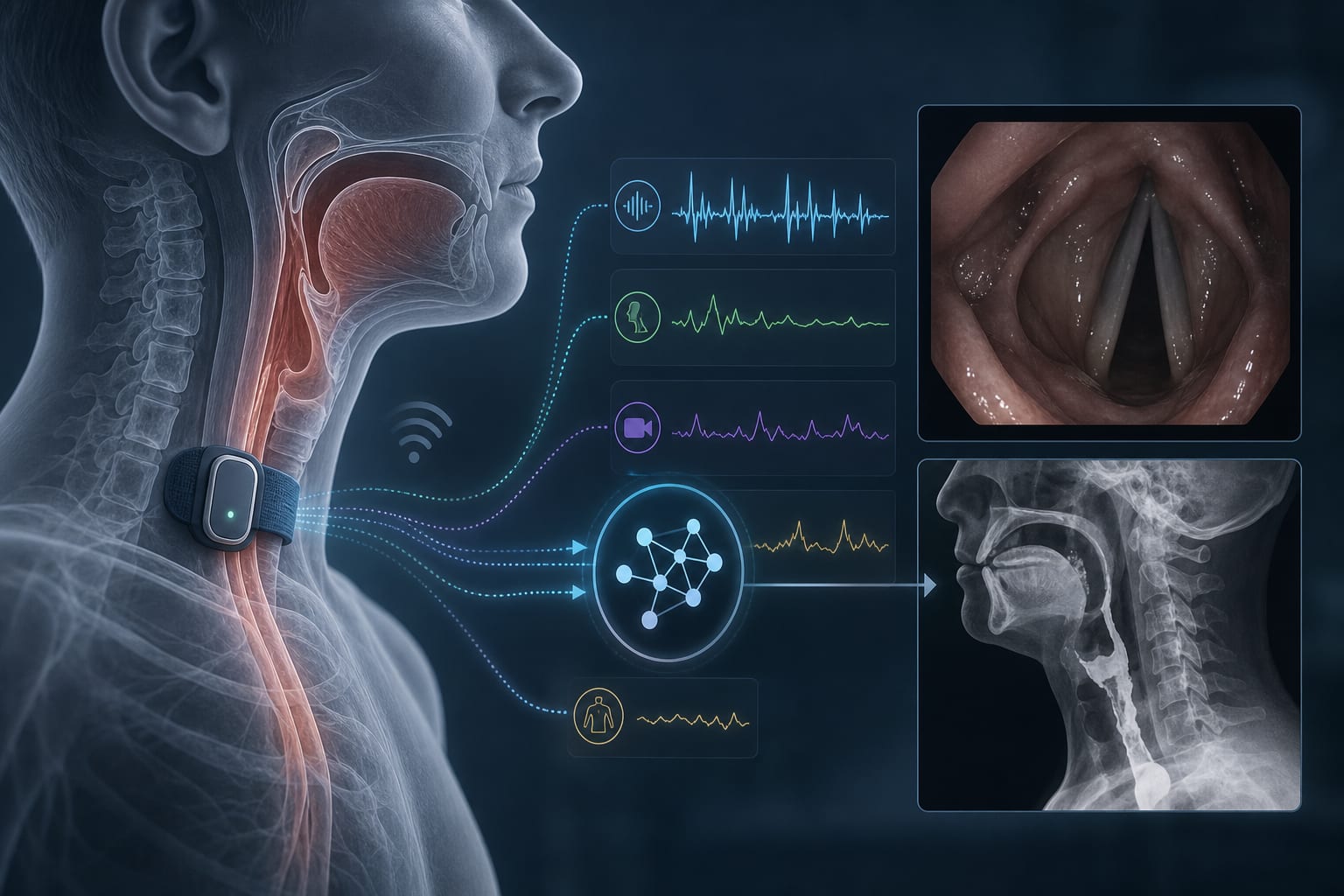
Editorial: AI-driven smart sensing and processing for personalized healthcare
-
By
-
Wei Wang
-
Lewei Zhao
-
Junxin Chen
-
July 7, 2026
-
Clinical Scorecard: The Role of AI in Smart Sensing and Data Processing for Tailored Healthcare Solutions
At a Glance
| Category | Detail |
|---|
| Condition | Personalized Healthcare |
| Key Mechanisms | AI-driven smart sensing, continuous physiological monitoring, intelligent imaging systems, wearable devices |
| Target Population | Individuals requiring personalized healthcare solutions |
| Care Setting | Interdisciplinary healthcare environments leveraging AI technologies |
Key Highlights
- AI models can operate efficiently on edge devices for real-time monitoring.
- Deep learning techniques enable scalable home-based neurorehabilitation.
- Intelligent medical imaging enhances early detection of colorectal cancer.
- AI-driven analysis supports earlier diagnosis of autism spectrum disorder.
- Digital twin technology bridges personalized data and public health governance.
Guideline-Based Recommendations
Diagnosis
- Utilize AI-driven pattern recognition for early screening in complex conditions.
Management
- Incorporate multimodal sensing for personalized assessments.
Monitoring & Follow-up
- Implement continuous physiological monitoring using wearable devices.
Risks
- Address potential disparities in access to AI technologies.
Patient & Prescribing Data
Patients with conditions requiring personalized monitoring and intervention.
AI technologies can enhance the precision and effectiveness of treatment plans.
Clinical Best Practices
- Ensure interdisciplinary collaboration among engineers, clinicians, and data scientists.
- Focus on user understanding and digital health literacy for effective AI adoption.
- Adopt uncertainty-aware modeling for safe clinical deployment.
Related Resources & Content