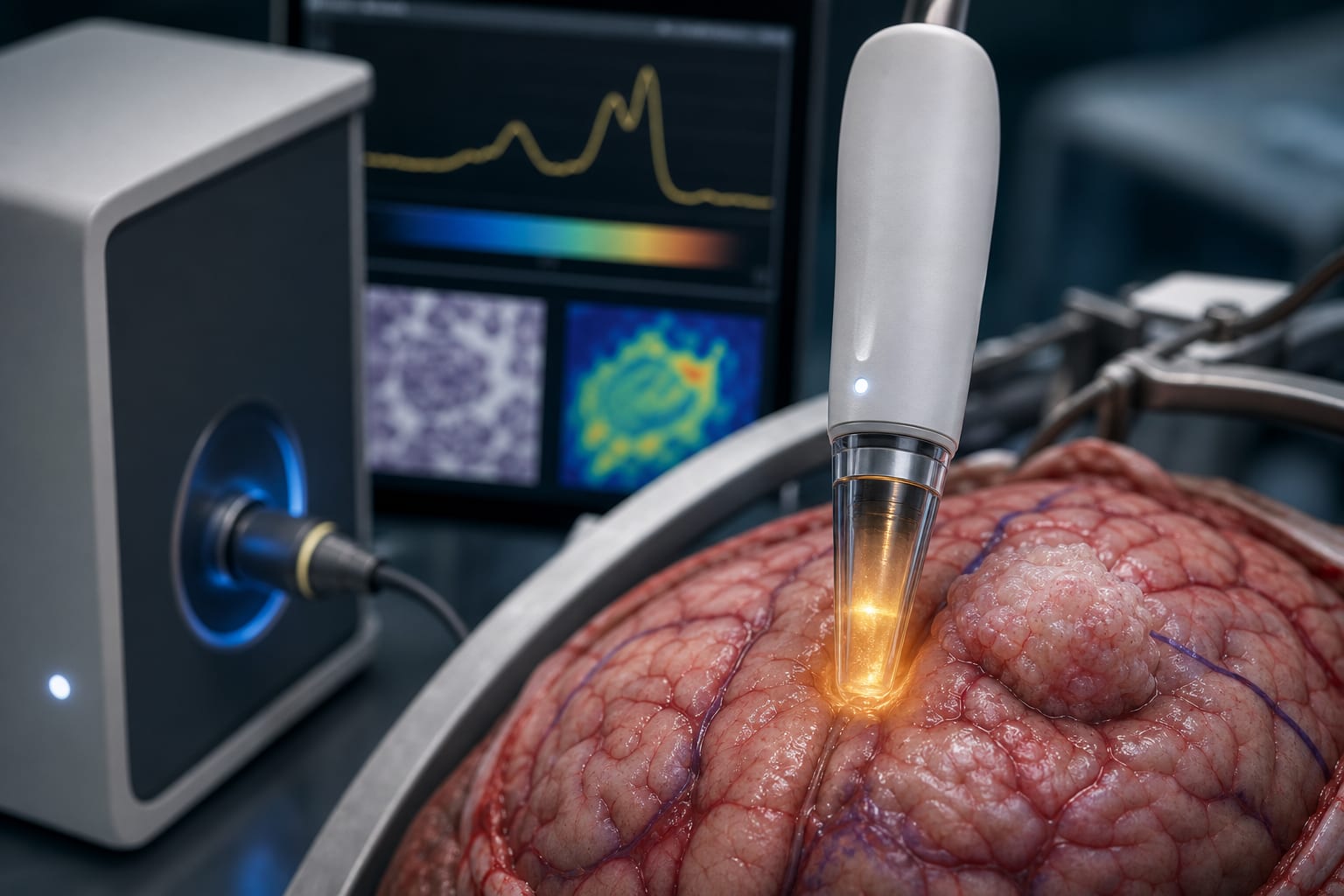
A novel label-free nanoplasmonic biosensor for distinguishing tumor margins during surgery for brain metastases
Clinical Scorecard: A novel label-free nanoplasmonic biosensor for distinguishing tumor margins during surgery for brain metastases
At a Glance
Category Detail
Condition Brain metastases Key Mechanisms Nanostructured plasmonic biosensors based on extraordinary optical transmission (EOT) detect biophysical differences in tissue. Target Population Adults ≥ 18 years of age with newly diagnosed brain metastases without prior local treatment. Care Setting Surgical treatment in a multicenter hospital setting.
Key Highlights
Brain metastases are the most common intracranial tumors in adults. Microscopic infiltration complicates the achievement of gross total resection. Current intraoperative tools for margin assessment lack biological specificity. EOT-based biosensors can provide real-time characterization of tumor margins. The study assesses the feasibility and diagnostic performance of the biosensor. Guideline-Based Recommendations
Diagnosis
Histopathological confirmation of brain metastases is required. Management
Surgical resection is a key treatment for selected patients. Monitoring & Follow-up
Intraoperative assessment of tumor margins is essential. Risks
Inadequate margin assessment may lead to incomplete resection and neurological morbidity. Patient & Prescribing Data
Patients with brain metastases candidates for surgical treatment.
Standard clinical protocols guide patient selection for surgery.
Clinical Best Practices
Utilize standardized intraoperative tissue-sampling protocols. Incorporate advanced imaging techniques for preoperative planning. Ensure ethical standards are met in research involving human subjects. Related Resources & Content