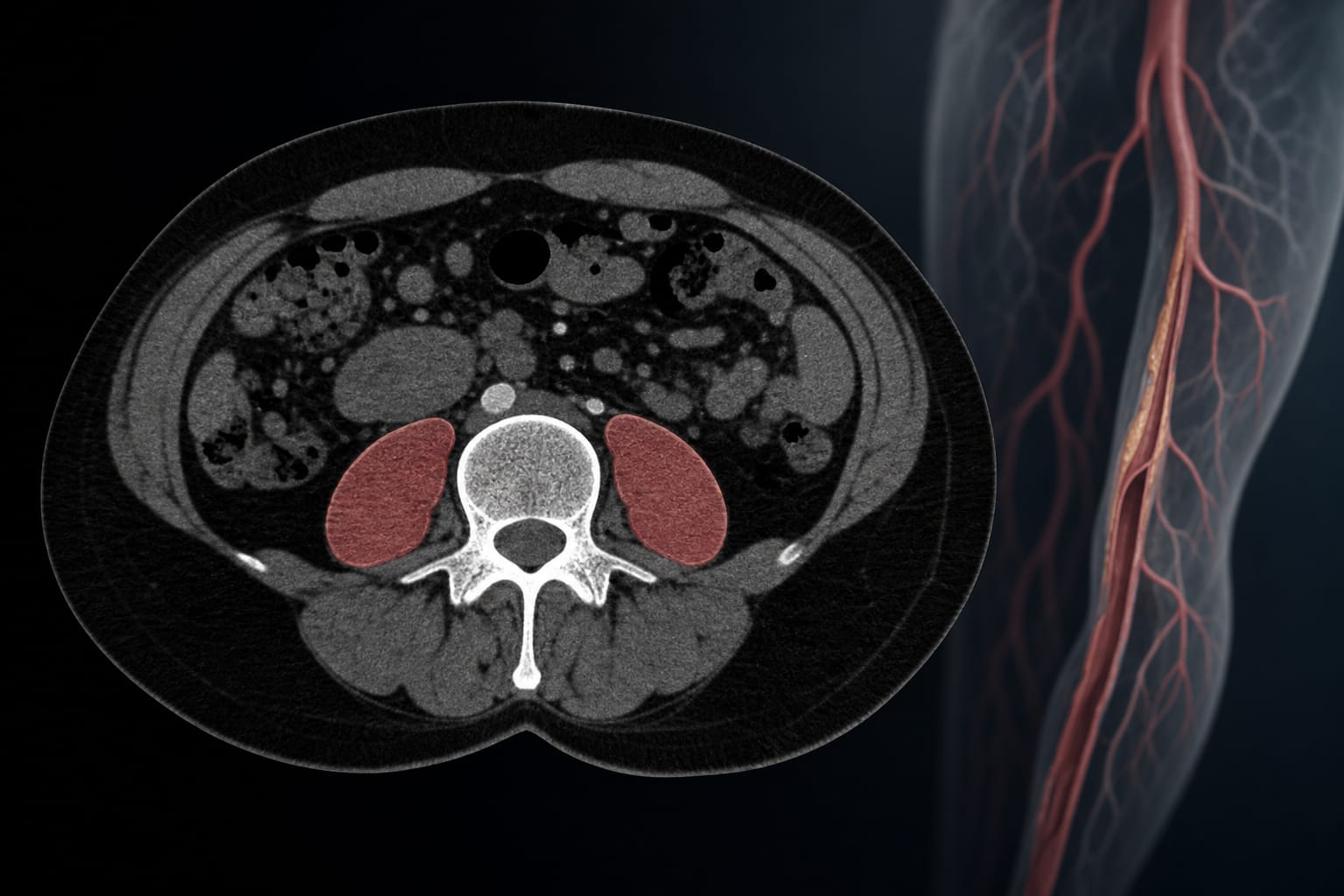
Responsible artificial intelligence in medical imaging: a systematic review
-
By
-
Nafiz Fahad
-
Ridwan Jamal Sadib
-
Rakib Hossain Sajib
-
Md Kishor Morol
-
Dip Nandi
-
Tze Hui Liew
-
July 16, 2026
Clinical Scorecard: Ethical Considerations of Artificial Intelligence in Medical Imaging: A Systematic Review
At a Glance
| Category | Detail |
|---|
| Condition | Artificial Intelligence in Medical Imaging |
| Key Mechanisms | Explainability, fairness, privacy, uncertainty, safety, and clinical trust. |
| Target Population | Patients undergoing imaging for various diseases including lung diseases, cancers, and dermatological disorders. |
| Care Setting | Clinical imaging environments utilizing AI for disease detection. |
Key Highlights
- AI in medical imaging requires transparent reasoning and equitable performance.
- Explainability methods like Grad-CAM and LIME are prevalent in studies.
- Accuracy or sensitivity reported above 90% should be interpreted cautiously.
- Bias in AI performance can arise across demographic factors.
- Privacy-preserving approaches are crucial due to the sensitivity of imaging data.
Guideline-Based Recommendations
Diagnosis
- Evaluate AI models through external and subgroup validation.
Management
- Incorporate privacy risk analysis and clinician-centered explanation assessment.
Monitoring & Follow-up
- Implement post-deployment monitoring of AI systems.
Risks
- Consider risks related to bias and demographic performance disparities.
Patient & Prescribing Data
Patients with conditions detectable via imaging such as lung cancer, breast cancer, and diabetic retinopathy.
AI models should be validated for generalizability and safety before clinical deployment.
Clinical Best Practices
- Ensure AI models are interpretable and explainable to clinicians.
- Adopt fairness and privacy-preserving techniques in AI development.
- Regularly assess AI systems for calibration and performance across diverse populations.
Related Resources & Content