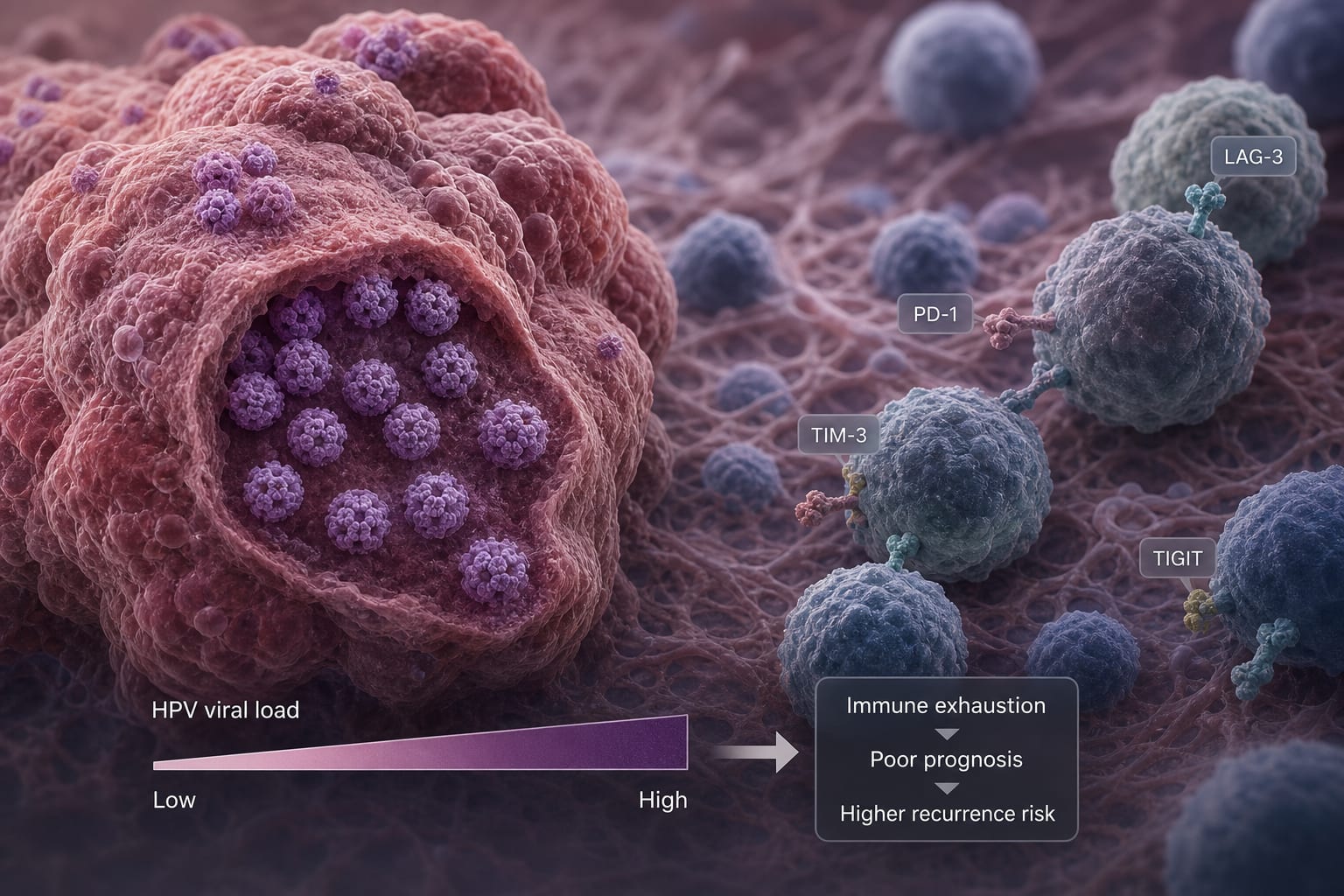
HPV viral load predicts immune exhaustion and prognosis in cervical neoplasia
-
By
-
Yibo Guo
-
Yuanrui Liu
-
Yongjian He
-
Yuzhao Zhang
-
Ling Li
-
Weiguo Lu
-
Zhanfeng Zhang
-
June 22, 2026
-
Clinical Scorecard: HPV Viral Load as a Predictor of Immune Exhaustion and Clinical Outcomes in Cervical Neoplasia
At a Glance
| Category | Detail |
|---|
| Condition | Cervical Neoplasia |
| Key Mechanisms | Persistent infection with high-risk HPV leading to immune evasion and tumor progression. |
| Target Population | Patients with cervical neoplasia. |
| Care Setting | Oncology and gynecology clinics. |
Key Highlights
- High HPV viral load is associated with advanced disease stage and lymph node metastasis.
- High viral load correlates with reduced tumor-infiltrating lymphocytes and lower PD-L1 positivity.
- Post-treatment viral load decline is linked to lower recurrence risk.
- Combining viral load with serum SCC improves prediction of high-grade lesions and recurrence.
- Estradiol levels correlate positively with viral load in premenopausal women.
Guideline-Based Recommendations
Diagnosis
- HPV viral load should be quantified for assessing disease severity.
Management
- Consider immune-enhancing therapies for patients with high HPV viral load.
Monitoring & Follow-up
- Dynamic monitoring of HPV viral load may reflect treatment response and recurrence risk.
Risks
- High HPV viral load is an independent predictor of recurrence.
Patient & Prescribing Data
Women diagnosed with cervical neoplasia.
Incorporating HPV viral load into routine assessment may improve risk stratification.
Clinical Best Practices
- Utilize HPV viral load as a biomarker for prognosis in cervical cancer.
- Assess immune parameters alongside HPV viral load for comprehensive evaluation.
Related Resources & Content