Clinical Scorecard: A federated digital twin analysis shows that cytomegalovirus reactivation hinders CAR-T cell therapy effectiveness through IL-15-driven cytokine competition in B-cell lymphoma.
At a Glance
Category
Detail
Condition
Cytomegalovirus reactivation in B-cell lymphoma patients undergoing CAR-T therapy
Key Mechanisms
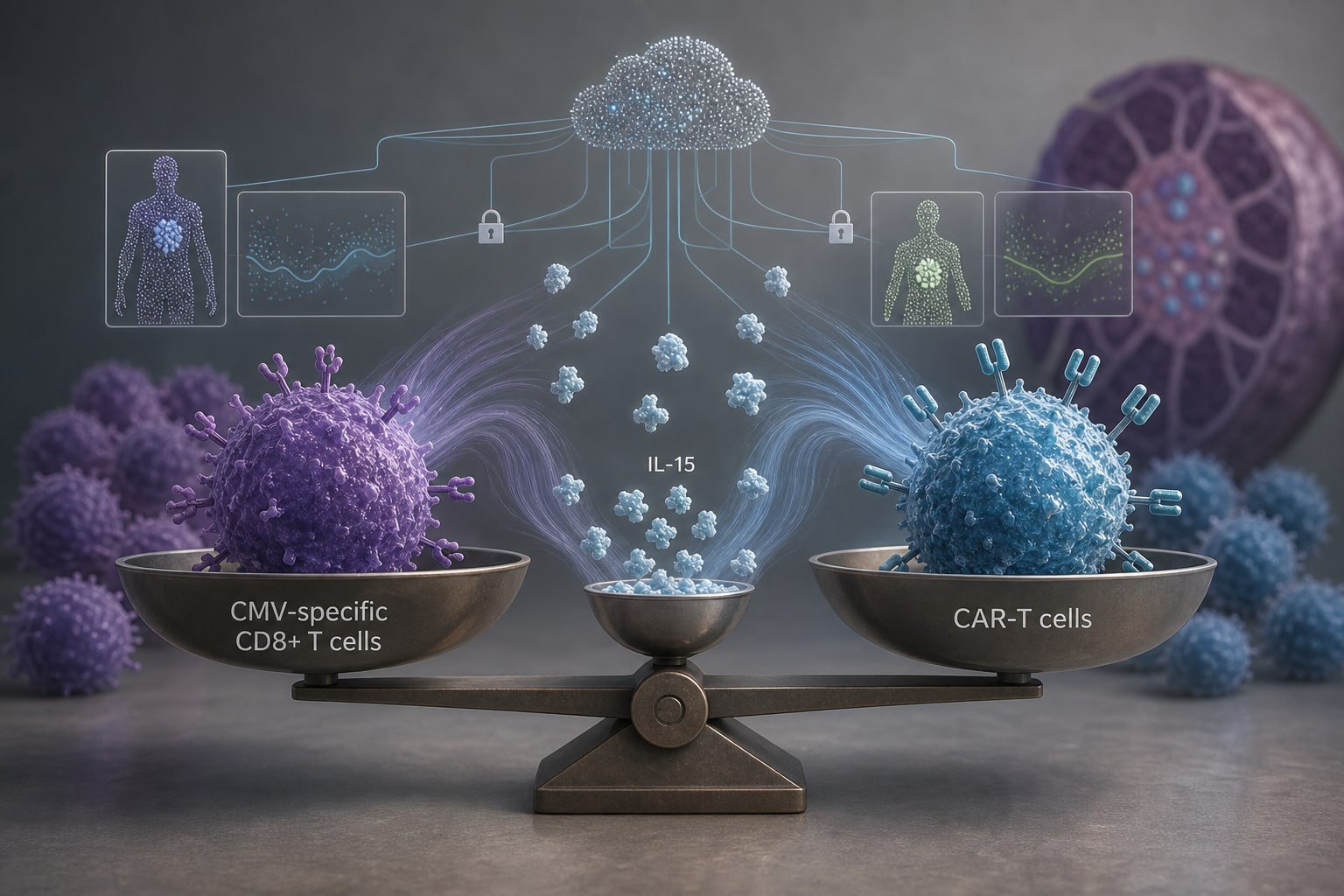
Cytokine competition between CMV-specific CD8+ T cells and CAR-T cells
Target Population
Seropositive patients receiving CAR-T therapy for B-cell lymphoma
Care Setting
Multi-institutional cancer centers
Key Highlights
CMV reactivation is associated with treatment failure in CAR-T therapy.
A digital twin model predicts CMV reactivation and its impact on CAR-T expansion.
Resource competition is identified as a mechanism linking CMV reactivation to CAR-T impairment.
In silico simulations suggest a risk-adapted antiviral prophylaxis strategy could reduce progression.
The model outperformed existing clinical risk scores in predicting CMV reactivation.
Guideline-Based Recommendations
Diagnosis
Monitor CMV viral load post-infusion to assess reactivation.
Management
Consider antiviral prophylaxis in seropositive patients undergoing CAR-T therapy.
Monitoring & Follow-up
Regularly evaluate CAR-T expansion and patient progression-free survival.
Risks
Increased risk of treatment failure associated with CMV reactivation.
Patient & Prescribing Data
Seropositive patients with B-cell lymphoma receiving CAR-T therapy.
Antiviral strategies may enhance CAR-T therapy effectiveness by mitigating CMV reactivation.
Clinical Best Practices
Utilize digital twin models for personalized intervention strategies.
Implement federated learning to enhance data privacy in clinical research.
Conduct randomized controlled trials to validate digital twin predictions.