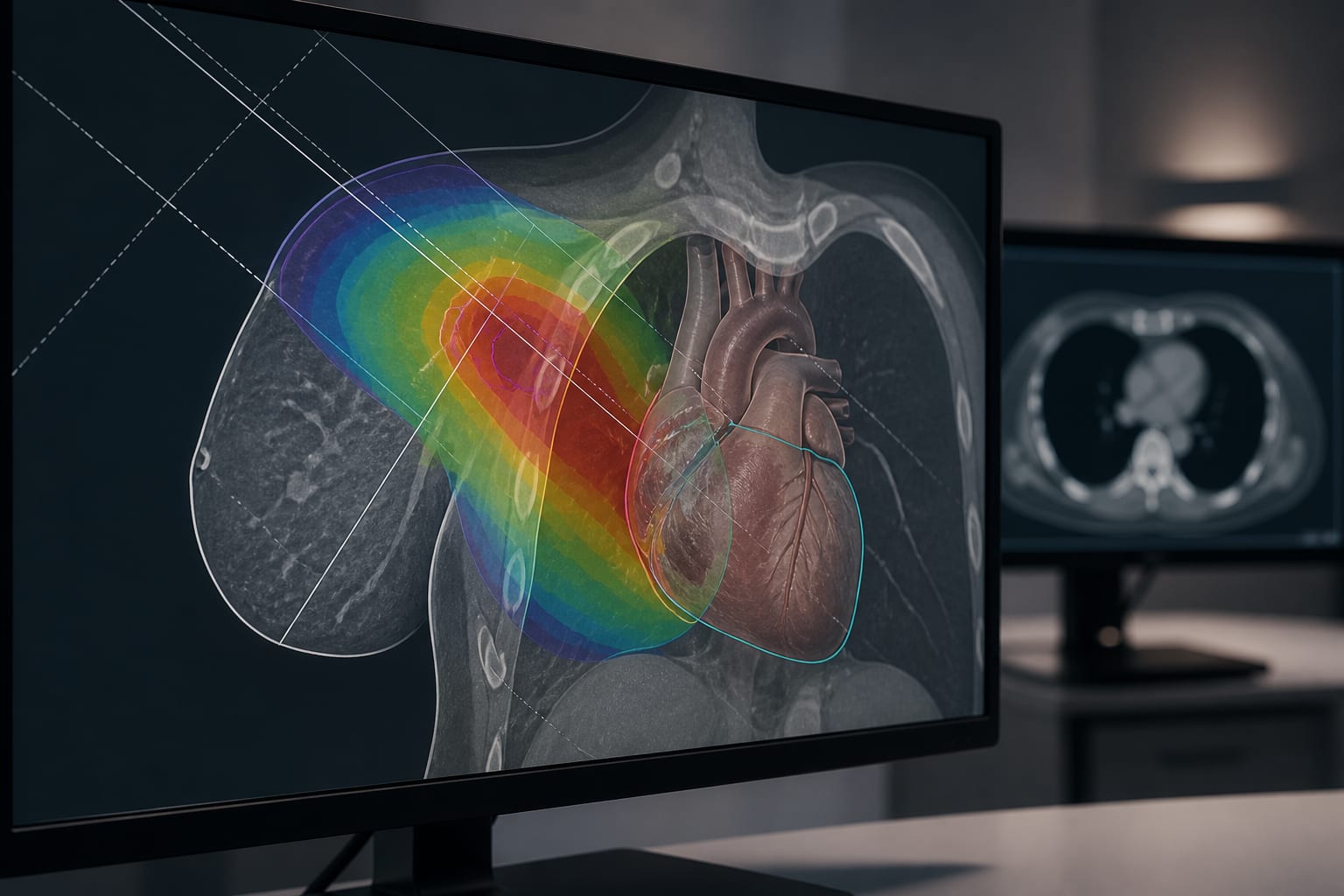
Integration of Surface-Guided Radiation Therapy with Real-Time Position Management for Deep Inspiratory Breath-Hold in Treating Left Breast Cancer - Scorecard - MDSpire
Clinical Scorecard: Integration of Surface-Guided Radiation Therapy with Real-Time Position Management for Deep Inspiratory Breath-Hold in Treating Left Breast Cancer
At a Glance
Category
Detail
Condition
Left Breast Cancer
Key Mechanisms
Deep Inspiratory Breath-Hold (DIBH) reduces radiation exposure to cardiac structures during radiotherapy.
Target Population
Females diagnosed with left-sided breast cancer post breast-conserving surgery.
Care Setting
Oncology radiotherapy departments.
Key Highlights
DIBH significantly mitigates radiation-induced cardiotoxicity and pulmonary complications.
SGRT combined with RPM improves treatment efficiency and reduces setup errors.
Patients selected based on specific criteria for optimal DIBH technique.
Guideline-Based Recommendations
Diagnosis
Diagnosis of left-sided breast cancer confirmed through clinical evaluation and imaging.
Management
Utilize DIBH during radiotherapy to minimize cardiac exposure.
Monitoring & Follow-up
Employ SGRT and RPM systems for accurate patient positioning and breath-hold verification.
Risks
Monitor for potential inaccuracies in respiratory gating and positioning errors.
Patient & Prescribing Data
20 females with left-sided breast cancer, median age 44 years.
Patients underwent whole-breast irradiation and tumor bed boost radiotherapy.
Clinical Best Practices
Ensure patient compliance with DIBH for optimal treatment outcomes.
Regularly assess and correct setup errors using SGRT and RPM systems.