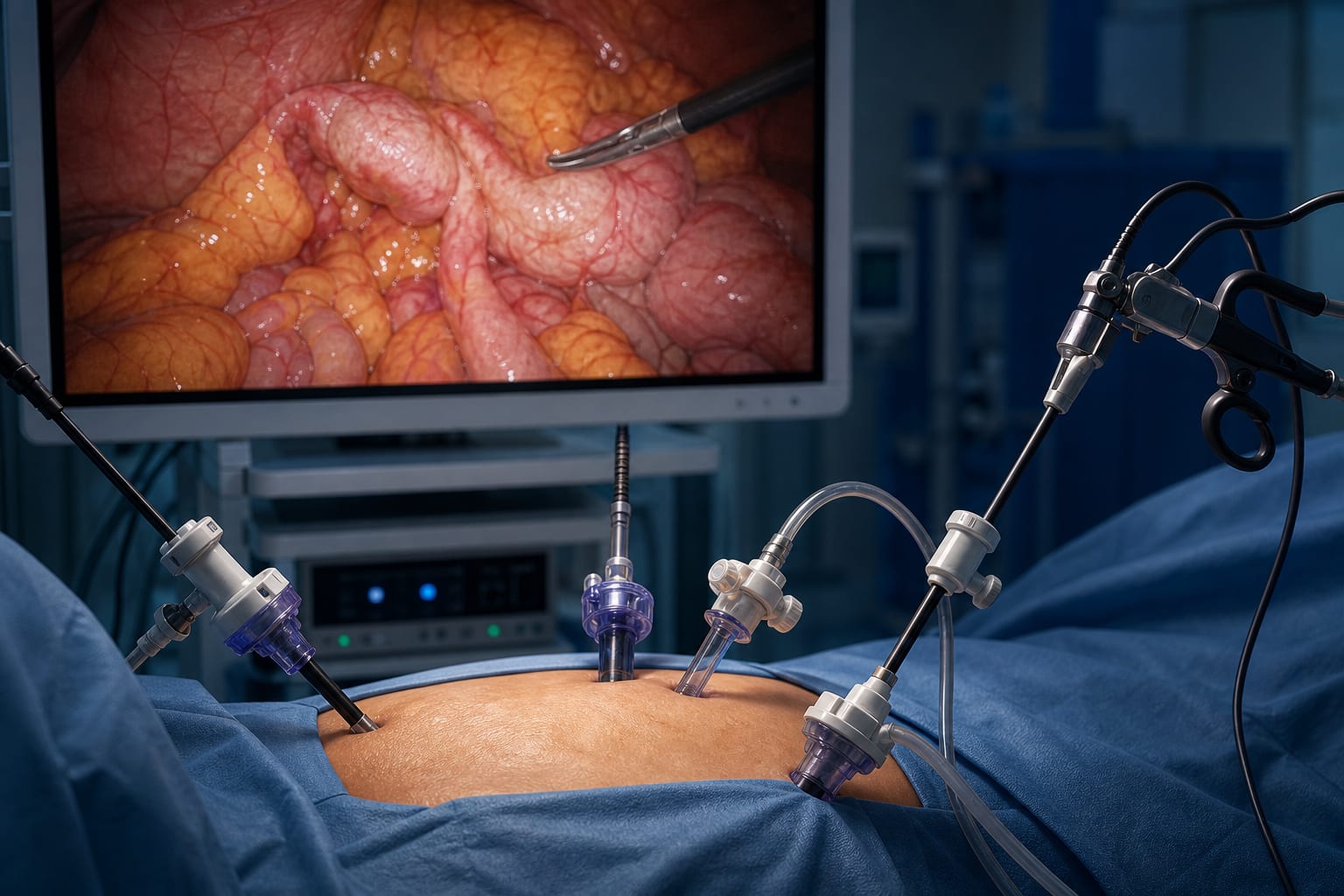
Predictors of conversion in laparoscopic Crohn’s surgery: a retrospective analysis of a tertiary cohort - Scorecard - MDSpire

Factors Influencing Conversion Rates in Laparoscopic Surgery for Crohn’s Disease: A Retrospective Study of a Tertiary Care Population

  • By

  • Tommaso Violante

  • Stefano Cardelli

  • Giacomo Calini

  • Marco Novelli

  • Nicola Renzi

  • Lorenzo Gentilini

  • Nikolas Konstantine Dussias

  • Fernando Rizzello

  • Matteo Rottoli

  • July 20, 2026

Share

Clinical Scorecard: Factors Influencing Conversion Rates in Laparoscopic Surgery for Crohn’s Disease: A Retrospective Study of a Tertiary Care Population

At a Glance

CategoryDetail
ConditionCrohn’s Disease
Key MechanismsLaparoscopic ileocecal resection as the standard surgical treatment; conversion to open surgery associated with complications.
Target PopulationAdults (≥ 18 years) undergoing elective ileocecal resection for Crohn’s disease.
Care SettingTertiary referral center

Key Highlights

  • Laparoscopic approach preferred for ileocecal resection.
  • Conversion rates range from 10% to over 37%.
  • Predictors of conversion include obesity, previous abdominal surgery, and intra-abdominal abscesses.
  • Conversion associated with longer hospitalization and higher healthcare costs.
  • Study aimed to identify independent preoperative predictors of conversion.

Guideline-Based Recommendations

Diagnosis

  • Assess disease behavior using the Montreal classification.

Management

  • Consider laparoscopic approach for suitable candidates.

Monitoring & Follow-up

  • Evaluate postoperative outcomes within 30 days.

Risks

  • Monitor for complications associated with conversion to open surgery.

Patient & Prescribing Data

Adults undergoing elective surgery for Crohn’s disease.

Preoperative medical therapy includes systemic steroids, biologic agents, and immunomodulators.

Clinical Best Practices

  • Perform careful preoperative risk stratification.
  • Utilize modern minimally invasive techniques in high-volume centers.

Related Resources & Content

Original Source(s)

Related Content