Integrated single-cell and bulk RNA sequencing analyses identify a myeloid state-related gene signature for molecular subtyping in stomach adenocarcinoma - Scorecard - MDSpire

Integrated single-cell and bulk RNA sequencing analyses identify a myeloid state-related gene signature for molecular subtyping in stomach adenocarcinoma

  • By

  • Ruinan Li

  • Bohong Wei

  • Bin Sun

  • Mingji Li

  • Yingman Wang

  • Xiangyu Zhao

  • Yuntao Yao

  • Duowu Zou

  • Zirui He

  • July 16, 2026

Share

Clinical Scorecard: Combined Single-Cell and Bulk RNA Sequencing Reveals a Gene Signature Related to Myeloid States for Molecular Classification in Gastric Adenocarcinoma

At a Glance

CategoryDetail
ConditionStomach adenocarcinoma (STAD)
Key MechanismsMyeloid cell differentiation trajectories and their impact on tumor microenvironment and patient prognosis.
Target PopulationPatients with gastric adenocarcinoma.
Care SettingOncology and molecular pathology.

Key Highlights

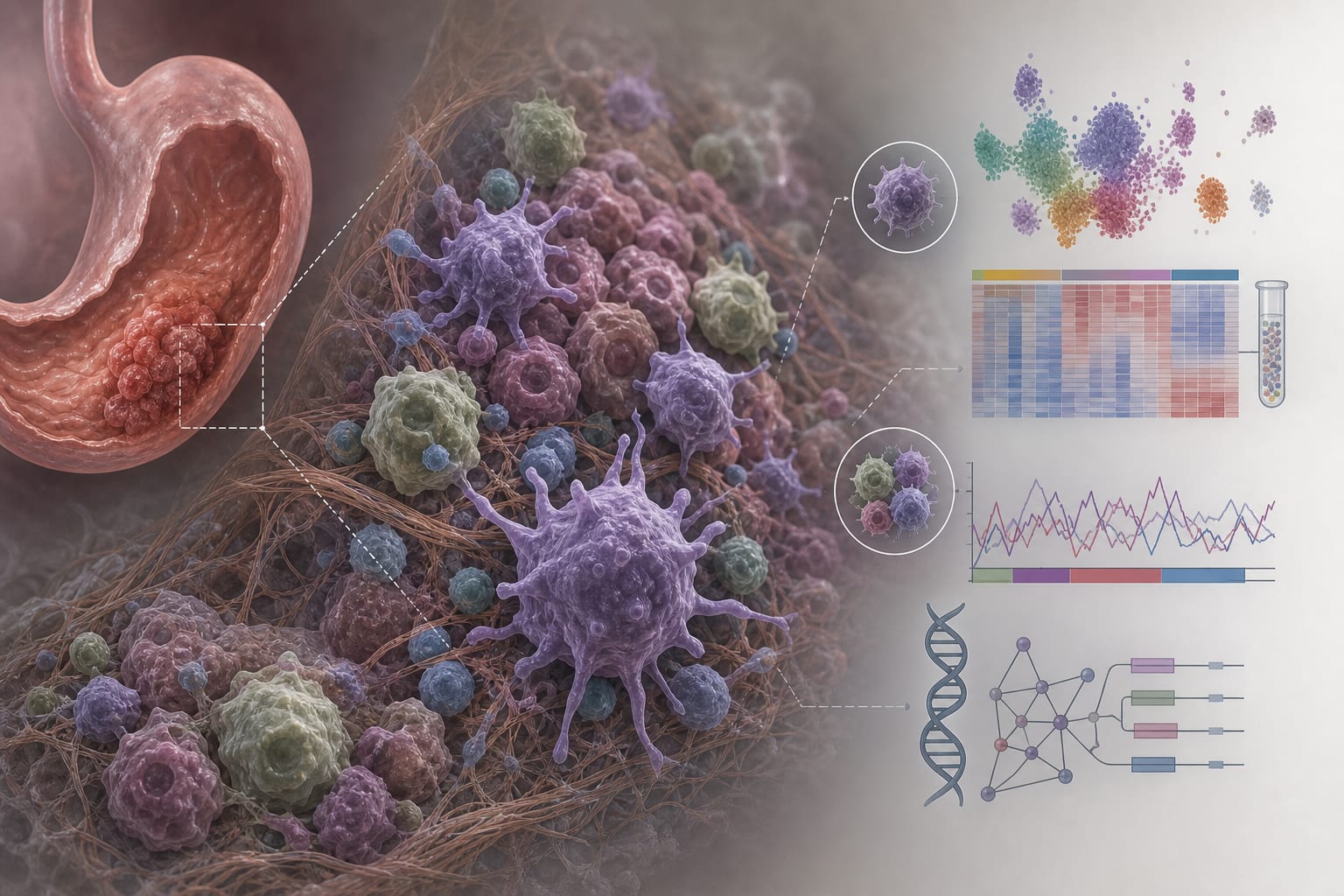
  • Identification of 32 myeloid state-related prognostic genes (MSRPGs).
  • Stratification of STAD patients into three subtypes based on immune infiltration: LI-STAD, MI-STAD, HI-STAD.
  • HI-STAD subtype associated with the poorest overall survival.
  • Development of a 5-gene prognostic signature for risk assessment.
  • Exploratory pharmacogenomic analysis indicating potential subtype-specific therapeutic vulnerabilities.

Guideline-Based Recommendations

Diagnosis

  • Utilize molecular classification frameworks for improved patient stratification.

Management

  • Consider subtype-specific therapeutic strategies based on myeloid state classification.

Monitoring & Follow-up

  • Assess patient prognosis using the identified 5-gene risk model.

Risks

  • Patients with HI-STAD subtype exhibit the highest risk of poor outcomes.

Patient & Prescribing Data

Patients with gastric adenocarcinoma undergoing treatment.

Potential associations with drugs like dabrafenib and ruxolitinib based on myeloid state classification.

Clinical Best Practices

  • Integrate multi-omics data for comprehensive patient assessment.
  • Utilize immunohistochemistry for protein-level validation of molecular classifications.

Related Resources & Content

Original Source(s)

Related Content