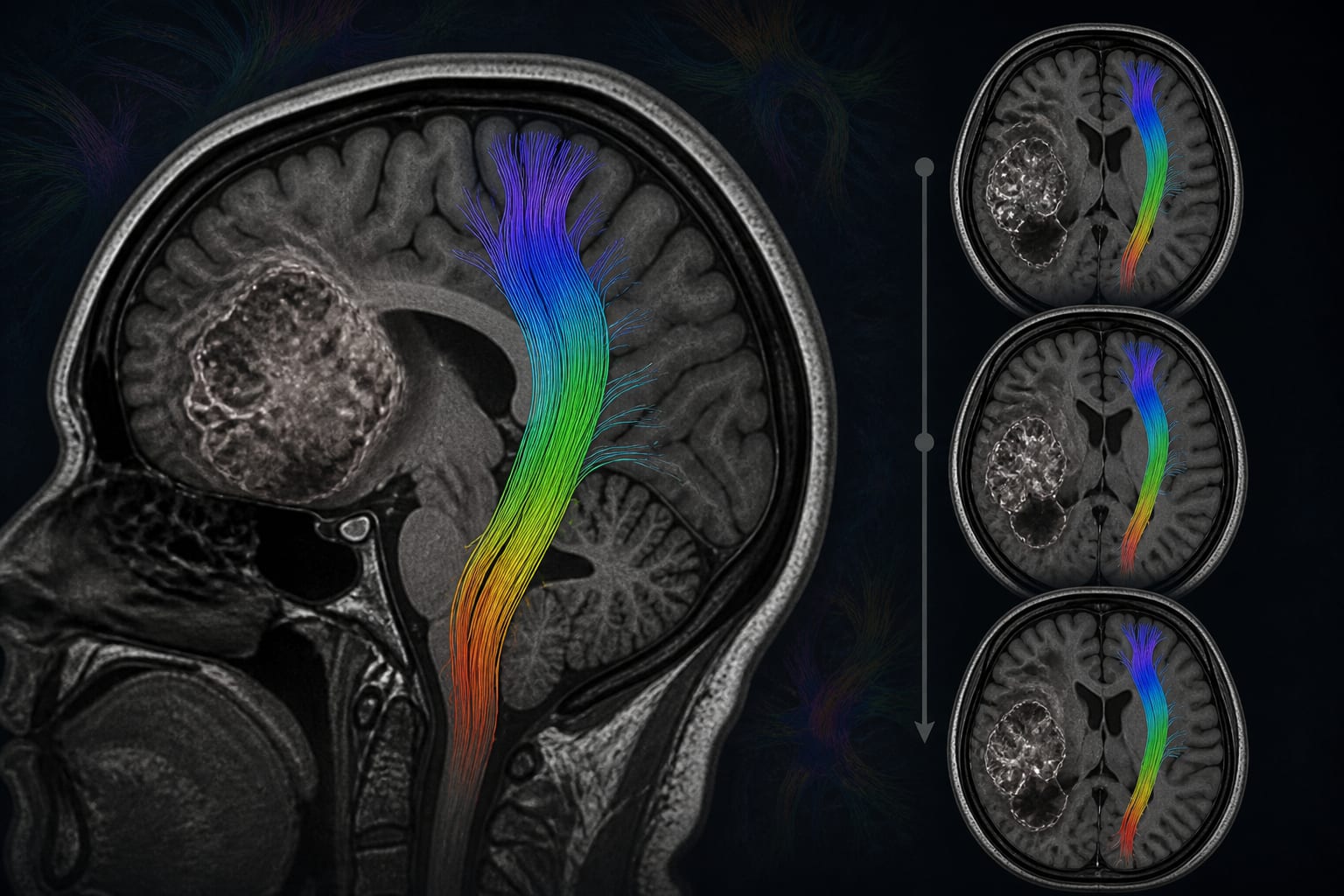
Rapid Glioma Analysis Could Help Guide Brain Tumor Surgery
-
October 8, 2026
-
3 min
Clinical Scorecard: Rapid Glioma Analysis Could Help Guide Brain Tumor Surgery
At a Glance
| Category | Detail |
|---|---|
| Condition | Glioma tissue identification and molecular classification |
| Key Mechanisms | Syringe touch spray tandem mass spectrometry measures metabolite ratios to distinguish glioma from nontumor tissue and classify tumors by IDH mutation status and grade. |
| Target Population | Patients undergoing brain tumor surgery; the study analyzed 78 glioma and 8 nontumor human brain specimens. |
| Care Setting | Potential intraoperative tissue assessment during brain tumor surgery, particularly at tumor margins; the method is not a replacement for standard care. |
Key Highlights
- The method analyzed a small tissue sample in approximately three minutes.
- The N-acetylaspartate-to-carnitine ratio distinguished glioma from nontumor tissue with 97% sensitivity, 100% specificity, and 98% accuracy against clinical diagnoses in the study.
- Ratios involving 2-hydroxyglutarate separated 13 IDH-mutant from 24 IDH-wild-type samples in the study cohort.
- Metabolite ratios separated grade 2 and grade 3 tumors from grade 4 tumors in the analyzed samples.
- Some mixtures with substantial tumor content fell below the tumor-core cutoff, indicating that this threshold may miss cancer in heterogeneous margins.
Guideline-Based Recommendations
Diagnosis
- The study evaluated metabolite-ratio analysis for distinguishing glioma from nontumor brain tissue and classifying gliomas by IDH status and grade.
Management
- The researchers described the method as a potential source of intraoperative molecular information to help guide surgical decisions, particularly at tumor margins.
- The method is not intended to replace the current standard of care during brain tumor surgery.
Monitoring & Follow-up
- The study assessed whether metabolite ratios changed with the proportion of tumor cells in mixed tumor and normal brain tissue.
Risks
- Some mixtures containing substantial tumor content fell below the cutoff established using tumor-core tissue, so a tumor-core threshold may miss cancer at heterogeneous margins.
Patient & Prescribing Data
No treatment or prescribing population was reported. The study analyzed 86 human brain specimens: 78 glioma and 8 nontumor samples.
No drug treatment was evaluated. The method was investigated as a possible intraoperative tissue-analysis tool.
Clinical Best Practices
- Interpret the reported diagnostic performance in the context of the study cohort and its 86 specimens.
- Do not treat tumor-core thresholds as established for heterogeneous surgical margins; some tumor-containing mixtures fell below the cutoff.
- Use the method, if applied, as a potential adjunct to—not a replacement for—current standard care, as stated by the study's lead author.
Related Resources & Content
Based on findings from:
Rapid Glioma Analysis Could Help Guide Brain Tumor Surgery
The Analytical Scientist, 2026.
https://theanalyticalscientist.com/issues/2026/articles/october/rapid-glioma-analysis-could-help-guide-brain-tumor-surgery/
This content is an AI-generated, fully rewritten summary based on a published scholarly article. It does not reproduce the original text and is not a substitute for the original publication. Readers are encouraged to consult the source for full context, data, and methodology.