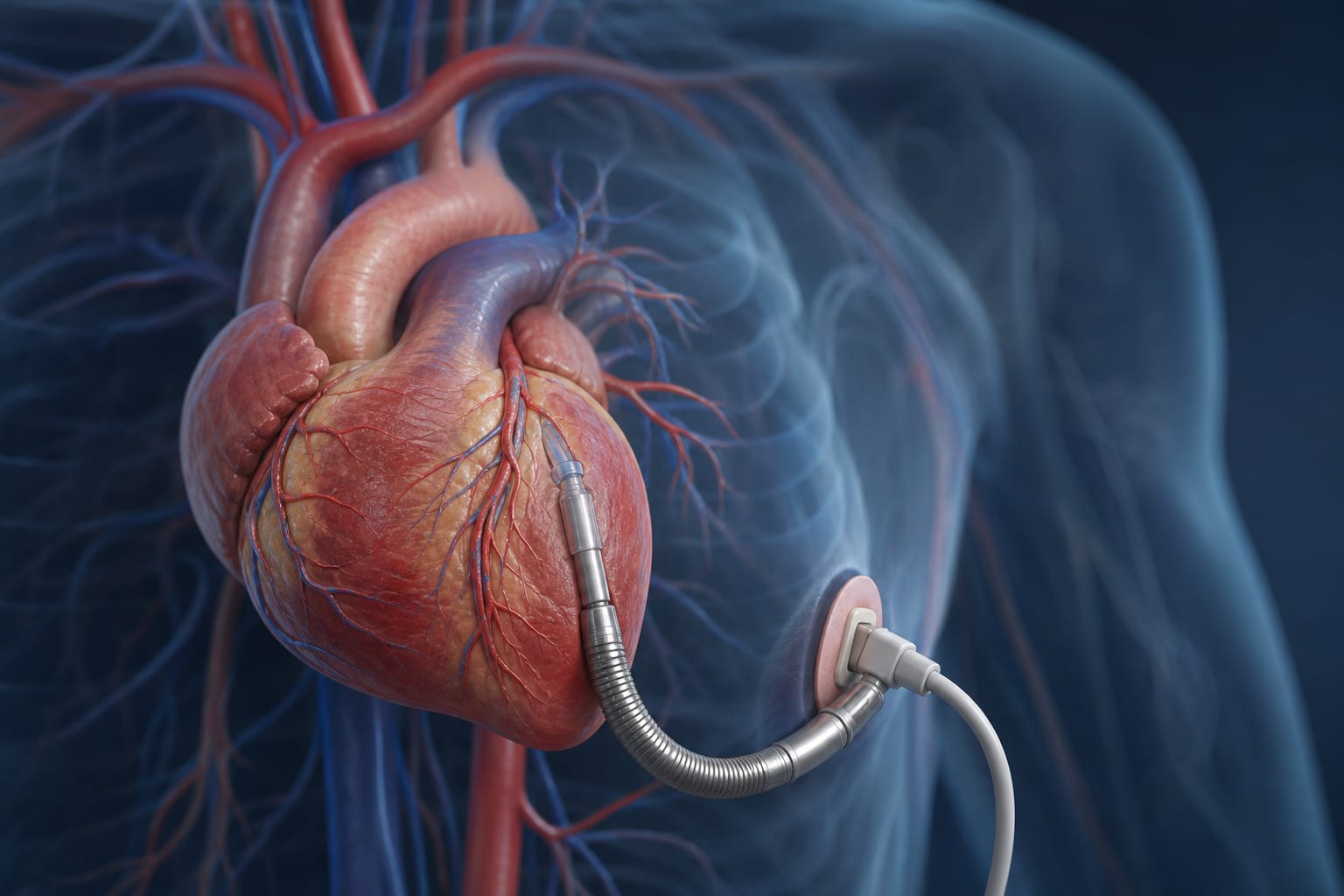
Vericiguat's Effects on Acute Coronary Syndrome Patients with Diminished Ejection Fraction: Insights from the EVE-ACSrEF Trial
-
By
-
Xinying Shi
-
Anran Zhao
-
Yi Ding
-
Lingfeng Gu
-
Tongtong Yang
-
Hao Wang
-
Qiming Wang
-
Sibo Wang
-
Liansheng Wang
-
February 21, 2026
-
Clinical Scorecard: Vericiguat's Effects on Acute Coronary Syndrome Patients with Diminished Ejection Fraction: Insights from the EVE-ACSrEF Trial
At a Glance
| Category | Detail |
|---|
| Condition | Acute Coronary Syndrome (ACS) with Heart Failure and Reduced Ejection Fraction (HFrEF) |
| Key Mechanisms | Involves the NO-sGC-cGMP signaling pathway and atherothrombosis due to plaque rupture. |
| Target Population | Patients with ACS complicated by HFrEF (LVEF < 45%) |
| Care Setting | Hospitalization and outpatient follow-up |
Key Highlights
- Vericiguat is a novel oral soluble guanylate cyclase stimulator.
- The study evaluates vericiguat's efficacy in reducing cardiovascular death and hospitalization for heart failure.
- Inclusion criteria include symptomatic heart failure classified as NYHA class II-IV.
- The study aims to assess the impact on cardiac function and quality of life.
- A total of 149 patients were included in the analysis.
Guideline-Based Recommendations
Diagnosis
- Meet current guideline diagnostic criteria for ACS.
- Echocardiographic confirmation of LVEF < 45%.
Management
- Standard GDMT includes beta-blockers, ACEI/ARB/ARNI, SGLT2i, and MRA.
- Dual antiplatelet therapy (DAPT) recommended within 12 months post-ACS.
Monitoring & Follow-up
- Regular monitoring of medication usage, adverse events, and endpoint events.
Risks
- Elevated risk of hospitalization for heart failure and major adverse cardiovascular events.
Patient & Prescribing Data
Patients aged 18-90 with ACS and HFrEF.
Vericiguat initiated during hospitalization and continued long-term post-discharge.
Clinical Best Practices
- Adhere to evidence-based stepwise optimization protocols for GDMT.
- Monitor hemodynamic assessments and adjust vericiguat dosage based on clinical symptoms.
References