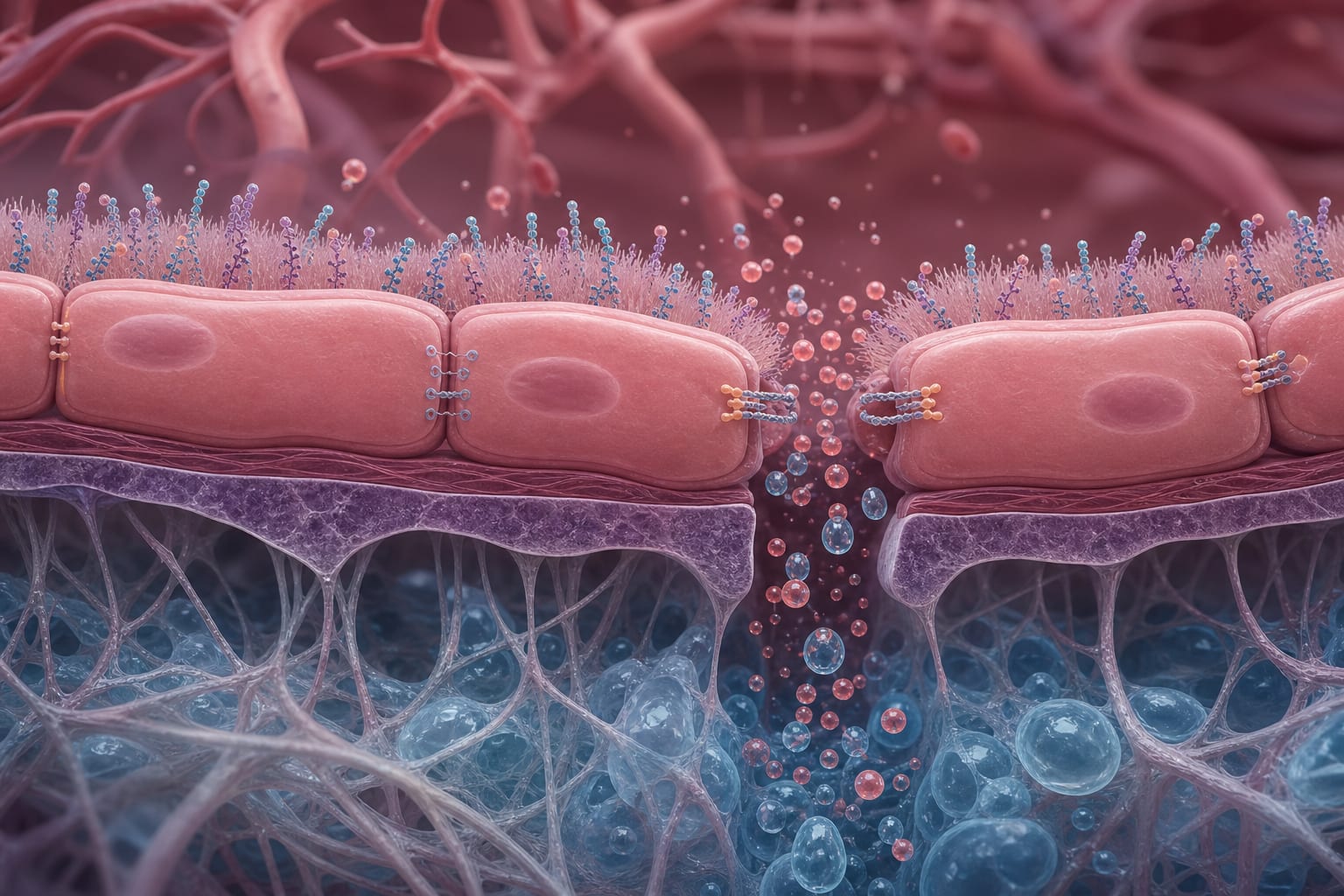
Endothelial barrier disorder in hereditary angioedema: molecular mechanisms and therapeutic implications
-
By
-
Nan Zhou
-
Jianqiang Wu
-
Yuxiang Zhi
-
June 1, 2026
-
Clinical Scorecard: Disruption of Endothelial Barrier Function in Hereditary Angioedema: Insights into Molecular Mechanisms and Treatment Strategies
At a Glance
| Category | Detail |
|---|
| Condition | |
| Key Mechanisms | Endothelial dysfunction and excessive bradykinin generation, emphasizing their interplay. |
| Target Population | |
| Care Setting | |
Key Highlights
- Endothelial cells play a critical role in vascular permeability regulation in HAE.
- New HAE subtypes linked to endothelial regulatory pathway variants have been identified.
- Endothelial dysfunction is a primary pathogenic mechanism in specific HAE subtypes.
- Misdiagnosis of HAE is common, leading to significant diagnostic delays.
- Dynamic regulation of endothelial junctions is crucial for maintaining barrier integrity.
- Endothelial junctions are actively involved in the pathogenesis of HAE.
Guideline-Based Recommendations
Diagnosis
- Consider HAE in patients with recurrent episodes of edema, especially with laryngeal involvement.
- Utilize specific diagnostic tests such as C1-inhibitor levels and genetic testing.
Management
Monitoring & Follow-up
Risks
Patient & Prescribing Data
Individuals diagnosed with hereditary angioedema, particularly those with endothelial dysfunction.
Therapies should address both bradykinin-dependent and independent pathways.
Clinical Best Practices
- Integrate endothelial-centered frameworks in understanding HAE pathogenesis.
- Utilize biomarkers for assessing disease activity and treatment efficacy.
- Educate patients on the signs of laryngeal edema to prevent emergencies.
- Encourage interdisciplinary collaboration for comprehensive HAE management.
Related Resources & Content