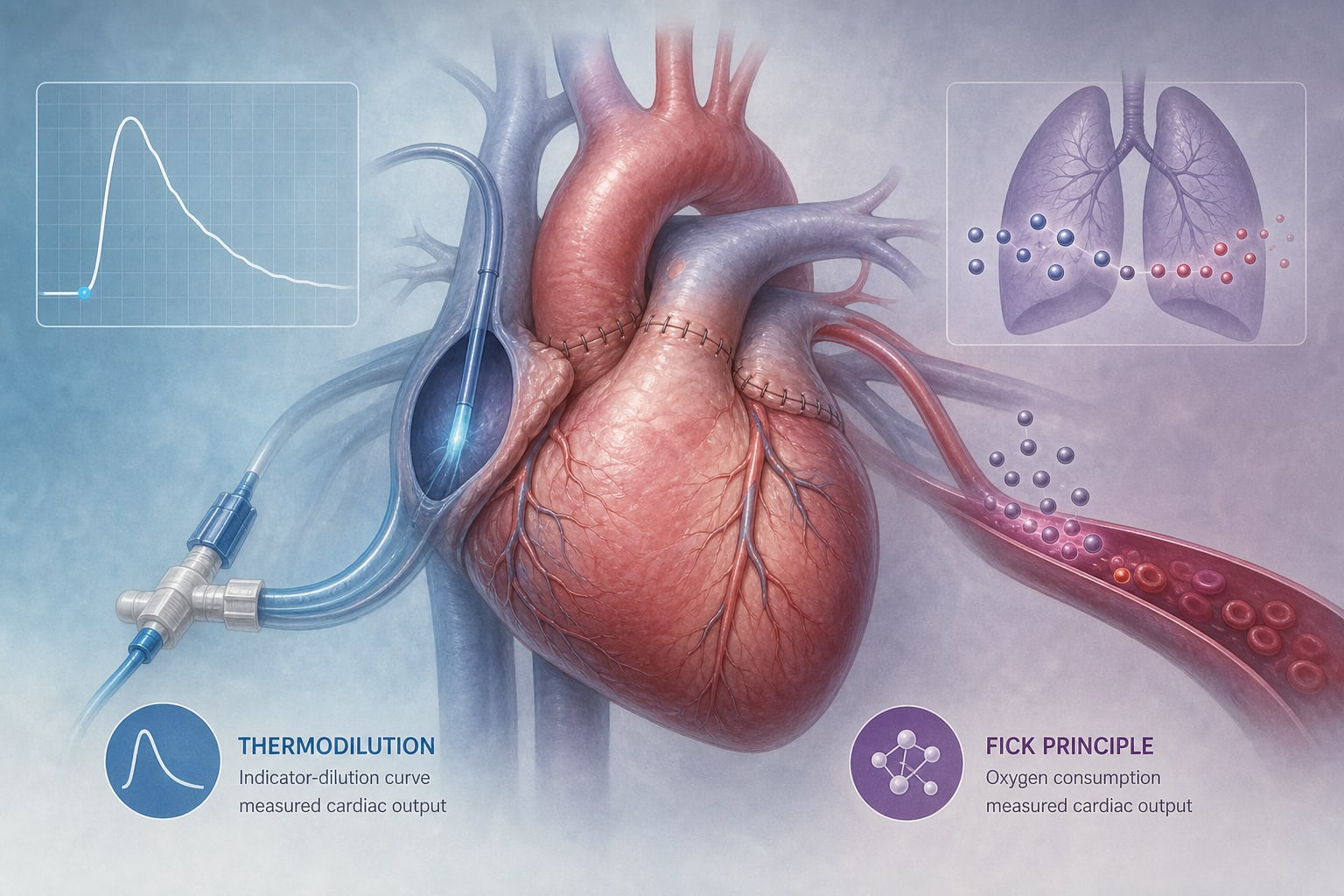
Cardiac Index Measured Using the Fick Principle Versus Thermodilution in Children Following Orthotopic Heart Transplantation
By
Elyssa Cohen
Conor O’Halloran
Nicholas Pilli
Paul Tannous
June 26, 2026
Clinical Scorecard: Comparison of Cardiac Index Assessment via the Fick Principle and Thermodilution in Pediatric Patients Post-Orthotopic Heart Transplantation
At a Glance
Category Detail
Condition Cardiac Index Assessment Key Mechanisms Measurement of systemic blood flow generated by the heart using Fick principle and thermodilution. Target Population Pediatric patients post-orthotopic heart transplantation. Care Setting Single center prospective observational cohort study.
Key Highlights
Median age of patients was 15.0 years, with 57% male. 69% of patients received transplant due to congenital heart disease. Median cardiac index via thermodilution was 2.7 L/min/m2; via Fick method was 3.7 L/min/m2. Low agreement between Fick and thermodilution methods (ICC = 0.13). 48% of cases showed normal Fick CI but abnormal thermodilution CI. Guideline-Based Recommendations
Diagnosis
Use thermodilution as the gold standard for cardiac index measurement in the absence of intracardiac shunts. Management
Perform serial catheterizations post-OHT to monitor cardiac index and pulmonary vascular resistance. Monitoring & Follow-up
Follow patients at 2 weeks, 4 weeks, 3 months, 6 months, 9 months, and 12 months after OHT. Risks
Potential for significant variation in cardiac index measurements between methods. Patient & Prescribing Data
Pediatric patients aged 5 years and older undergoing orthotopic heart transplantation.
Patients may be on milrinone or ventricular assist devices prior to transplantation.
Clinical Best Practices
Utilize the LaFarge formula for estimating VO2 in Fick calculations. Ensure accurate assessment of cardiac index to guide post-transplant care. Related Resources & Content