A precise oral glucose loading 18F-FDG PET myocardial metabolic imaging protocol in coronary artery disease patients complicated by diabetes mellitus: an exploratory prospective cohort study - Scorecard - MDSpire
Conexiant’s news site is now MDSpire News. Learn more
Advertisement
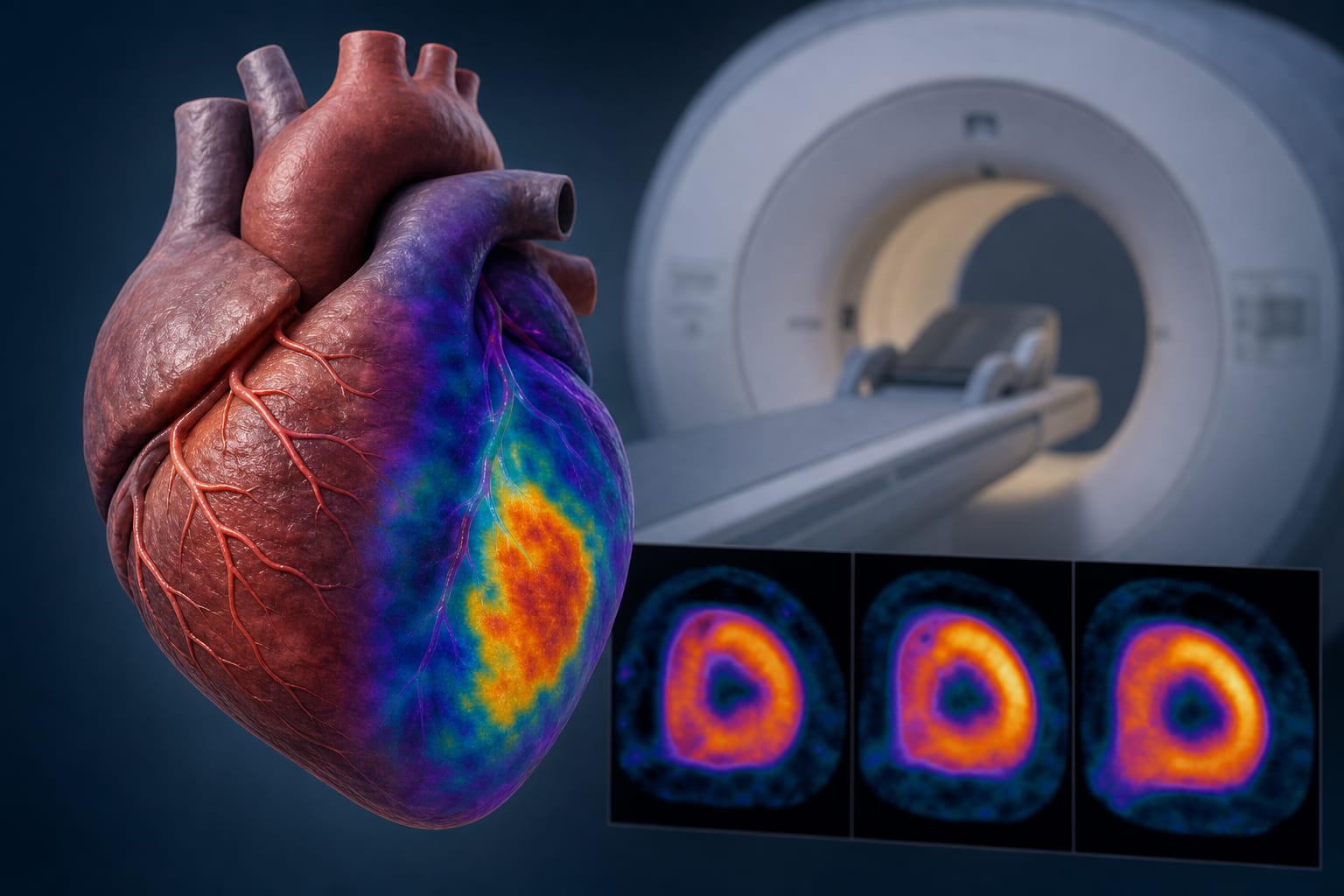
An Exploratory Prospective Cohort Study on a Tailored Oral Glucose Loading Protocol for 18F-FDG PET Myocardial Metabolic Imaging in Diabetic Patients with Coronary Artery Disease
Clinical Scorecard: An Exploratory Prospective Cohort Study on a Tailored Oral Glucose Loading Protocol for 18F-FDG PET Myocardial Metabolic Imaging in Diabetic Patients with Coronary Artery Disease
At a Glance
Category
Detail
Condition
Coronary Artery Disease complicated by Diabetes Mellitus
Key Mechanisms
Oral glucose loading combined with subcutaneous insulin administration to enhance 18F-FDG PET imaging quality.
Target Population
Patients with coronary artery disease and diabetes mellitus.
Care Setting
Clinical application of metabolic imaging protocols.
Key Highlights
179 CAD patients with DM were enrolled in the study.
FDG image quality was excellent in 57.5% of patients.
Image quality varied significantly with blood glucose levels at FDG injection.
No severe adverse reactions were reported during the study.
The tailored glucose loading protocol is feasible for clinical application.
Guideline-Based Recommendations
Diagnosis
Utilize 18F-FDG PET combined with myocardial perfusion imaging for assessing myocardial viability.
Management
Implement a tailored oral glucose loading and insulin administration protocol prior to imaging.
Monitoring & Follow-up
Assess blood glucose levels before FDG injection to optimize image quality.
Risks
Monitor for potential adverse reactions during metabolic preparation.
Patient & Prescribing Data
Patients with CAD and DM undergoing myocardial viability assessment.
Individualized glucose dosing based on baseline blood glucose improves imaging outcomes.
Clinical Best Practices
Adhere to fasting protocols prior to PET imaging.
Evaluate myocardial viability using both MMI and MPI for accurate diagnosis.
In an observational US target trial emulation, glucagon-like peptide-1 receptor agonist initiation was associated with about 3 to 4 more ischemic optic neuropathy cases per 10,000 patients over 18 months than two comparator drug classes.
Creatine's ATP-buffering trick isn't just for biceps. In mice, it juices up dendritic cells' energy supply, sharpening T-cell priming and shrinking tumors on daily injections. Human DCs got the memo too, at least in a dish. Early days, but a fun plot twist for gym-bag chemistry.