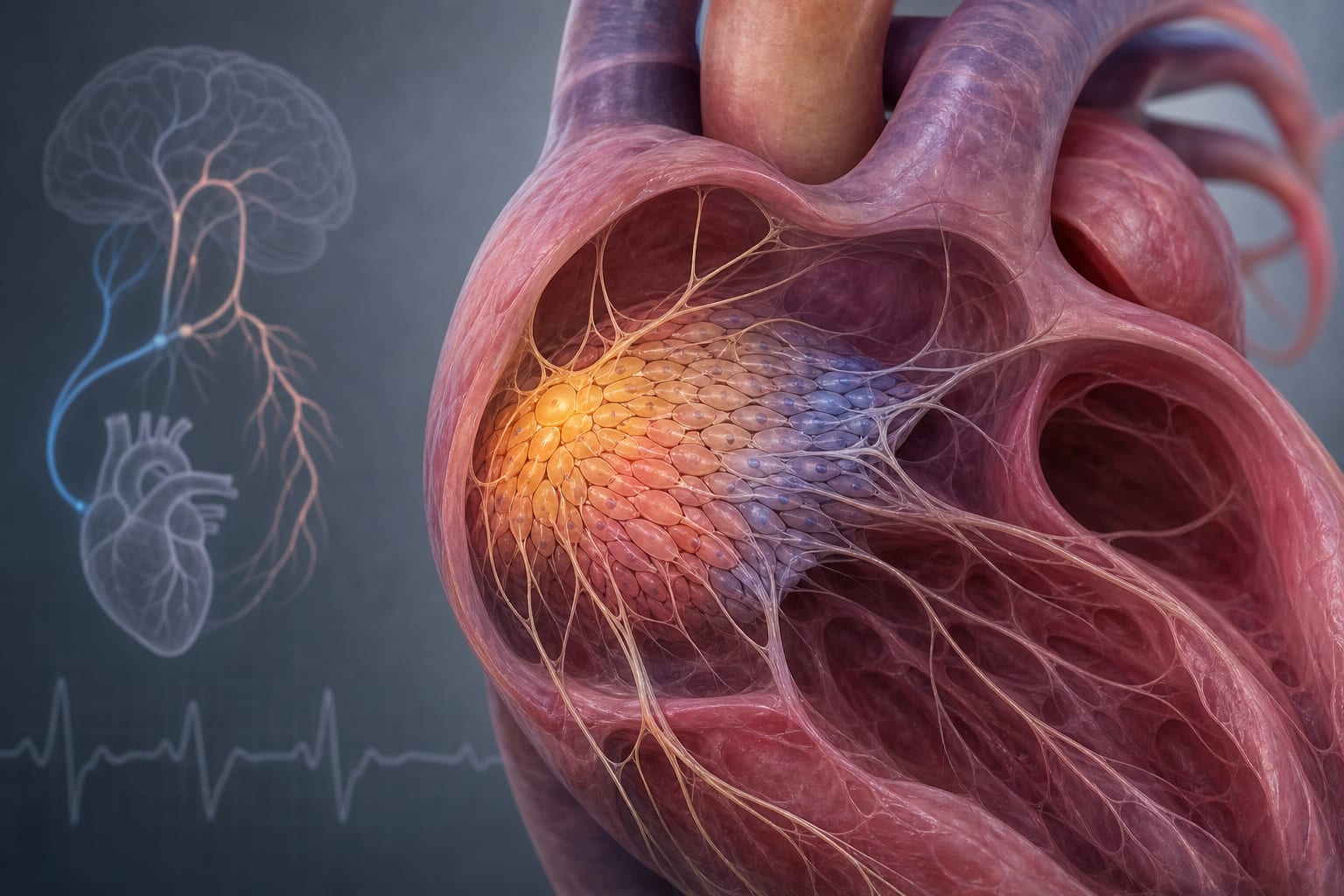
Desynchronization of Pacemaker Activity in the Sinoatrial Node Triggered by Stress
By
Dong-Gyun Han
June 23, 2026
Clinical Scorecard: Desynchronization of Pacemaker Activity in the Sinoatrial Node Triggered by Stress
At a Glance
Category Detail
Condition Sinoatrial Node Dysfunction Key Mechanisms Loss of synchronization within pacemaker cells due to stress-related factors. Target Population Individuals experiencing chronic stress or autonomic loading. Care Setting Clinical cardiology and electrophysiology.
Key Highlights
Sinoatrial node functions as a heterogeneous population of pacemaker cells. Stress-related factors can lead to arrhythmogenic vulnerability. Abrupt physiological transitions may expose latent instability in pacemaker activity. Chronic autonomic loading and structural remodeling contribute to synchronization loss. Population-level coherence is crucial for stable pacemaker function. Guideline-Based Recommendations
Diagnosis
Assess arrhythmogenic risk in patients with chronic stress or autonomic dysfunction. Management
Consider interventions targeting synchronization reserve in the sinoatrial node. Monitoring & Follow-up
Monitor for arrhythmias during periods of physiological stress or transitions. Risks
Increased risk of arrhythmias due to loss of pacemaker coherence. Patient & Prescribing Data
Patients with stress-related cardiac arrhythmias.
Focus on managing stress and autonomic function to improve pacemaker stability.
Clinical Best Practices
Evaluate the impact of chronic stress on cardiac rhythm. Implement strategies to enhance synchronization in the sinoatrial node. Monitor patients for arrhythmias during physiological challenges. Related Resources & Content