Long term survival of patients with alpha-fetoprotein-positive hepatoid adenocarcinoma of the gallbladder: a case report and literature review - Scorecard - MDSpire
Advertisement
Long term survival of patients with alpha-fetoprotein-positive hepatoid adenocarcinoma of the gallbladder: a case report and literature review
Clinical Scorecard: Prolonged Survival in a Patient with Alpha-Fetoprotein-Positive Hepatoid Adenocarcinoma of the Gallbladder: A Case Study and Review of Existing Literature
At a Glance
Category
Detail
Condition
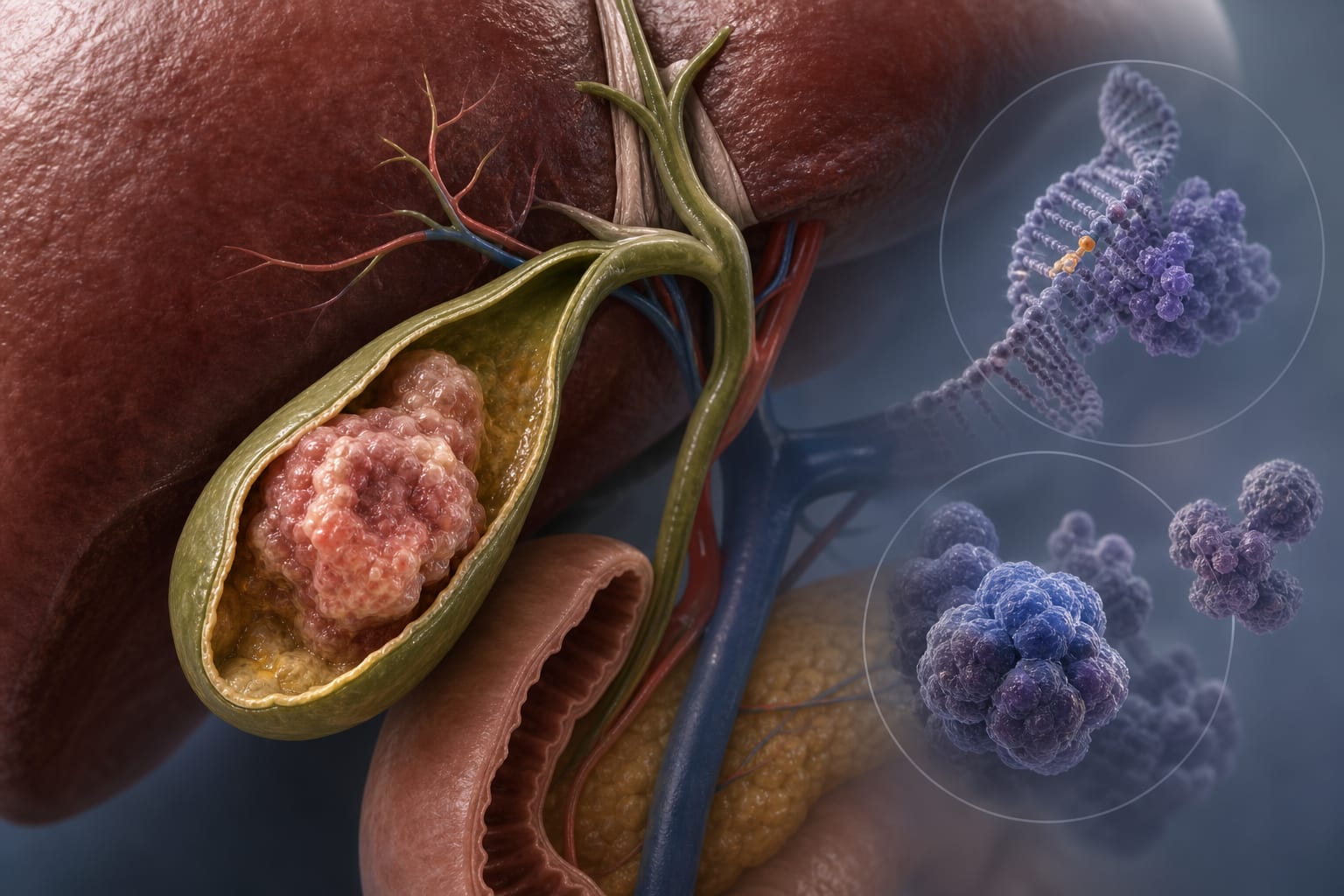
Hepatoid adenocarcinoma of the gallbladder
Key Mechanisms
Alpha-fetoprotein production, TP53 mutation, EGFR copy number amplification
Target Population
Patients with AFP-positive gallbladder carcinoma
Care Setting
Oncology and surgical intervention
Key Highlights
Hepatoid adenocarcinoma is a rare and aggressive variant of gallbladder carcinoma.
The patient achieved 68 months of recurrence-free survival following radical resection and adjuvant TACE.
Elevated serum AFP levels are a hallmark of this subtype, with a concentration of 1210.00 ng/mL at diagnosis.
Genomic profiling revealed a TP53 mutation and EGFR amplification, indicating potential therapeutic targets.
Histopathological analysis confirmed the diagnosis with strong positivity for AFP and other markers.
Guideline-Based Recommendations
Diagnosis
Histopathological and immunohistochemical analyses are essential for diagnosis.
Management
Radical resection followed by adjuvant transarterial chemoembolization (TACE) may improve outcomes.
Monitoring & Follow-up
Serum AFP levels should be monitored postoperatively to assess treatment response.
Risks
Hepatoid adenocarcinoma has a poor prognosis and is associated with aggressive disease.
Patient & Prescribing Data
66-year-old male with a history of hepatitis B virus infection.
Combination of surgical intervention and TACE led to normalization of serum AFP levels.
Clinical Best Practices
Consider genomic profiling for targeted therapy options in aggressive cases.
Regular follow-up and monitoring of serum AFP levels are crucial for early detection of recurrence.
To better service community practitioners, Roswell Park Comprehensive Cancer Center is proud to introduce Gyn-Onc Connect, a dedicated phone number to access Roswell Park’s gynecologic oncology team.