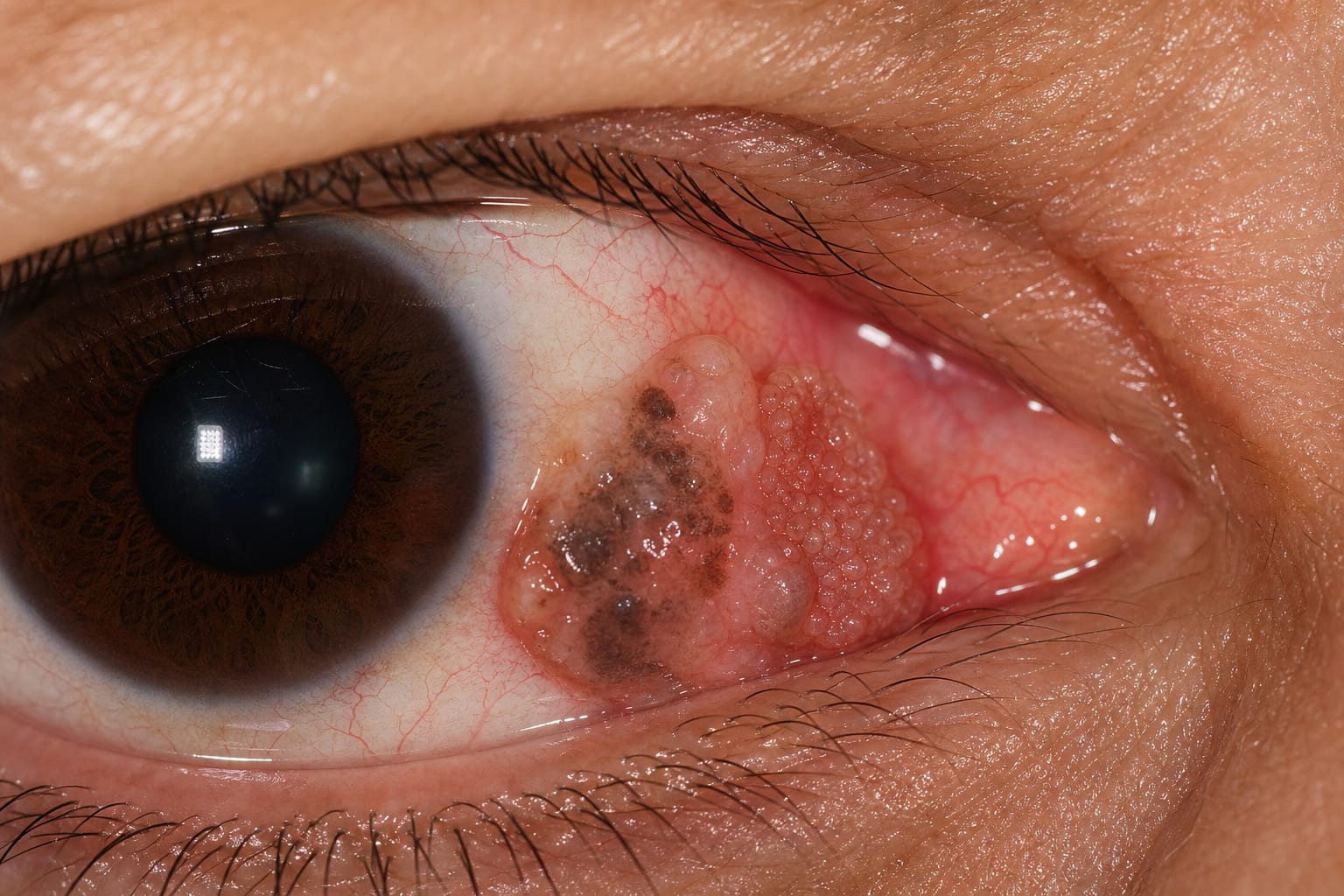
Lacrimal Caruncle Tumors: A Case Study of Subepithelial Nevus and Papilloma with a Review of Existing Literature
Clinical Scorecard: Lacrimal Caruncle Tumors: A Case Study of Subepithelial Nevus and Papilloma with a Review of Existing Literature
At a Glance
| Category | Detail |
|---|
| Condition | Lacrimal Caruncle Tumors |
| Key Mechanisms | Diversity of histopathological types; benign, premalignant, and malignant lesions. |
| Target Population | Patients with lacrimal caruncular tumors, particularly older adults. |
| Care Setting | Ophthalmology clinics and surgical settings. |
Key Highlights
- Lacrimal caruncular tumors are rare, with a majority being benign.
- Coexistence of different types of benign caruncular tumors is extremely rare.
- Complete tumor resection using the no-touch technique is the primary treatment.
- Adjunctive double freeze–thaw cryotherapy may help prevent recurrences.
- Histopathological examination is essential for definitive diagnosis.
Guideline-Based Recommendations
Diagnosis
- Tissue biopsy is recommended based on features suggesting malignancy.
Management
- Complete excisional biopsy is necessary for definitive diagnosis and management.
Monitoring & Follow-up
- Follow-up for recurrence is advised post-treatment.
Risks
- Malignant transformation in undiagnosed lesions.
Patient & Prescribing Data
Older adults with lacrimal caruncular tumors.
Surgical intervention is critical for both diagnosis and treatment.
Clinical Best Practices
- Utilize MRI for imaging suspicious lesions.
- Consider a multidisciplinary approach for complex cases.
- Educate patients on signs of recurrence.
Related Resources & Content