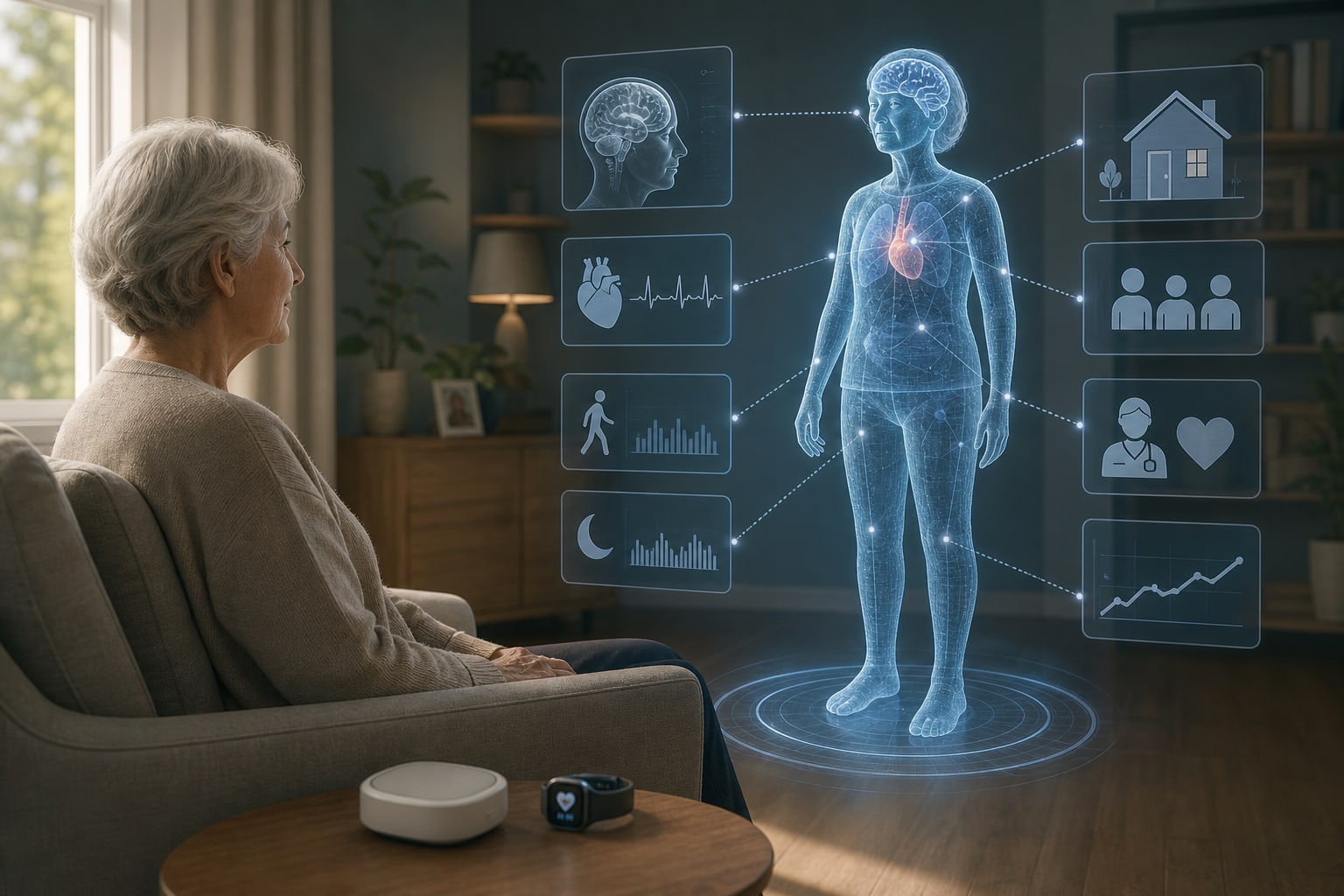
Evaluating the Effects of Digital Interventions on Frailty and Age-Related Health Outcomes: A Systematic Review and Meta-Analysis
By
Tricia Tay
Kate Grailey
Fangyue Chen
Hamzah Amin
Balraj Maan
Simon Dryden
Leila Shepherd
Michael Fertleman
Ara Darzi
January 1, 2026
Clinical Scorecard: Evaluating the Effects of Digital Interventions on Frailty and Age-Related Health Outcomes: A Systematic Review and Meta-Analysis
At a Glance
Category Detail
Condition Frailty in older adults Key Mechanisms Digital interventions including wearable devices and telehealth technologies to monitor and improve frailty markers. Target Population Older adults aged 65 years and older. Care Setting Community-based settings.
Key Highlights
Frailty is marked by exhaustion, weight loss, low activity, slow walking speed, and weak grip strength. Digital sensors can monitor physical activity and support interventions to reduce frailty. Combined digital interventions have shown effectiveness in improving frailty status. Guideline-Based Recommendations
Diagnosis
Utilize Fried's criteria to assess frailty phenotype components. Management
Implement digitally-enabled interventions such as telehealth and wearable technologies. Monitoring & Follow-up
Track engagement metrics including adherence, usability, and acceptability of interventions. Risks
Consider the low technology readiness of some digital interventions. Patient & Prescribing Data
Older adults with frailty or at risk of frailty.
Digital interventions can effectively monitor and improve frailty-related outcomes.
Clinical Best Practices
Encourage the use of home sensors and wearable devices for ongoing monitoring. Integrate telehealth solutions to enhance access to care for older adults. References