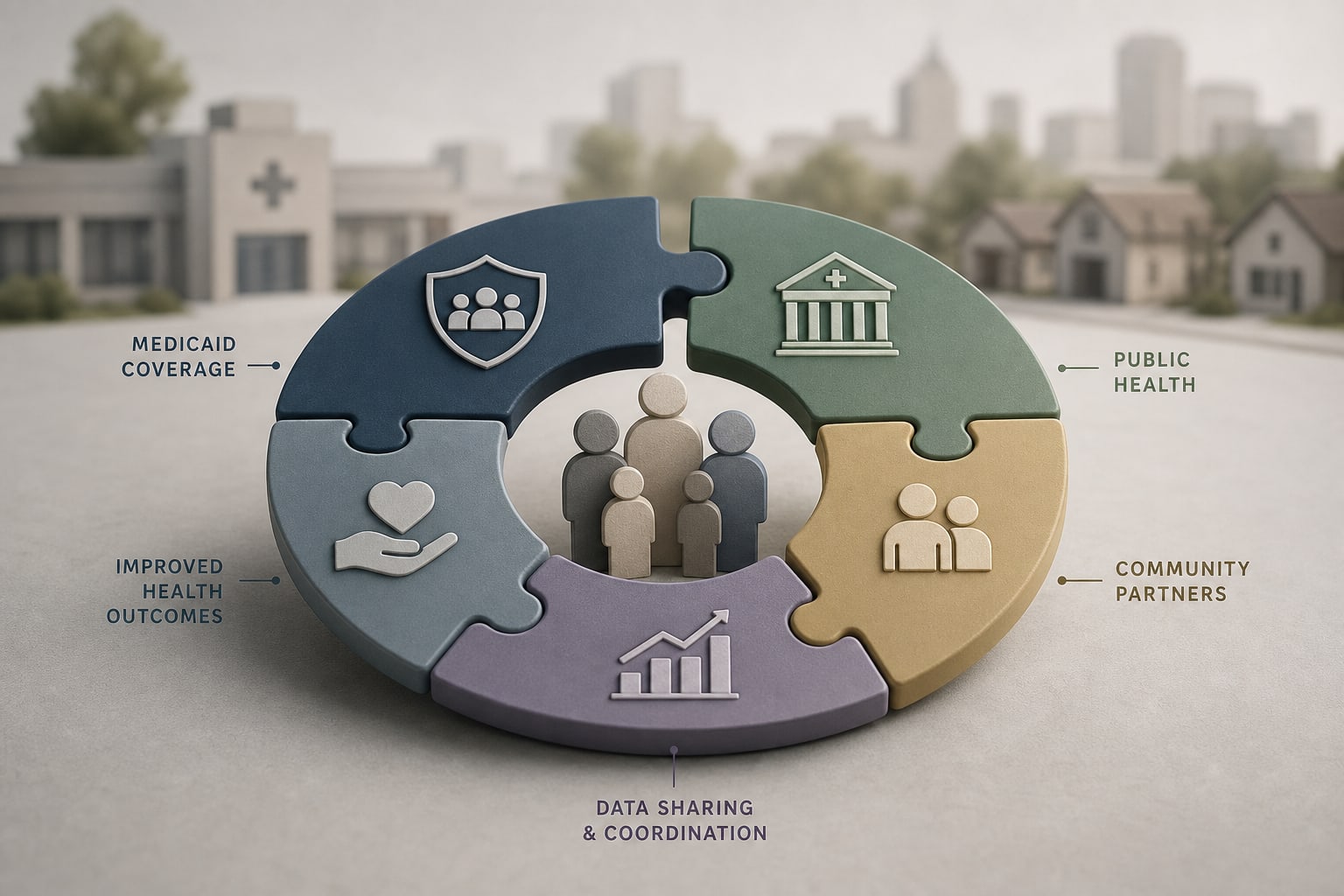
Clinical Scorecard: Exploring Recent Developments in Medicaid and Public Health Collaborations for 2025: Insights from a Survey of State Medicaid Programs
At a Glance
Category
Detail
Condition
Medicaid and Public Health Partnerships
Key Mechanisms
Data sharing, rural initiatives, workforce development, access improvements
Target Population
Low-income individuals, particularly women in reproductive years and children
Care Setting
State and local public health agencies, Medicaid programs
Key Highlights
Over 75% of states reported new or expanded initiatives for FY 2025 or planned for FY 2026.
Maternal and child health and behavioral health are key focus areas.
Collaboration between Medicaid and public health agencies is essential for improving health outcomes.
Interagency workgroups are leveraged to facilitate coordination and address complex health factors.
Coverage expansions for maternal and child health services are being implemented.
Guideline-Based Recommendations
Diagnosis
Implement cross-agency data sharing for maternal and child health surveillance.
Management
Collaborate on the Transforming Maternal Health Model to expand access and integrate services.
Monitoring & Follow-up
Utilize interagency workgroups to track and improve maternal and child health outcomes.
Risks
Address access challenges in rural areas and integrate mental health and substance use disorder services.
Patient & Prescribing Data
Medicaid/CHIP enrollees, particularly pregnant and postpartum individuals.
Expansion of Medicaid coverage for services like doula and lactation support.
Clinical Best Practices
Strengthen partnerships between Medicaid and public health agencies.
Focus on evidence-based strategies to improve maternal care access.
Support community health workers and perinatal providers.